
Sign up for the Today newsletter
Get everything you need to know to start your day, delivered right to your inbox every morning.
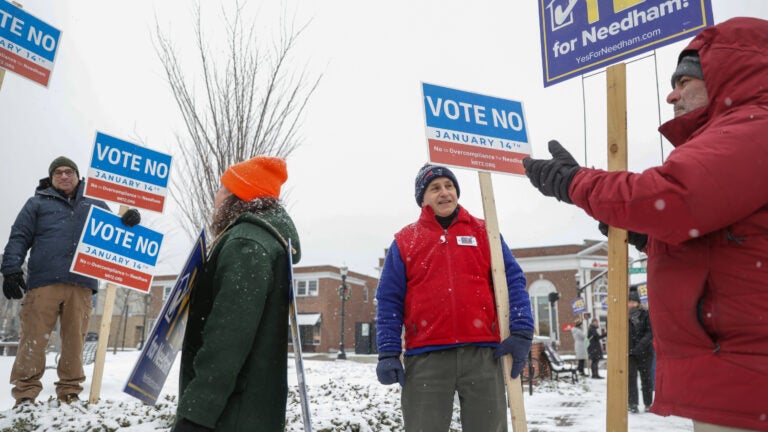
The state filed emergency regulations for the MBTA Communities Act on Tuesday after the state’s highest court found the controversial zoning law constitutional, but “unenforceable.”
Communities that have not submitted a compliance application with the state now will have six months to comply, according to the state’s Executive Office of Housing and Liveable Communities.
“We want to make sure these communities have adequate time to develop their zoning, conduct public engagement activities and bring that zoning to their local legislative bodies,” Executive Office of Housing and Livable Communities Secretary Ed Augustus said in a statement. “Local involvement is critical in developing zoning districts that put multifamily housing where communities have determined are the best locations.”
Communities that did not meet prior deadlines must now submit a new action plan to the state, outlining their strategy to reach compliance, by 11:59 p.m. on Feb. 13, 2025. These communities will then have until July 14, 2025, to submit a district compliance application to the state. Communities designated as adjacent small towns still have a Dec. 31, 2025, deadline to adopt zoning.
The emergency regulations do not make substantive change to the law’s zoning requirements and do not affect any compliance statuses that have already been issued by EOHLC.
The regulations are effective upon filing for 90 days, the state said. After a public comment period, the EOHLC intends to adopt the regulations permanently.
In Wednesday’s SJC decision, Chief Justice Kimberly Budd wrote that the EOHLC, which determines zoning compliance, failed to comply with the Administrative Procedure Act, making the MBTA Communities Act “presently unenforceable.”
While the EOHLC issued draft guidelines, hosted community meetings, and received feedback from affected communities in the years since the law was passed in 2021, it didn’t complete a number of required steps before the guidelines were announced in 2023, according to the decision. The office failed to file a notice of public hearing, a notice of proposed adoption or amendment of a regulation, or a small business impact statement, Budd wrote.
The MBTA Communities Act, signed by former Governor Charlie Baker in 2021, was heard by the SJC after the Town of Milton launched a legal battle last year to fight against compliance.
Milton, a rapid transit community because of the presence of the Mattapan Trolley, is one of many municipalities, including Weston, refusing to comply with the law. Some opponents say the law is overreaching; proponents say it addresses the state’s housing crisis.
Since it failed to comply with zoning changes, Campbell filed suit against the town, and in February of last year, Milton began to miss out on state grants, according to Kevin Martin, who represented Milton in front of the court. Martin said the state “was wrong” to withhold funding from Milton because the guidelines were ruled ineffective by the SJC.
Healey noted that 116 communities out of 177 have already complied with MBTA Communities Act, resulting in 3,000 new homes “in the pipeline – and those numbers are going to continue to grow.”
Get everything you need to know to start your day, delivered right to your inbox every morning.





To comment, please create a screen name in your profile
To comment, please verify your email address
Conversation
This discussion has ended. Please join elsewhere on Boston.com