
Sign up for the Today newsletter
Get everything you need to know to start your day, delivered right to your inbox every morning.
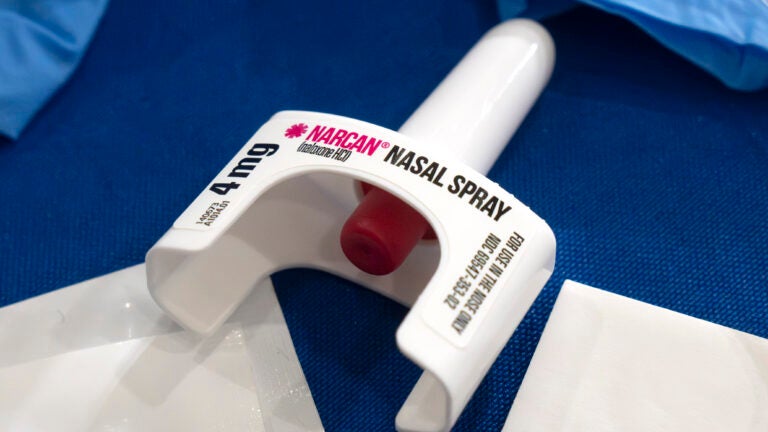
The Wu administration announced Monday that it installed four vending machines around Boston stocked with naloxone, a medicine that reverses opioid overdoses.
The state government purchased 14 of the harm reduction vending machines in total, four of which were given to Boston. Each machine contains a “core group of harm reduction supplies,” which includes naloxone, safe injection kits, and fentanyl test strips. Each individual site has some flexibility in how the machines ares stocked, and other supplies can be added, like pregnancy tests, personal protective equipment, or even socks, officials said.
“Harm reduction is about keeping people safe and alive. Unfortunately, many people living with substance use disorder don’t use harm reduction tools, like naloxone and clean syringes, due to stigma, lack of access or unawareness,” Commissioner of Public Health Bisola Ojikutu said in a statement. “These vending machines and kiosks are a low-cost, compassionate way to destigmatize harm reduction and expand access throughout our city.”
The vending machines are located in the BPHC Recovery Services office in the Finland Building on Albany Street, the Southampton Street Shelter, the EnVision Hotel, and North End Waterfront Community Health Center’s Charlestown public housing location. The vending machine locations were determined by Boston’s Overdose Data to Action program.
Naloxone can either be injected or administered via a nasal spray known as Narcan.
Officials are also deploying eight indoor naloxone distribution kiosks. These are built from repurposed newspaper stands, according to the city. In addition to naloxone, the kiosks contain contact information for a help line that offers free assessments, crisis support, and referrals for substance use treatment. The kiosks are being placed “in reach of populations experiencing higher overdose rates.” This includes Bridge Over Troubled Waters, the Harvard Street Neighborhood Health Center, SPOKE Gallery, and the Suffolk County Jail.
“This initiative is vital to saving lives and supporting the work of our public health officials by providing the tools and life-saving resources to deliver immediate assistance. This is a crucial step to breaking down barriers to access and ensuring that life-saving resources are available to our residents at more times and places,” Boston City Councilor Gabriela Coletta Zapata said in a statement.
Although opioid-related deaths decreased across Massachusetts in 2023, Boston recorded the highest number of deaths in seven years. A total of 377 people died of opioid-related overdoses in the city last year, representing almost a 7% increase from 2022, The Boston Globe reported.
But city data also shows that there was a decrease in the number of overdose deaths in Boston from January to April 2024 compared to the same time period in 2023. Opioid-related overdose deaths dropped by about 33% during this period, according to the city.
Get everything you need to know to start your day, delivered right to your inbox every morning.




To comment, please create a screen name in your profile
To comment, please verify your email address
Conversation
This discussion has ended. Please join elsewhere on Boston.com