
Sign up for the Today newsletter
Get everything you need to know to start your day, delivered right to your inbox every morning.
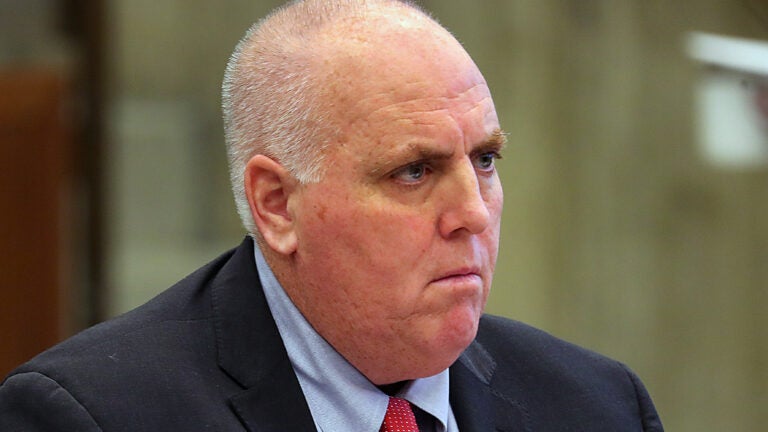
A day after Boston Mayor Michelle Wu’s controversial property tax proposal died in the Senate, City Councilor Ed Flynn asked the state Inspector General to explore an investigation into the late-changing real estate assessment projections that caused the bill’s demise.
Wu’s proposal sought to raise the cap on commercial property tax rates to avoid a potentially large tax spike for residential property owners. Different iterations of the plan were approved by City Council and the House twice this year, only to hit roadblocks in the Senate.
Earlier versions of the plan were based on property value projections that ended up being off by one or two percentage points. The state Department of Revenue certified final property valuations last week that showed the potential tax spike for homeowners would not be as intense as the Wu administration initially predicted. Commercial property values fell just 5%, compared to the expected 7% drop. At the same time, residential values rose by 3%, compared to the administration projection of a 4% increase.
Now, the average single-family home is expected to see about a 10.5% year-over-year increase in property taxes, as opposed to the 14% the administration previously projected. With the new numbers not painting as dire a picture as the administration had sketched out earlier in the year, the legislation lost momentum.
Flynn, a former City Council president and rumored potential challenger to Wu in next year’s mayoral election, voted against the plan over the summer. He sent a letter to Inspector General Jeffrey Shapiro Tuesday asking him to determine whether an investigation is warranted into how councilors and lawmakers were provided with “outdated and inaccurate” assessing data.
“In order to best represent the interest of our constituents, it is critical that the data that we are provided with as a legislative body is most up-to-date and accurate,” Flynn wrote. “I believe it is necessary to look into how and why there are such discrepancies in the data that was provided by the Assessing Department to ensure that this confusion does not occur in the future.”
During an appearance Wednesday on GBH’s “Boston Public Radio,” Wu addressed the changing valuations.
“We struck a deal knowing that there was uncertainty in this process, precisely to give predictability and to give the city proactive tools. The numbers would shift, and we are very glad that they didn’t shift… to the worst-case scenario,” she said.
“When it got better for businesses, when the valuations actually came back not as dire as had initially described in a potential worst-case scenario, this was still within the original range that we presented of a margin of error, and then people did not honor the results of the process,” Wu added.
Ron Rakow, the city’s former Commissioner of Assessing and a current fellow at the Lincoln Institute of Land Policy in Cambridge, told The Boston Globe he was not alarmed by the late changes to the numbers.
“At a time when you have a lot of vacancy and you don’t have a lot of transactions, that valuation process becomes all the more difficult,” Rakow told the paper. “In the context of Boston doing a revaluation, and the fact that Boston’s tax situation is a very dynamic one, the fact that these numbers changed by a percent or two is hardly surprising.”
Sorry. This form is no longer available.
Get everything you need to know to start your day, delivered right to your inbox every morning.




To comment, please create a screen name in your profile
To comment, please verify your email address
Conversation
This discussion has ended. Please join elsewhere on Boston.com