
Sign up for the Today newsletter
Get everything you need to know to start your day, delivered right to your inbox every morning.
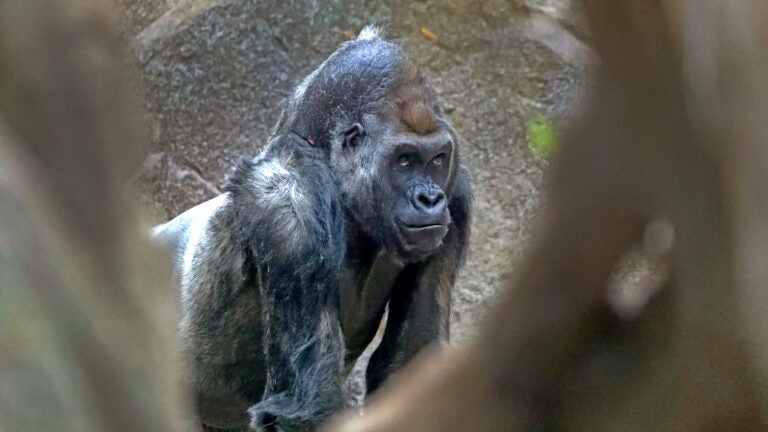
Franklin Park Zoo gorilla Kitombe was “humanely euthanized” on Thursday, the zoo said in a statement.
Kitombe, known as “Kit,” was a 38-year-old, geriatric Western lowland gorilla. He experienced a “rapid decline in his health” on Wednesday, the zoo said. In order to find the root of his health issues, the zoo said they performed a comprehensive exam on Kit. His symptoms included a chronic cough, loss of weight and muscle mass, and increased lethargy and trembling, the zoo said.
The exam included chest radiographs, blood tests, urinalysis, an echocardiogram, and a muscle test, the zoo said. Results after the tests indicated a poor prognosis and “serious quality of life concerns,” which prompted the zoo to decide to humanely euthanize Kit.
“We are devastated to share the news of Kit’s passing. He has been part of our zoo family for more than 25 years, and will be deeply missed by the staff who has cared for him for so many years,” John Linehan, Zoo New England President said. “He was an incredible father to his five offspring with his mate Kiki, and it was a joy to watch his gentle interactions with them.”
Kit has lived at Franklin Park Zoo since 1998, the zoo said. He had five offspring with his mate Kiki, three of whom also reside at the zoo.
“Kit’s care team described him as a great dad who was very gentle, as well as a good leader for the troop. He is fondly remembered as a great nest builder, building big, beautiful nests,” the statement said. “He was also able to clearly communicate his likes and dislikes with his care team, and was very particular about some of his food.”
The zoo said Western lowland gorillas, like Kit, are “critically endangered” in the wild. Western gorillas are native to Nigeria, Cameroon, Gabon, Equatorial Guinea, Republic of Congo, Angola, and Central African Republic, according to the zoo. Their habitats are threatened by disease and the bushmeat trade, the zoo said.

Get everything you need to know to start your day, delivered right to your inbox every morning.





To comment, please create a screen name in your profile
To comment, please verify your email address
Conversation
This discussion has ended. Please join elsewhere on Boston.com