
Sign up for the Today newsletter
Get everything you need to know to start your day, delivered right to your inbox every morning.
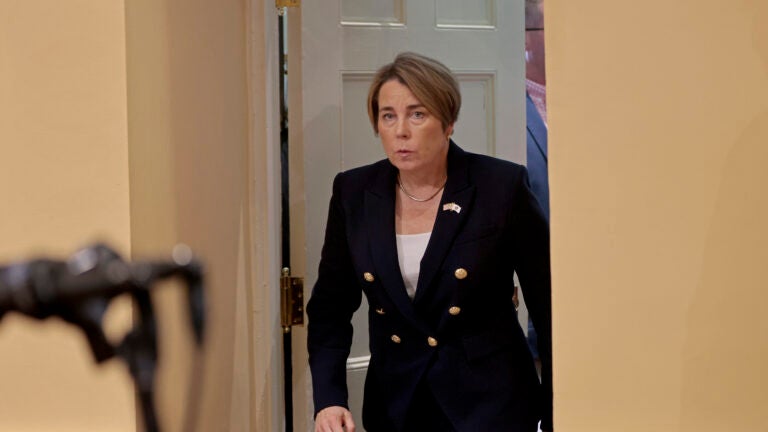
Massachusetts Gov. Maura Healey announced a series of major changes to the state’s overburdened emergency shelter system Friday, as her administration tries to manage costs and space constraints exacerbated by the high cost of living in Massachusetts and an influx of migrants.
The administration will introduce a two-track system for eligible families, one offers homeless and migrant families a 30-day shelter stay, and the other offers a six-month stay. The state will also begin to “phase out” the use of hotels and motels to house families in need of shelter.
The shelter system, which is projected to cost nearly $1.1 billion in fiscal year 2025, has grown “increasingly unsustainable” in recent years, Healey said. Despite “significant action” and “tangible results,” the changes announced Friday are necessary to rein in costs and help more families find stable housing, she said.
“More needs to be done so that Massachusetts taxpayers do not continue to be on the hook for this federal problem. The changes we are making will reduce costs, phase out the use of hotels and better meet the needs of all families,” Healey said in a statement.
When the shelter system reached capacity last year, officials set up a series of overflow shelter sites throughout the state. In August, Healey implemented a new prioritization system for families and capped stays at the overflow sites, or “temporary respite centers,” to five days for those not being prioritized. Now, families being placed in these sites will have the option of staying for 30 days as part of the two-track system.
Starting Dec. 10, families applying for shelter will be “assessed according to their risk and need” and assigned to either the “Rapid Shelter Track” or the “Bridge Shelter Track.” Families will not be able to choose between the tracks.
The rapid track is meant for families that the state thinks are well-positioned to secure self-sufficient permanent housing quickly. They will be offered 30 business days at the respite centers, with some allowance for extensions.
The bridge track will be reserved for “high-risk” families and those with “complex needs,” such as people with intellectual or developmental disabilities or women who have late-term pregnancies. Those placed in this track will be eligible for six-month stays, pending legislative approval.
In the spring, the Legislature capped shelter stays at nine months. The Healey administration now wants to lower this cap to six months.
“We want to be clear with families: We are seeking six [months] so nobody feels they don’t have the right expectations,” Lt. Gov. Kim Driscoll told The Boston Globe. “We think six months is achievable. I anticipate if folks can find housing sooner than six months, they’ll take it.”
Driscoll chaired the Special Commission on Emergency Housing Assistance Programs, which released a detailed report on the emergency shelter system on Tuesday. Friday’s announcement was crafted based on the recommendations outlined in that report, the administration said.
As of Thursday, nearly half of the 7,115 families in the shelter system were staying in hotels and motels, according to state data. But contracting with hotels has been the “most expensive shelter model” and it does not provide an ideal environment for those seeking shelter, officials said. So the use of hotels will be slowly phased out through fiscal years 2025 and 2026. The administration did not release detailed explanations of how this will happen, but said the approach will be based on “discussions with providers” and that families will be notified in advance.
The administration says it is focusing on expanding current programs to help more families exit the shelter system. The commission’s report found an “extraordinary growth” in monthly shelter exits over the past year, from a low of 163 in September 2023 to a high of 475 this past September. A crucial tool for helping families secure housing is HomeBASE, a program that provides money to help pay for rent, moving expenses, utility costs, and furniture.
State officials are now proposing legislative changes to HomeBASE that would increase temporary rental subsidies. Currently, families are eligible for a total of $30,000 over two years or $45,000 over three years. The proposed changes would allow families to secure $25,000 in rental assistance per year for two years.
Get everything you need to know to start your day, delivered right to your inbox every morning.




To comment, please create a screen name in your profile
To comment, please verify your email address
Conversation
This discussion has ended. Please join elsewhere on Boston.com