
Sign up for the Today newsletter
Get everything you need to know to start your day, delivered right to your inbox every morning.
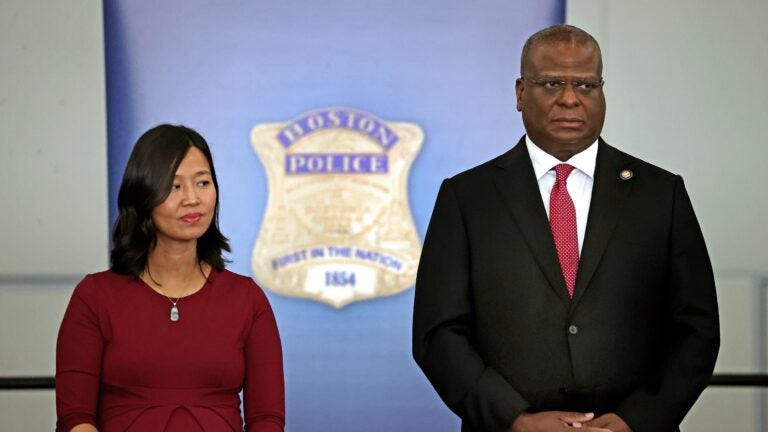
Boston Mayor Michelle Wu is beginning to publicly address how the city could respond to President-elect Donald Trump’s plans to conduct mass deportations of undocumented migrants.
In multiple recent media appearances, she stressed that the city’s resources and personnel, including local police, are not expected to cooperate with federal agents attempting to detain migrants on civil warrants.
“The idea that certain local law enforcement agencies will be required, or will be expected, to participate in mass deportations of residents who have not been part of serious criminal activity just to fulfill this campaign promise, this is not something that is possible under the laws in Boston,” Wu said last week on GBH’s “Boston Public Radio.”
Trump’s promises to oversee mass deportations were at the core of his campaign. Now, all indications point to him acting on those promises immediately after taking office in January. On Monday, Trump said on social media that he is preparing to declare a national state of emergency and use the U.S. military to conduct deportations.
Leaders in blue states are gearing up for Trump’s plans. Gov. Maura Healey said this month that her administration would not cooperate with federal authorities looking to conduct mass deportations.
In Boston, an existing law prohibits Boston police officers from coordinating with U.S. Immigration and Customs Enforcement agents in a number of scenarios. When asked about the possibility of federal agents carrying out mass deportations of Boston residents without the help of local law enforcement, Wu said on GBH that her administration is actively planning for a number of different scenarios. She said that the federal government could face staffing issues and other logistical problems when attempting to follow through on Trump’s promises. Some of those promises do rely on having the full cooperation of local agencies, Wu said.
“In places where that is not the case… we still have other mechanisms where we can identify spaces that might be most targeted and think about protections there,” Wu said on GBH.
Researchers estimate that Trump’s plans could cost more than $300 billion, exacerbate labor shortages, and require hiring hundreds of thousands of new government employees and law enforcement officers.
During an appearance on WCVB’s “On The Record” Sunday, Wu pushed back on misconceptions about “sanctuary cities.” Sometimes that term is understood to mean a place that grants migrants immunity even if they have committed serious criminal acts. This is not the case in Boston, where local police can work with ICE “on matters of significant public safety importance, such as human trafficking, child exploitation, drug and weapons trafficking, and cybercrimes.”
Wu did acknowledge that city resources have been stretched due to the influx of new migrants recently. This surge, combined with an ongoing housing crisis, has overwhelmed shelters throughout the state for more than a year. In Boston, city-run shelters for individuals have been as full as they normally are during only the coldest winter months, she said.
Early this year, the Melnea A. Cass Recreational Complex in Roxbury was used to house families in need of shelter for about four months before reopening to the public. Many residents disapproved of the move, saying it was unfair to locals who rely on the rec center. Wu has said publicly that she plans to run for a second term next year, and her response to Trump’s plans could factor heavily in that race.
There are limits to what that response could include, and no city can override certain parts of the federal government’s agenda, Wu said.
“What we can do is make sure that we are doing our part to protect our residents in every possible way, that we are not cooperating with those efforts that actually threaten the safety of everyone by causing widespread fear and having large-scale economic impact,” she said.
Even if logistical or legal issues hamstring Trump’s deportation plans, residents could grow fearful of local government and be hesitant to contact local officials for help regarding any topic, Wu said. She wants to increase direct outreach to residents, making sure that they are not fearful of contacting the city or requesting services.
When the Trump administration begins enacting its plans next year, the resistance of blue states and cities will inevitably receive media coverage, and Trump frequently vows to attack “enemies from within.” Wu was asked about the possibility of Boston potentially being targeted by the federal government at an unrelated event Monday.
“Our city is always held up as a national example of what’s possible. That historically can be used to try to tear down what it means for a community to be welcoming to all but it’s also even more important right now to provide proof of government working well,” she said.
Get everything you need to know to start your day, delivered right to your inbox every morning.




To comment, please create a screen name in your profile
To comment, please verify your email address
Conversation
This discussion has ended. Please join elsewhere on Boston.com