
Sign up for the Today newsletter
Get everything you need to know to start your day, delivered right to your inbox every morning.
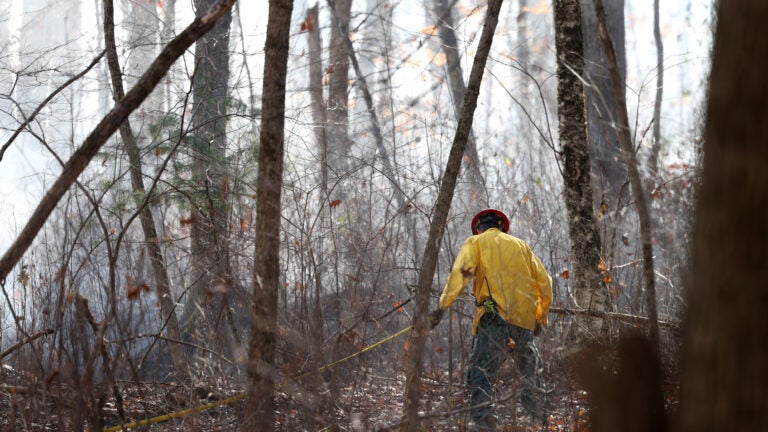
As wildfires have ignited across Massachusetts in recent days, firefighters have been working around-the-clock to quell the flames.
In an average year, Massachusetts has less than 20 wildland fires reported in October, Jake Wark, the spokesperson for the state Department of Fire Services, told Boston.com.
This October, the state had at least 186.
“That is a staggering spike, especially when you consider that the usual fire season is in the spring, from March to May,” Wark said.
“These fires will burn emissions, and that’s what causes challenging control issues for firefighters trying to get them suppressed,” Dave Celino, the chief fire warden for the state Department of Conservation and Recreation, told Boston.com. “That’s why we’re going to see longer duration incidents.”
As of Wednesday evening, there were nine active wildfire incidents in Massachusetts, according to a briefing from DCR — in Salem, Middleton, Canton, Devens, Wilmington, Holden, and North Andover.
The Department of Fire Services said the state is facing an enhanced risk of brush fires. As of Wednesday evening, there had been 120 brush fires reported across Massachusetts, totaling about 450 acres, just over the past several days, Wark said.
Even after showering twice, Salem Fire Department Lt. Ryan Riley said he still “smelled like a fire pit” following his work in the field to combat the Salem wildfires, which burned over a hundred acres this week — so large that many people across the region reported smelling the smoke.
“Forest fires are extremely dangerous, and if you don’t have your head on a swivel, you can quickly find yourself in a very dangerous situation,” he told Boston.com. “The fire spreads both above our heads and below our feet without even giving us a warning.”
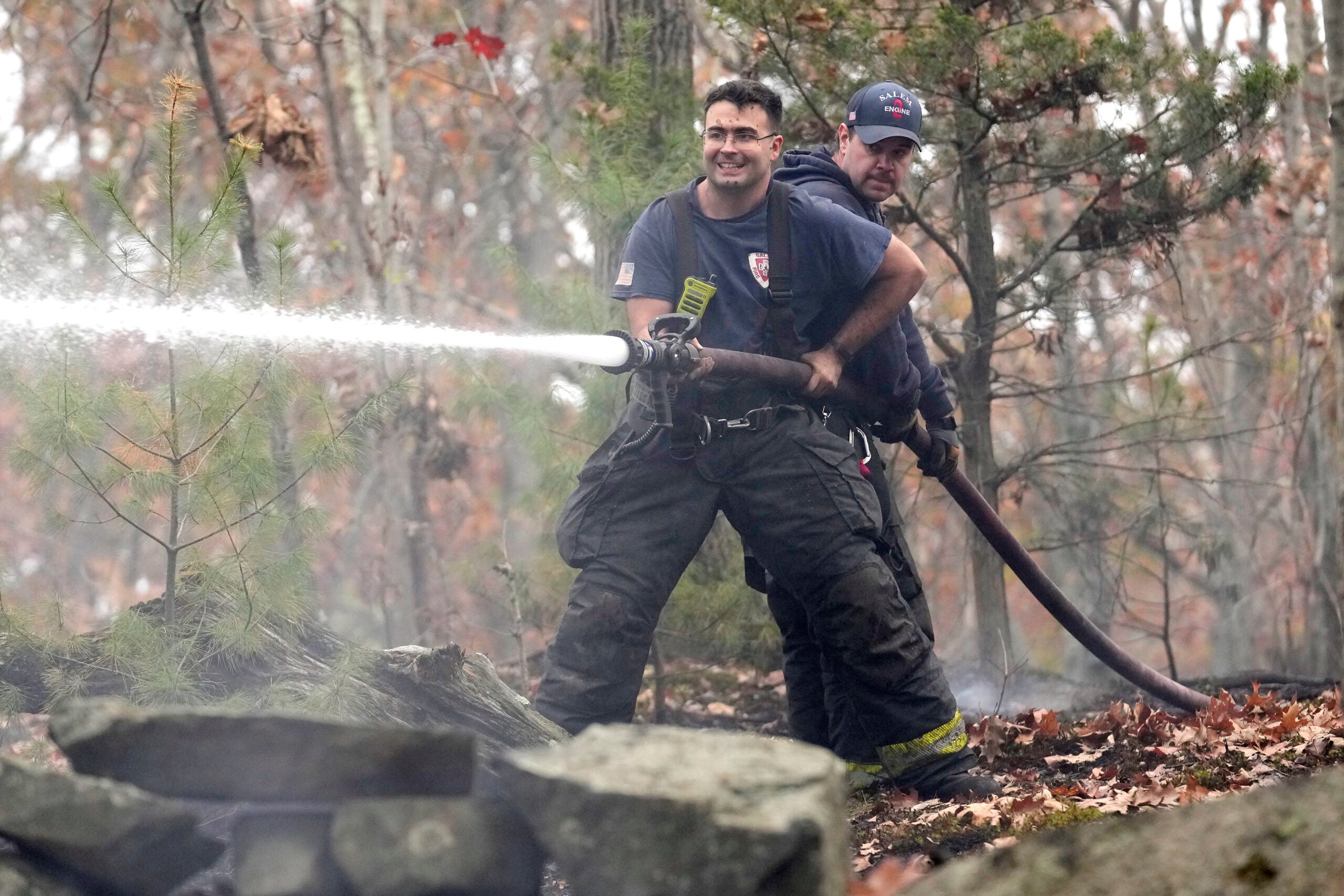
Riley said combating a fire in the woods is challenging both “physically and mentally” for a team of structural firefighters that are accustomed to putting out building fires.
“It’s a different ball game out there,” he said.
The gear the firefighters wear weighs anywhere from 50 to 175 pounds, Riley said.
“It’s physically demanding out there in our bunker gear because it’s designed to protect us from the heat inside buildings, not necessarily great for trudging through the leaves and the brush of forests,” he said.
Salem firefighter Sean Hebert said wildland fires tend to “move quick.”
“The fire could be taller than you,” he told Boston.com. “It’s a pretty wild site.”
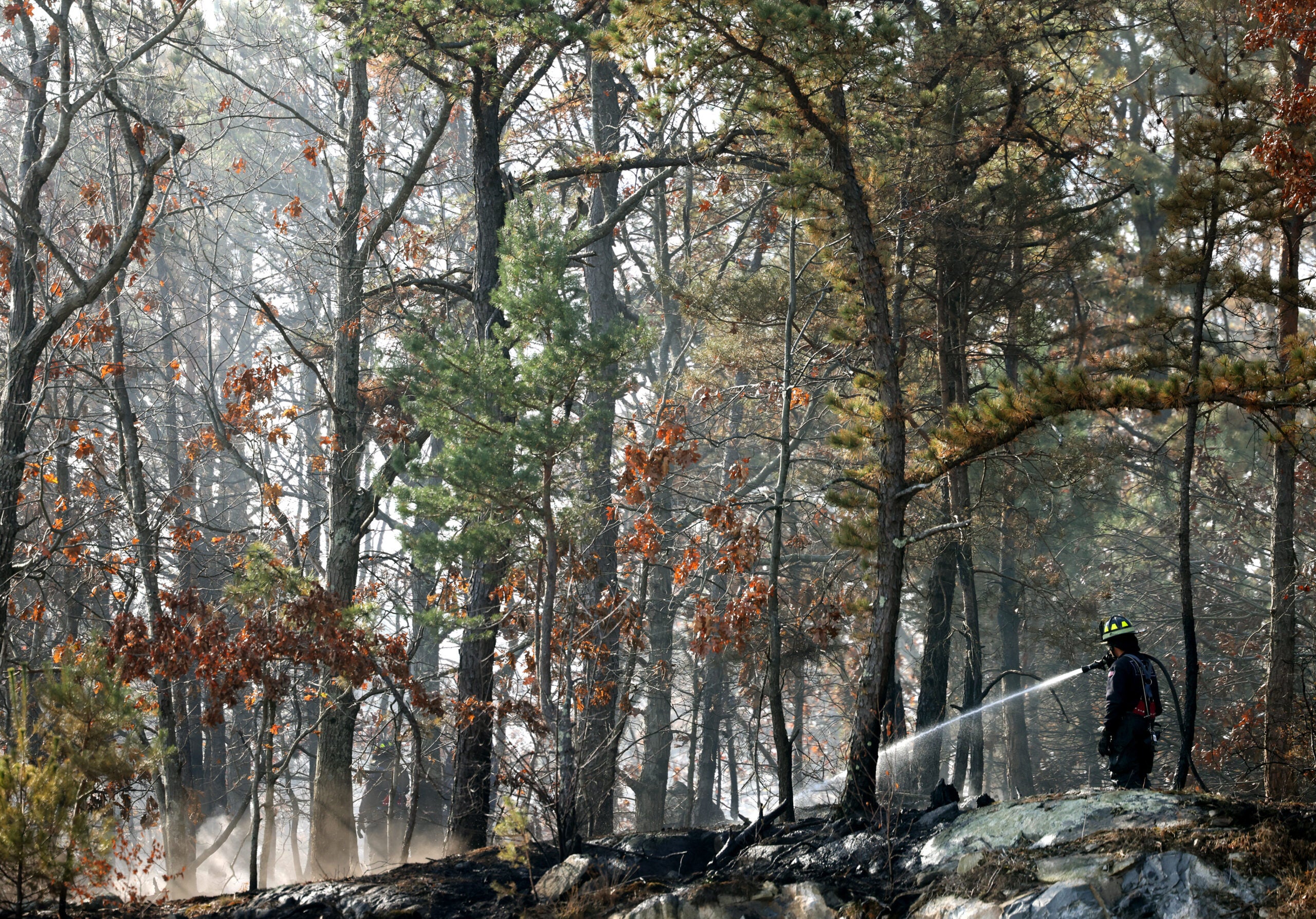
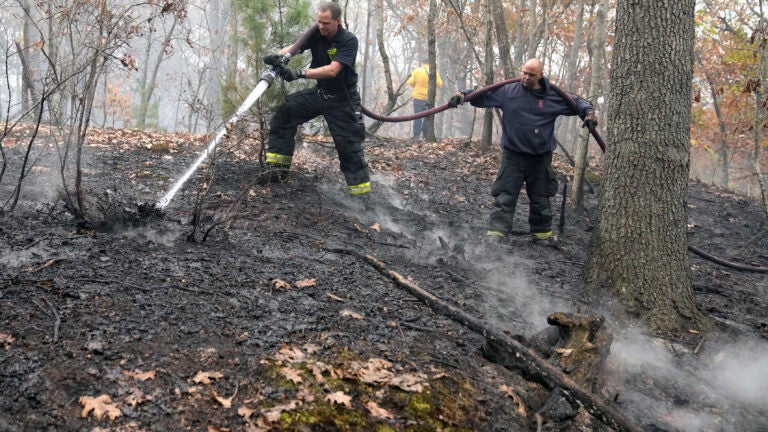
To stop the fire, crews have to shoot water into the ground at 100 gallons a minute in an effort to dig up the fire, Fire Captain at the Saugus Fire Department Billy Cross told Boston.com.
“There’s no easy way, or clean way, to do it,” he said. “It’s just real dirty work.”
Beverly Fire Chief Peter O’Connor described the work as “frustrating” at times.
“The fire is burning underground, and when you get one part out, it’s going to pop up maybe 100 feet away,” he told Boston.com. “But part of the job is you just have to get it done.”
Wark said that weather conditions have played a “significant role” in the week’s fire activity.
“It’s autumn, with dead leaves and vegetation providing a significant amount of ground fuel,” he said. “We’ve had an unusually dry season with very little precipitation, so those fuels are very receptive to ignition.”
The recent high temperatures, low humidity, and breezy conditions have all contributed to the elevated fire risks, Wark said. Almost all outdoor fires start with human activity such as outdoor cooking, unattended campfires, or power equipment, he said, that can ignite dry vegetation.
Many of the Salem firefighters worked additional hours throughout the week, Hebert said.
Salem firefighters typically work 24 hours on-duty, then 24 hours off.
Hebert said he worked an additional 14 hours — meaning that he worked for 38 hours straight.
“Not a lot of sleep happens at the firehouse, as it is,” Riley, who is also president of the Salem Massachusetts Firefighters Local 172 union, said. “We have had a lot of individuals that have worked above and beyond.”
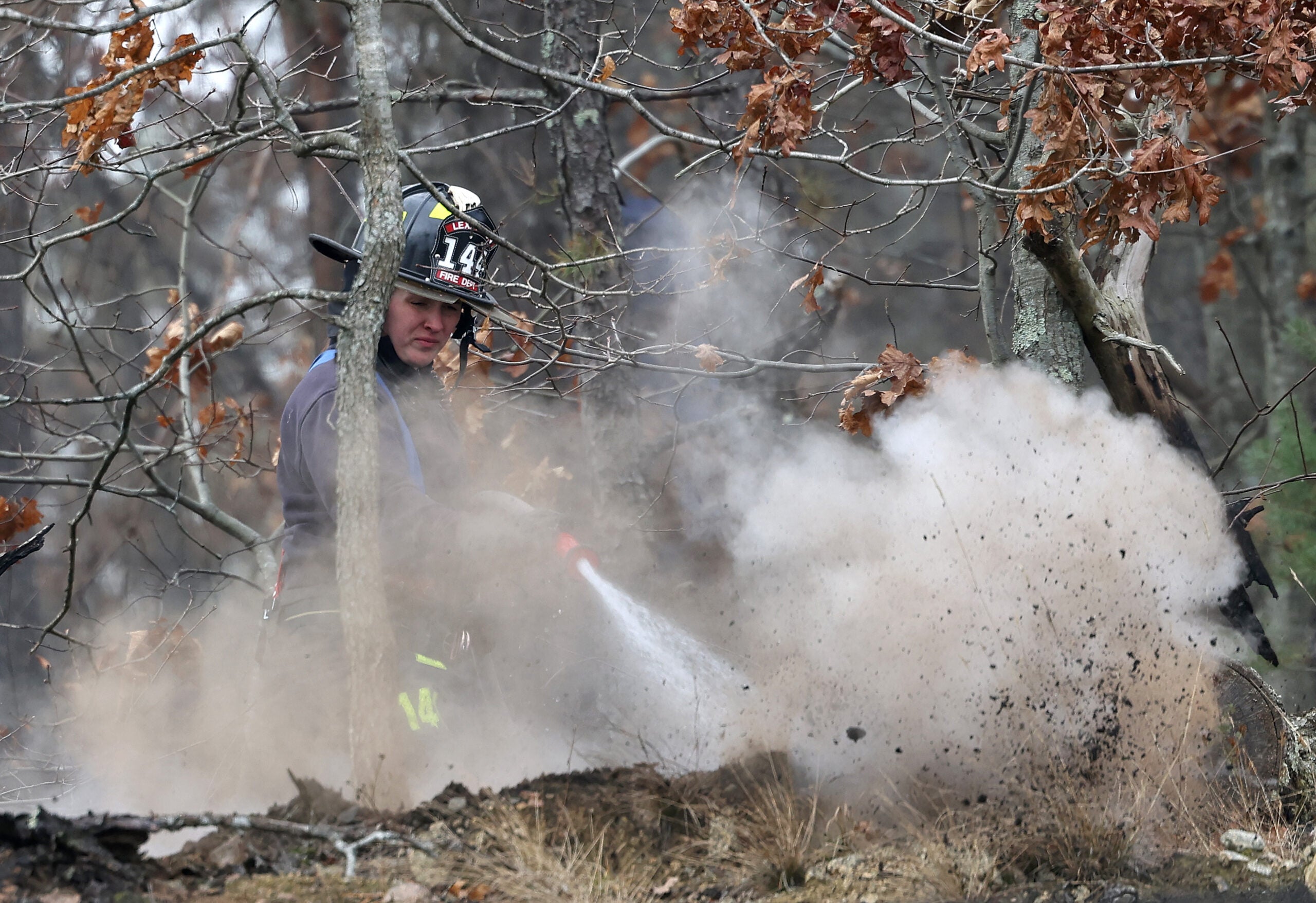
Many crews from outside communities came in to assist the efforts in high-need places on top of their normal-duty hours, O’Connor, the Beverly chief, said.
“It’s a lot for somebody to do, especially if you’re traveling for an hour in the morning, traveling for an hour to get back home at night, and then coming back the next morning early to do it again,” he said.
O’Connor said most of the firefighters have been “working hours on end.”
“It’s dirty, they’re tired, they’re hungry, they just want to rest,” he said. “But they know that the mission is to get the fire out.”

Get everything you need to know to start your day, delivered right to your inbox every morning.



To comment, please create a screen name in your profile
To comment, please verify your email address
Conversation
This discussion has ended. Please join elsewhere on Boston.com