
Sign up for the Today newsletter
Get everything you need to know to start your day, delivered right to your inbox every morning.
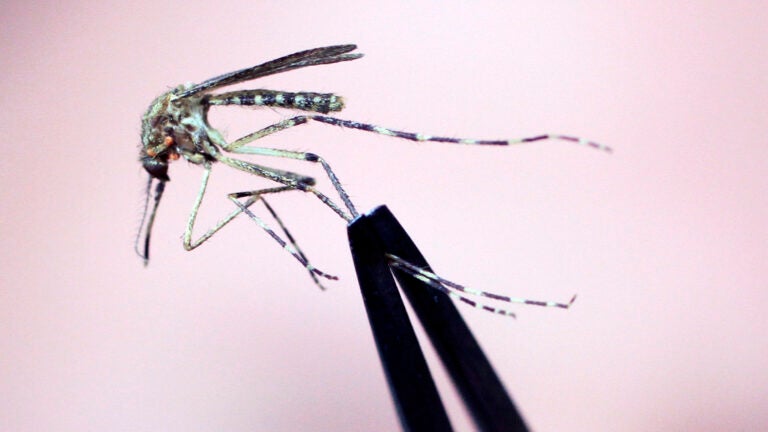
State health officials announced Tuesday that the risk of eastern equine encephalitis has been lowered for more than a dozen Massachusetts communities.
The change means that the risk from the mosquito-borne virus is no longer considered high or critical anywhere in the state, the Department of Public Health said in a statement. The communities that were previously at higher risk — Douglas, Dudley, Harvard, Northridge, Oxford, Sutton, Uxbridge, Webster, Carver, Middleborough, Plymouth, Acton, Ayer, Boxborough, Concord, and Littleton — are now considered at moderate risk for the illness.
“Our surveillance data and past patterns of disease indicate that the risk from EEE is, thankfully, declining,” Public Health Commissioner Robbie Goldstein said in a statement. “We know that most EEE infections occur by the end of September and this decision reflects that. Some risk from EEE will continue to exist until the first hard frost and we encourage people to continue to take steps to prevent mosquito bites as they enjoy the fall weather.”
So far this season, there have been 96 EEE-positive mosquito samples in the state, three cases in horses, and four in humans. The 2019-2020 outbreak saw 17 human cases and seven people died.
Dr. Catherine Brown, the state epidemiologist, said in a statement that mosquito behavior is “more variable” by this point in the year.
“The mosquitoes that are most likely to spread EEE to people are dying off and are present in much smaller numbers,” she said. “In addition, their activity is driven more by temperature and humidity and somewhat less by the time of day.”
Still, officials are urging residents to take steps to avoid mosquito bites by using insect repellent, avoiding the peak mosquito hours of dusk to dawn if possible, and wearing long sleeves and pants to keep the insects from your skin. Residents are also being advised to keep draining standing water around homes to limit places for mosquitoes to breed.
Residents can also check the state’s map that tracks the risk for mosquito-borne illnesses in the state.

Get everything you need to know to start your day, delivered right to your inbox every morning.




To comment, please create a screen name in your profile
To comment, please verify your email address
Conversation
This discussion has ended. Please join elsewhere on Boston.com