

Sign up for The Dish
Stay up to date on the latest food and drink news from Boston.com.
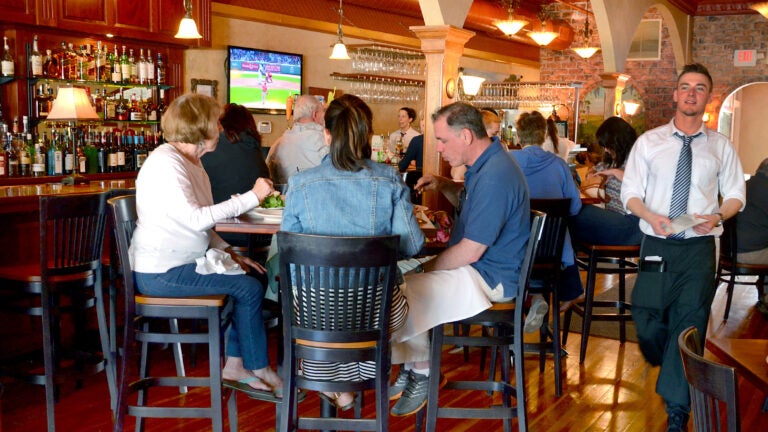
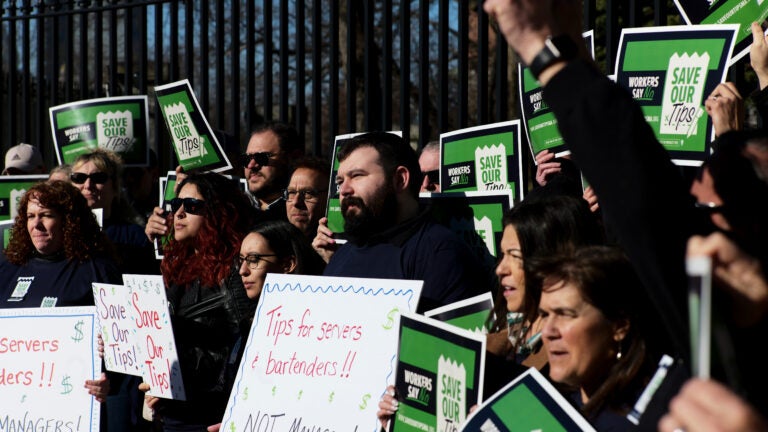
What has become a national conversation around tipping culture in America is now on the ballot this November for Massachusetts voters to decide whether the tipped minimum wage stays.
One Fair Wage, a national labor organization that has fought to change the status quo of how servers and bartenders earn their income in other states, brought the ballot question to Massachusetts.
The group earned enough signatures — more than 74,000 the first round and more than 12,000 the second round — to then leave it up to voters to decide if the tipped minimum wage of $6.75, plus tips, should be eliminated in favor of paying servers and bartenders the state minimum wage of $15 an hour. The opposing side, the Massachusetts Restaurant Association and the coalition Committee to Protect Tips, had filed an objection over the signatures collected by One Fair Wage, but withdrew that objection when the restaurant group said they ran out of time to do a complete review of the petitions.
One Fair Wage hopes voters will say yes to the ballot question. But on the other side of the issue is a coalition and vocal restaurant owners who are fighting for voters to turn down the new measure.
Before you head to the polls, here’s a breakdown of what this ballot question would do, if passed, and who’s for and against it.
The ballot item states that workers currently paid a tipped minimum wage would eventually get paid the state minimum wage of $15 an hour.
Servers, bartenders, and other tipped employees are paid $6.75 an hour, plus tips that must legally combine to equal or be higher than the regular minimum wage amount of $15 an hour. If their tips do not make up that gap at the end of a shift, then it’s the law that employers pay the difference.
The tipped minimum wage increased as recently as 2023 due to the “Grand Bargain” bill from former Gov. Charlie Barker. Before the bill began gradually increasing both the regular minimum wage and the tipped minimum wage, the latter was at $3.75.
The dissolution of the tipped minimum wage would happen in stages over the course of five years, with gradual increases each year after passage:
Employers would still be required to pay the difference during those years that servers and bartenders are paid higher tipped minimum wages, until 2029 when servers and bartenders are given the regular minimum wage of $15 an hour.
The ballot item also states that employers would be allowed to “calculate this difference over the entire weekly or bi-weekly payroll period.”
Employers could also administer a “tip pool” that takes the tips given to tipped workers and “distributes them among all the workers, including non-tipped workers” like kitchen staff.
One Fair Wage is behind the measure, a nonprofit organization that works to end tipped minimum wage and has been successful in getting legislation passed in Washington, D.C., and Chicago.
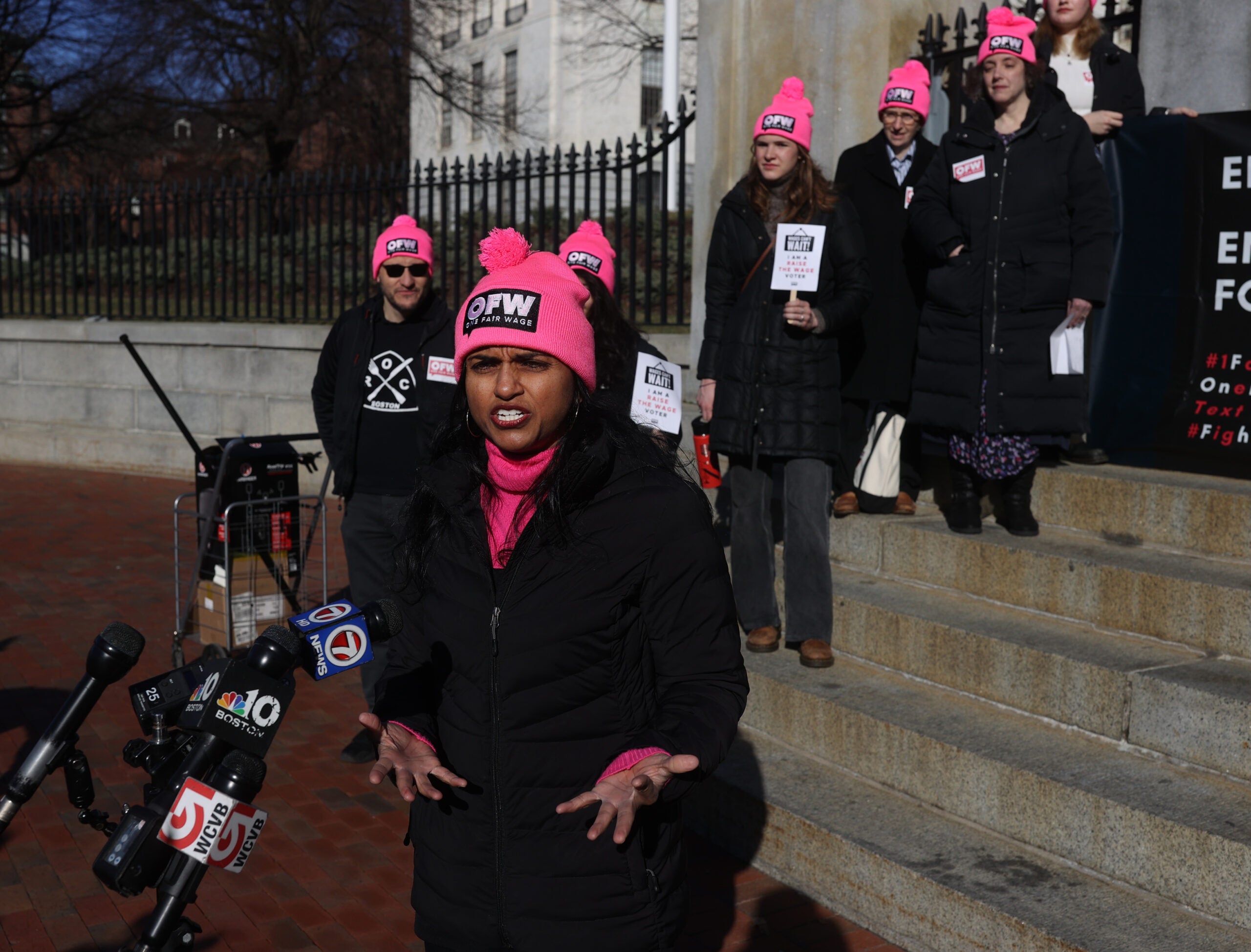
But the organization’s goal is to get 25 states to change course by 2026, joining the seven states in the U.S. without a tipped minimum wage law — for example, California, Nevada, and Washington state.
One Fair Wage president and co-founder Saru Jayaraman said there are three big reasons to support this change at the voting booth. For starters, she argued that a tipped minimum wage, an amount that can fluctuate shift to shift depending on how much a server makes in tips, isn’t a stable way to earn income in a place as expensive as Massachusetts.
“You don’t know how much you’re going to be paid day to day, week to week, or month to month,” Jayaraman said. “But your bills and rent don’t go up and down — they stay the same, and you’re liable to pay those things even though you may not earn enough some days.”
Jayaraman also said that sexual harassment, particularly for women, is a problem in the service industry. The #MeToo movement in Hollywood led to studies that looked at how sexual harassment affected other industries and found that it was most prevalent in the food and beverage industry.
Harassment reports from employees included those against customers, and servers put up with it so that it won’t affect their tips, Jayaraman said.
And though it is state law for employers to cover what tips don’t, there are reports of mistakes happening — unintentional or not. The state reported this year that 23,000 restaurant workers were impacted by wage theft that totaled $5 million.
The misconception of their measure, Jayaraman said, has been that it would get rid of tipping. It won’t, but also Jayaraman said diners in states without a tipped minimum wage still tip servers and bartenders.
“Have you ever walked into a restaurant and asked a server how much [they] earn before deciding how much to tip? People don’t go from state to state knowing what people earn before deciding how much to tip,” Jayaraman said. “It doesn’t make any sense.”
Other supporters include “thousands of restaurant workers,” according to Jayaraman, as well as a few state lawmakers and other workers’ groups.
Previous and current industry workers and owners have also expressed interest in its passage in outlets WBUR and The Boston Globe.
The Globe‘s editorial board, meanwhile, endorsed the measure, writing, “it will provide greater economic stability for tens of thousands of tipped workers, many of them single parents, immigrants, or young people struggling to gain a foothold in society. It would also simplify an arcane pay system for tipped workers, potentially encourage more workers to remain in their jobs — a benefit to employers — and reduce harassment of female workers who often endure the bullying or sexual advances of customers in order to receive tips.”
A coalition known as Committee to Protect Tips formed in response to this ballot measure and includes the state’s restaurant trade organization, Massachusetts Restaurant Association.

The coalition’s main argument against getting rid of the tipped minimum wage in exchange for the normal minimum wage is that they claim servers and bartenders don’t want it. According to a survey the association conducted, 91% of the 351 tipped employees polled prefer the current system.
According to the survey, it also showed that 90% of respondents believe they’ll earn less if the state gets rid of the tipped minimum wage, which critics of the ballot measure argue is because diners will tip less.
It also will cost businesses more money to roll this out — right after recovering from the pandemic and as restaurants still face inflation challenges. The reason for that is that they would have to pay at least $15 an hour for every check, rather than how it works now in which that payout would fluctuate.
“Our restaurants are just coming back from a pandemic,” said Jessica Muradian, the association’s director of governmental affairs. “This will cost our restaurants a lot of money, and in order to survive, they’re going to need to raise prices.”
Restaurant owners have put signs up or posted to their business Instagram accounts to show their opposition to the ballot question.
Some acknowledged that a lot about restaurant culture does need to change, and that there are restaurants in Massachusetts that have moved away from paying servers a tipped minimum wage — but this ballot measure, in their opinion, isn’t the answer.
“Servers are the highest paid people in lots of restaurants,” Nightshade Noodle Bar said on Instagram. “They don’t need to be saved.”
It’s true that some servers and bartenders can make upwards of $30 an hour because of their tips, but some can also make just above minimum wage. That can vary by location and the type of restaurant — for example, rural versus city restaurants and fine-dining versus casual, as reported by FiveThirtyEight.
U.S. Bureau of Labor Statistics data also shows average cook and server pay. The former is slightly higher than the latter, but as The Washington Post reports, that might be because cash tips often go unreported, and therefore tipped workers are likely making more money on average than back-of-house staff.
Another point of opposition that those in the industry have shared is the potential for employers to use a tip pool. The MRA survey found that 88% of respondents were against it.
“You’re taking away tips from servers and having them share it with folks, so they are going to make less money,” Muradian said.
Other opponents of this measure include Massachusetts Restaurants United, various chambers of commerce, and a dozen mayors.
Bartenders and servers have also spoken to outlets WBUR and GBH in opposition of the ballot question.
Both sides had different takes on Washington, D.C., which has been in the national spotlight of the tipped minimum wage conversation ever since the city got rid of it after a 2022 vote.
It’s only still gradually increasing, but tipped employees will earn the full minimum wage by 2027.
One Fair Wage, the organization involved in pushing the ballot measure there, argued that the D.C. restaurant industry is doing just fine.
According to The New York Times, D.C.’s restaurant scene hasn’t imploded in the way critics warned about the ballot measure’s passage leading to mass closures and an exodus of restaurants heading to Virginia and Maryland.
Some servers who spoke to outlets said they are getting paid more, they’re still getting tips, and their job seems more reliable.
And many of the workers the Times spoke to supported the elimination of the tipped minimum wage.
But at the other end of the debate, the Massachusetts Restaurant Association’s arguments that this change would lead to higher prices and more service charges has become a reality in D.C. And according to Marketplace, employment at D.C. restaurants dropped, resulting in less staff on the floor and changes to business operations at restaurants.
Some servers and bartenders told the Times that customers are more confused when to tip, or are tipping less. For some workers, they’re also bringing home less than before.
Because the increase hasn’t reached D.C.’s minimum wage just yet, it will take time to see the full impacts of the measure.
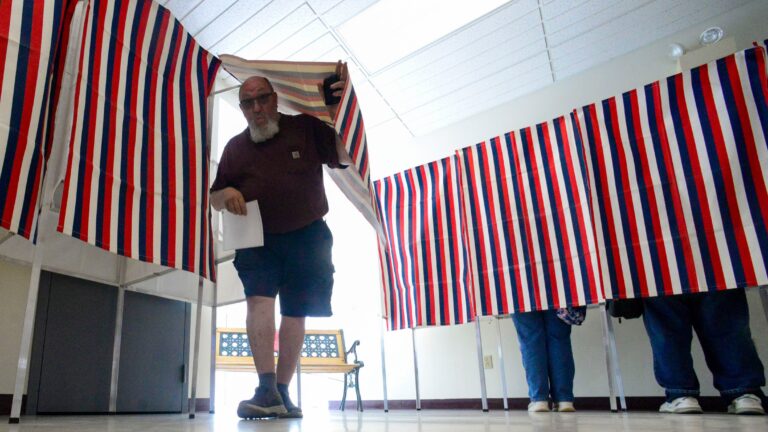
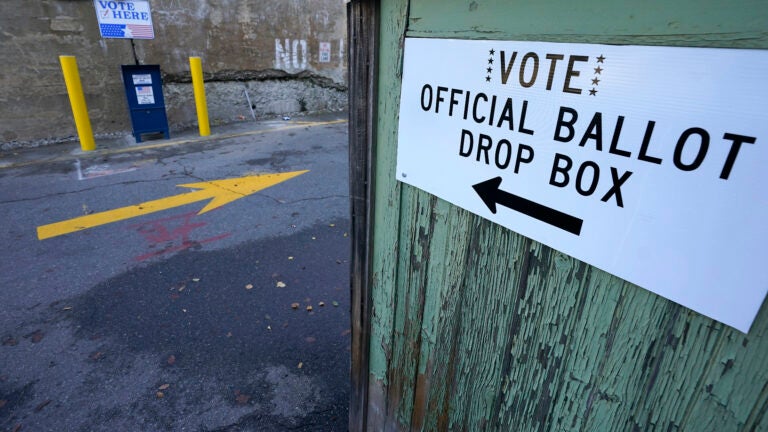
The ballot question in Massachusetts will go before voters on Election Day, Nov. 5. The deadline to register to vote is Oct. 26, and the vote-by-mail application deadline is Oct. 29. For more information on Election Day, visit the Secretary of the Commonwealth’s website.
Sorry. This form is no longer available.

Stay up to date on the latest food and drink news from Boston.com.




To comment, please create a screen name in your profile
To comment, please verify your email address
Conversation
This discussion has ended. Please join elsewhere on Boston.com