
Sign up for the Today newsletter
Get everything you need to know to start your day, delivered right to your inbox every morning.
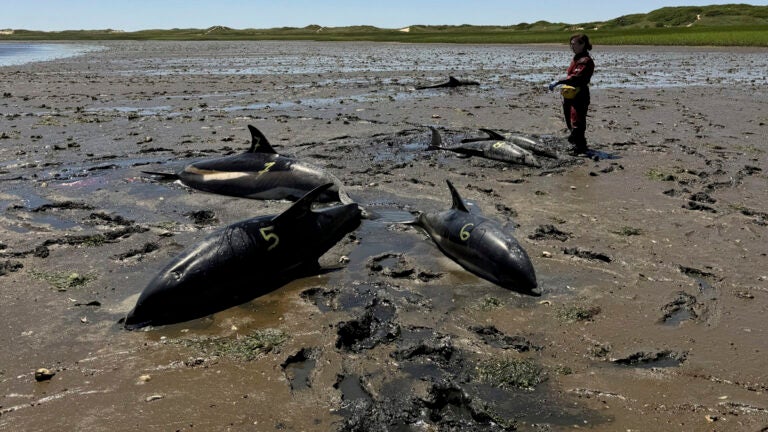
An “unprecedented” number of bottlenose dolphins were stranded along the shores of Brewster on Monday afternoon in the largest bottlenose dolphin mass stranding ever seen in the Northeast region.
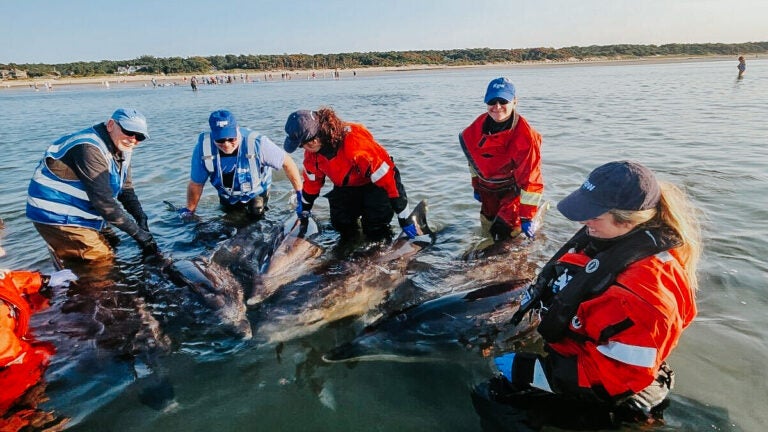
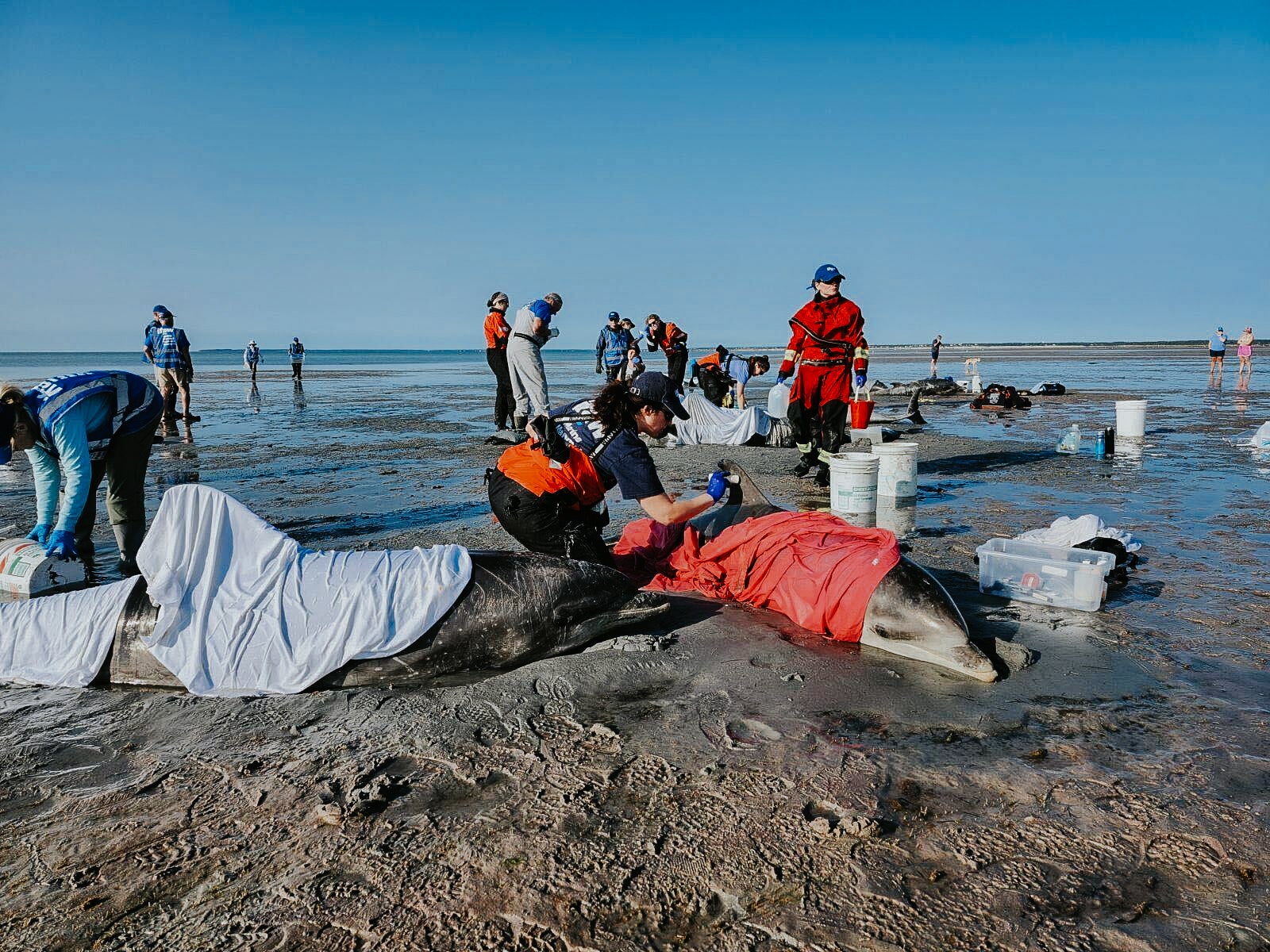
Fourteen dolphins were stranded at Linnell Landing. Three were confirmed dead and a mammal rescue team underwent efforts to refloat and save the remaining 11 dolphins as the tide rose, according to a statement from the International Fund for Animal Welfare.
The bottlenose mass stranding is one of many dolphin strandings this past summer. Since the end of June, the IFAW reported responding to 175 live stranded dolphins — over 2.5 times their annual average. And in the last two weeks, the charity responded to 26 dolphin strandings.
A mass stranding that began June 28 was the largest involving dolphins in U.S. history, officials said.
Since this week’s stranding, “we have been on high alert and monitoring their movements closely,” said IFAW biologist and animal responder Kira Kasper in the group’s statement.
Cape Cod’s “shallow waters, complex tidal movements, and sandbars” create the perfect storm for dolphin strandings, according to the IFAW.
This is the first time the team has seen such a large group of the bottlenose species of dolphin stranded in the area, according to the IFAW statement, which noted that this offshore species of dolphin tends to be larger than its coastal counterparts and is typically found farther from shore.
Rescuers marked the dolphins from Monday with temporary identification tags and one was given a satellite tag to track its movements after it was released.
However, just before 7 a.m. on Tuesday, the satellite tag alerted responders that the dolphins found themselves stranded again at Lieutenant Island in Wellfleet.
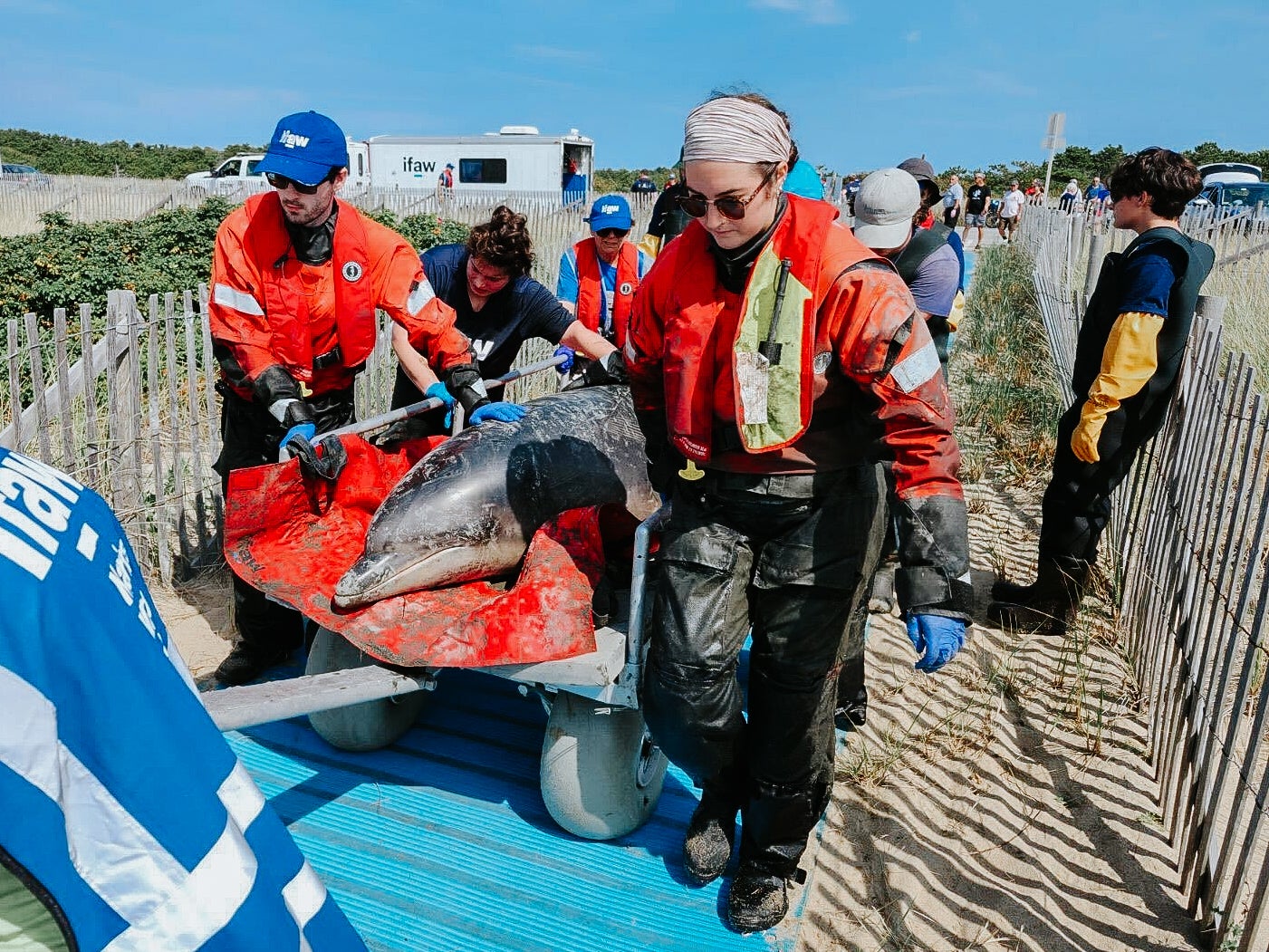
“Our team moved quickly to extract the animals from treacherous mud, provide necessary health assessments and treatments, and transport the dolphins to Herring Cove in Provincetown, where they were all released back to the ocean,” Kasper said.
Monitoring dolphins with satellite tags provides “crucial information about their movements and health post-release.”
“Dolphins play an essential role in marine ecosystems, and every effort is made to safeguard their populations through rescue, research, and conservation,” the statement said. “Teams worked tirelessly to ensure the safe return of these dolphins to the ocean.”

Get everything you need to know to start your day, delivered right to your inbox every morning.





To comment, please create a screen name in your profile
To comment, please verify your email address
Conversation
This discussion has ended. Please join elsewhere on Boston.com