
Sign up for the Today newsletter
Get everything you need to know to start your day, delivered right to your inbox every morning.
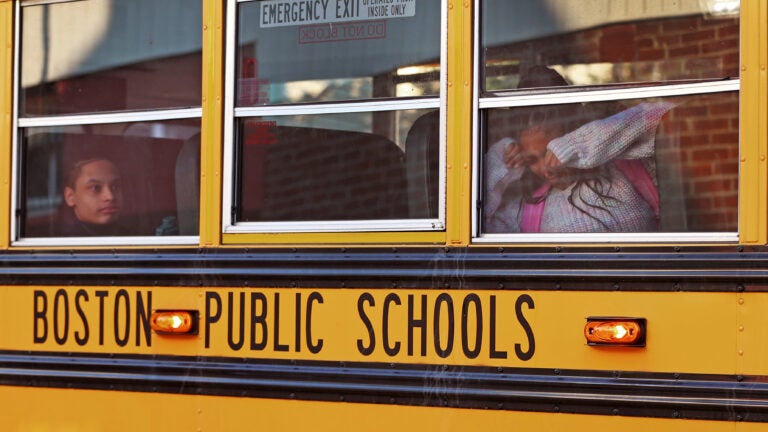
On the morning of the first day of school in Boston, about two thirds of buses did not arrive on time. A week later, members of Boston City Council are calling on state education officials to address the transportation issues.
In a letter that Councilors Ed Flynn and Erin Murphy sent to Massachusetts Board of Elementary and Secondary Education Chair Katherine Craven Thursday, the councilors said that they had “profound concern” about the transportation problems. They urged Craven to instigate an investigation into the matter and to develop an action plan.
“BPS families want accountability and results. The transportation failure is unacceptable. We have asked state education officials to investigate the BPS transportation plan and offer recommendations to fix the growing problem. The status quo is not an option,” Flynn wrote in a post on X Friday.
The on-time arrival rate is normally poor on the first day of the school year in Boston before improving as drivers learn their routes and families learn their schedules. But the number of late buses this year was particularly striking. Just 34% of buses arrived on time on the morning of Sept. 5, according to data provided by Boston Public Schools. The on-time arrival rate rose to 61% the following day, and hovered around the rate through the early part of this week. The number of buses that arrived within 15 minutes of their goal was 62% on the first day of school and 84% on Tuesday of this week.
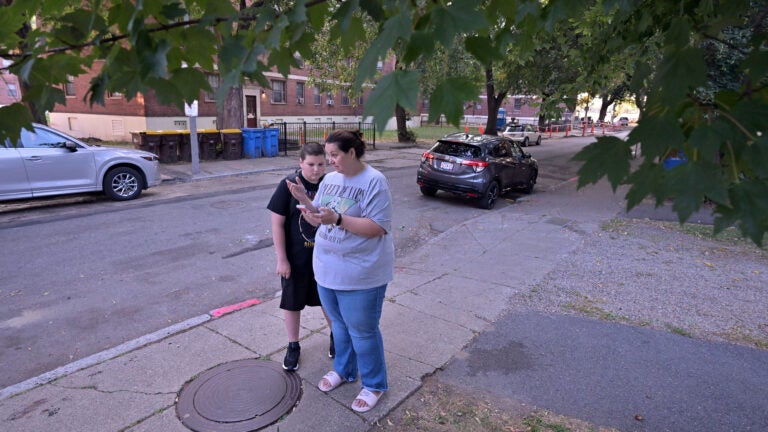
Students and their families felt the impacts. Some parents waited with their children for as long as 45 minutes on the first morning, sometimes turning to other transportation options when buses failed to arrive. On their way home, a child was on the bus for over two hours as it drove from Dorchester to South Boston. The child eventually had to provide the driver with directions to their house, according to a hearing order introduced by Flynn at a City Council meeting this week.
One mother told local news outlets that her first-grade son was supposed to return home at 3:30 p.m. but did not make it back until 7 p.m. The woman now says her son is too anxious to ride the bus.
Boston Mayor Michelle Wu and Superintendent Mary Skipper predominantly blamed the issues on two factors: the implementation of a new real-time app designed to track buses, and an unusual amount of families waiting until the final weeks of summer to register their children for bus transportation.
The app, Zum, was introduced this year as a way to reduce student commute times, improve transparency, and collect better data. Bus drivers now work with a tablet affixed to their dashboards, allowing better GPS tracking and giving them the ability to record each student who boards their bus. Some drivers had trouble with the technology during the first week of school, and families also reported problems with the app not allowing them to track their children as promised.
Route changes played a major role in delaying buses, Wu has said. Drivers are given their initial route assignments in early August and get to practice “dry runs” along the routes. Last year, about one third of BPD drivers had route changes added between that time and the beginning of the school year. But this year, that figure doubled.
While transportation woes are nothing new for BPS students and their families, elected officials appear to be taking a renewed focus on solving the problems. At the center of their concerns is the fact that the district does not appear close to hitting key benchmarks. In 2022, BPS and DESE agreed on an improvement plan that requires BPS buses to hit a monthly on-time arrival rate of 95%. It set out a goal of having 99% of buses arrive within 15 minutes of the school day’s start.
“[This year’s] staggering delay has impacted more than 14,500 students, leaving their families to face the stress and inconvenience of finding alternative transportation solutions. Such delays are unacceptable and severely undermine the educational progress and stability of our students,” Flynn and Murphy wrote in their letter.
Not only do the delays impact the district’s ability to meet its transportation goals, but there are wide-ranging impacts on students, they argued.
“Delayed buses contribute to increased absenteeism, disrupt students’ learning experiences, and undermine the progress BPS aims to achieve,” they wrote.
Flynn and Murphy urged DESE to conduct a thorough investigation into the scheduling, routing, and operation practices of the BPS transportation system. They want to see a new action plan, improved communication, and a new system for monitoring transportation performance.
During Wednesday’s City Council meeting, multiple councilors expressed their worries and signed onto the hearing order. It was referred to the Committee on Education, and a hearing will be scheduled for councilors to hear directly from education officials.
“When 66% of all buses arrive late to school, that means 14,500 of our Boston public school children did not get to school on time last week,” Murphy said during the meeting. “I know, as a former teacher for decades, that those first days of school are nerve-wracking for many of our students and families. And to know that they’re missing those first moments when you’re meeting your new classmates or finding out your schedule for the day … is not acceptable.”
Get everything you need to know to start your day, delivered right to your inbox every morning.



To comment, please create a screen name in your profile
To comment, please verify your email address
Conversation
This discussion has ended. Please join elsewhere on Boston.com