

Sign up for the Today newsletter
Get everything you need to know to start your day, delivered right to your inbox every morning.
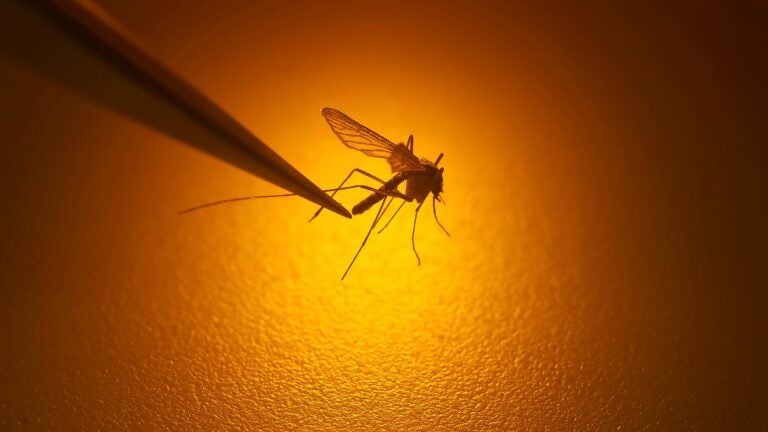
A New Hampshire man is fighting for his life after contracting three mosquito-borne illnesses.
Joe Casey of Kensington, about five miles north of Amesbury, Massachusetts, tested positive for eastern equine encephalitis (EEE), West Nile virus, and St. Louis encephalitis, according to a GoFundMe page set up for his family.
Casey was first hospitalized on Aug. 8, and it took several days for doctors to determine the cause of his sickness, the GoFundMe page says. The family still does not know which of the three diseases is causing Casey to become so sick.
For the past several weeks, Casey has been in the ICU on a ventilator, undergone a tracheotomy, and remains under 24-hour constant care.
“He’s my brother. It’s very difficult, especially because it’s from a mosquito,” Casey’s sister-in-law Angela Barker told WBZ-TV.
Barker says Casey has swelling in his brain and is barely able to communicate.
“My brother-in-law is not a small man, and to see someone that you love be as sick as he is and not be able to talk, to move, to communicate for over three weeks is terrifying and gut-wrenching,” Barker told WBZ-TV.
EEE is a rare but serious and potentially fatal disease that can affect people of all ages. According to the CDC, about 30% of people who develop severe EEE die, and many survivors have ongoing neurologic problems. Symptoms include fever, headache, vomiting, diarrhea, seizures, behavioral changes, and drowsiness.
According to the CDC, West Nile virus is the nation’s leading cause of mosquito-borne disease. Most people infected with the virus do not feel sick, but about one in five develop a fever and other symptoms.
The CDC says that most people infected by St. Louis encephalitis do not have symptoms, but some can become ill with fever, headache, nausea, vomiting, and tiredness. In rare cases, some people develop neuroinvasive diseases, such as encephalitis, inflammation of the brain or meningitis, and inflammation of the membranes surrounding the brain and spinal cord.
There are no vaccines to prevent any of these mosquito-borne illnesses.
The terrifying outcome is prompting warnings to those in the region to take precautions while outdoors.
The New Hampshire State Health Department recommends that residents try to prevent mosquito bites by using repellents, wearing long sleeves and pants, ensuring doors and windows have tight-fitting screens, and avoiding being outdoors in the early morning and evening.
New Hampshire health officials reported an adult in Hampstead died from EEE at the end of August.
In Massachusetts, state officials have reported two human cases of EEE, one in Plymouth County in late August and another in Worcester County earlier this summer. In response to the increased risk for EEE in those areas, the state is doubling down on its spraying.
Boston.com could not immediately reach Casey’s family for further comment on Tuesday.

Get everything you need to know to start your day, delivered right to your inbox every morning.


To comment, please create a screen name in your profile
To comment, please verify your email address
Conversation
This discussion has ended. Please join elsewhere on Boston.com