
Newsletter Signup
Stay up to date on all the latest news from Boston.com

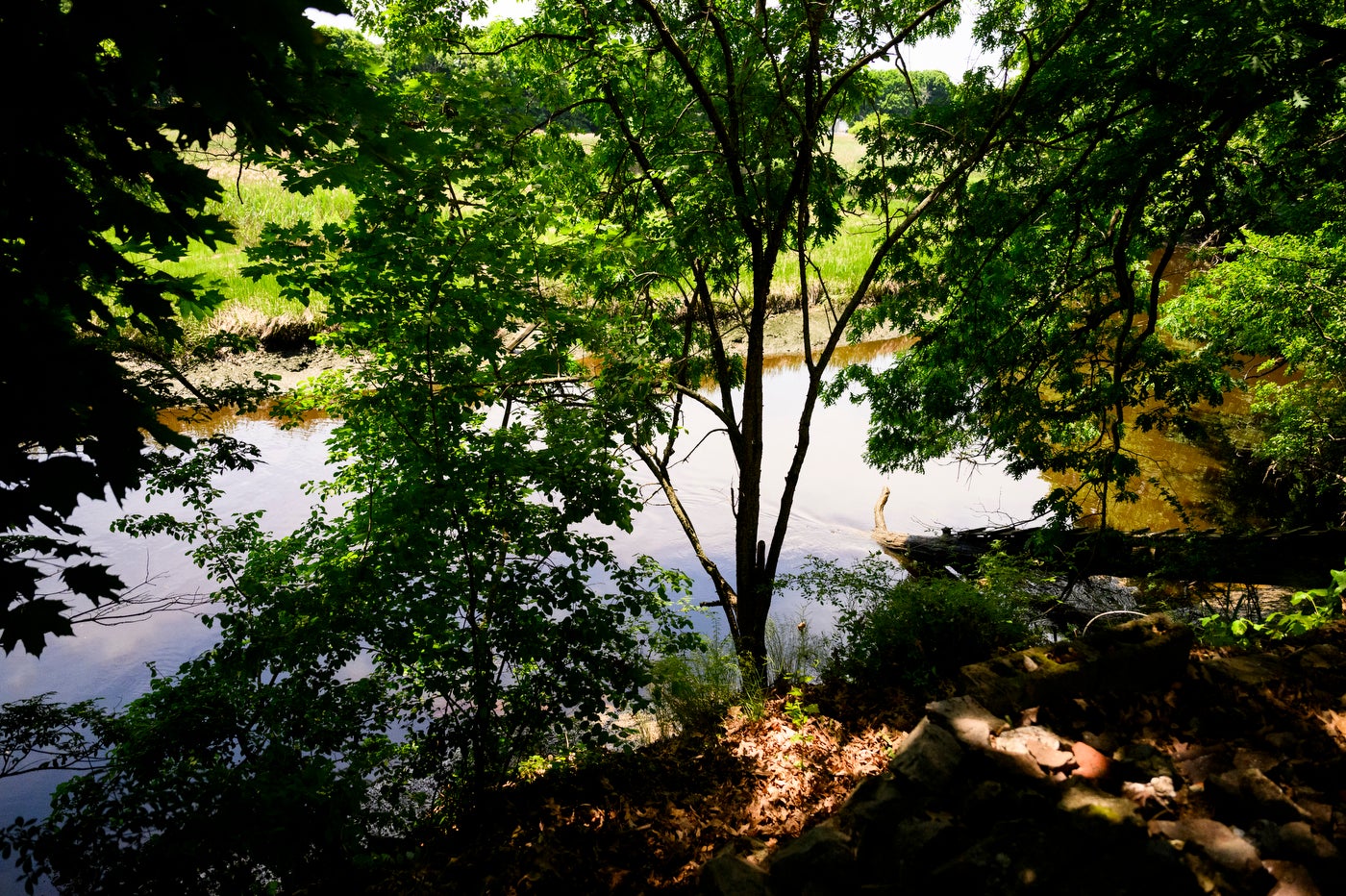
Along the banks of the Saugus River in Lynn, archeologists believe they have uncovered the long-lost homestead of King Pompey, a colonial community leader and one of the first Black property owners in New England.
Kabria Baumgartner, dean’s associate professor of history and African studies at Northeastern University, said people often recall the history of slavery in the South in the 19th century.
But, “there are stories of enslavement right here in New England, in the 18th century, and the 17th century too.”
Pompey Mansfield, or King Pompey, was an enslaved African who won his freedom and later became a prominent community leader in the region.
Archaeologists at the University of New Hampshire and Baumgartner worked together to locate Pompey’s homestead, where he lived with his wife Phylis (or Phebe) over 260 years ago.
Historical accounts show that Pompey hosted free and enslaved Blacks on Black Election Day, one of the most important days in the colonial era for Black people in New England. On this day, Pompey was elected “king” on an annual basis.
Whoever was elected king could later be called on to handle matters in the Black community.
The event was documented as being lively and joyful, filled with dancing and singing based on the attendees’ West African traditions.
“To imagine that kind of communal gathering amid slavery is, I think, kind of incredible, kind of remarkable,” said Baumgartner.
The election was held on the same day white men voted for their leaders.
Similar celebrations occurred throughout New England, including New Hampshire, Rhode Island, and Connecticut.
Baumgartner said King Pompey was likely born in Africa and claimed to have royal African ancestry.
He might have been a prince captured and forcibly trafficked across the Atlantic as part of the Middle Passage, Baumgartner said. He arrives in Lynn, Massachusetts and is enslaved. Historians don’t know how long he was enslaved, but they suspect possibly for decades.
By the 1760s, he was a free man, probably because he had been self-emancipated, but there is no confirmation of that.
“We have somebody who’s enslaved, who then experiences a life of freedom,” said Baumgartner. “And in doing so, builds a life for himself.”
Meghan Howey, professor of anthropology and director of the University of New Hampshire’s Center for the Humanities, runs a research project in New Hampshire that uses archaeology to rewrite political narratives.
Last summer, she received a National Endowment for the Humanities grant to bring 72 teachers around the country to New Hampshire to learn about reteaching colonialism and place-based learning.
Experts were brought in to speak, including Baumgartner, who had researched King Pomey for years and discussed enslaved Africans in New England.
During the event, Baumgartner showed Howey a map from 1829 with King Pompey’s homestead marked on it.
Howey said, “I bet we can go find that.”
Howey says the map is from the 1800s when historians began to write the histories of towns in the region. Alonzo Lewis, a historian who wrote the history of Lynn, did the map with sites of interest.
“But I have learned over the years of doing archaeology, looking for sites on early colonial and even historic maps, it’s hardly like you can enter them into your GPS,” said Howey.
The team, which included archaeologist Alyssa Moreau and community historian Diane Fiske, spent months pouring over public records, deeds, and genealogical records to pinpoint the location.
The team compared historical maps with contemporary LIDAR-derived topographic maps and cross-referenced them with probate records and historical newspapers to identify specific landmarks and narrow down the area.
Fiske traced who owned the land from the 1700s to 2024 using the descriptions in the deed.
“She got it,” said Howey.
Howey said everything from the stonewall, river orientation, and oak trees was in the correct location, as described in the documents and on the map.
“It was like stepping back in time,” said Howey.

The site sits on private property, where the landowners, who wanted to keep the specific location private, allowed them to do the research.
The owners told them an old foundation was in the back of the property.
“My gut told me, ‘Oh, there’s something more here,’” said Howey. “Luckily, they were generous enough to let us dig it up. And there was a hand-built 1700s foundation. So, pretty cool.”
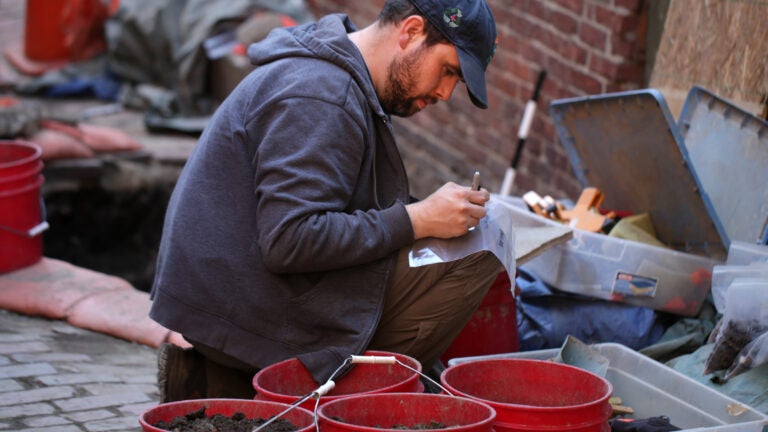
Archeologists are very systematic, and, usually, everything is dug up by hand, said Howey. In this case, it was an old cellar hole filled with trash from the 1950s. It was dangerous to clear out, and workers had to wear thick gloves to remove a lot of metal, like a rod and a tire of an old car.
It was also covered with poison ivy. The team had to wear Tyvek suits and remove it all.
After clearing it out, the team hand-dug a trench four feet deep and uncovered a foundation constructed of river rocks, as described in the documentation.
“For me, it’s confirmation of what we had been reading in a lot of historical records,” said Baumgartner.
Some historical records written in the 19th century were doubtful. Lewis was accused of embellishing history, so people thought his description of the area was an exaggeration.
“And then we find it, and we realize it’s almost as beautiful as he described,” said Baumgartner. “And then that means there’s weight to his overall depiction of these areas. If this area is as beautiful as he described, King Pompey existed.”
The next steps include filing with the Massachusetts Historical Commission. They hope to put up a sign documenting the story at the nearby town hall or an exhibit at the Saugus Iron Works National Historic Site.
But they will need more funding to do so. The small seed grant they received from the New England Humanities Consortium (NEHC) and Northeastern University for the work so far is gone.
Howey hopes to take this model on the road to discover more untold stories.
“A lot more places have hidden histories, hidden, overlooked Black figures,” said Howey.
Baumgartner said it is essential to do this work now because climate change is covering up many of these locations. The homestead of King Pompey would have been underwater if they had found it 10 to 20 years from now.
Rising sea levels and storm surges threaten heritage sites. Many of the foundations and homes landowners built in the past were along rivers and the shore.
“It’s hundreds of years later, and it is washing away the chance we have to find those overlooked stories,” said Howey. “It’s like a final act in a way.”

Stay up to date on all the latest news from Boston.com





To comment, please create a screen name in your profile
To comment, please verify your email address
Conversation
This discussion has ended. Please join elsewhere on Boston.com