
Newsletter Signup
Stay up to date on all the latest news from Boston.com
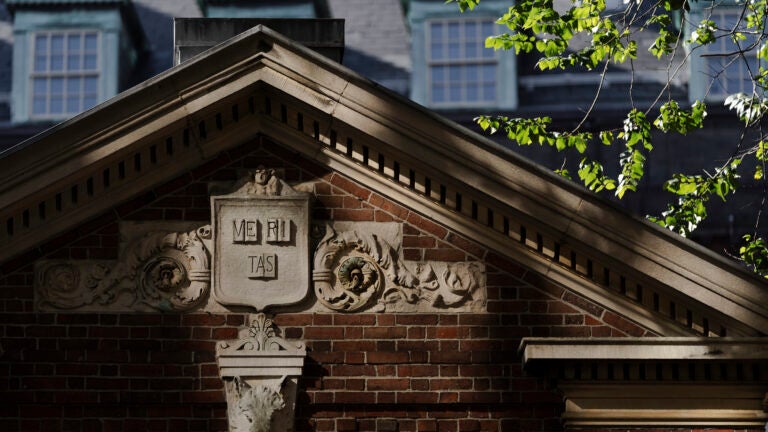
After a chaotic year at Harvard University, a dean drew the ire of many with a recent essay arguing that the free speech of faculty should be limited.
Dean of Social Science Lawrence Bobo made the case in an op-ed that appeared in The Harvard Crimson, the student newspaper, last week.
“Is it outside the bounds of acceptable professional conduct for a faculty member to excoriate University leadership, faculty, staff, or students with the intent to arouse external intervention into University business? And does the broad publication of such views cross a line into sanctionable violations of professional conduct?” Bobo wrote. “Yes it is and yes it does.”
The ideas in Bobo’s op-ed do not reflect the official position of Harvard, a spokesperson told The Boston Globe.
The Oct. 7 Hamas attacks and Israel’s subsequent military campaign in Gaza ignited multiple waves of controversy at Harvard that attracted enormous outside attention over the past eight months. Allegations of antisemitism and Islamophobia have been frequent. Former President Claudine Gay stepped down after disastrous testimony at a congressional hearing and allegations of plagiarism. A Pro-Palestinian encampment set up by student demonstrators on campus lasted 20 days, and other acts of protest have been frequent. Harvard was the subject of multiple federal investigations. The topic of necessitating diversity, equity, and inclusion statements provided more fodder for debate.
Last month, Harvard announced that it would no longer make public statements on issues that don’t immediately affect the “university’s core function.” This is a reason for faculty to use their voices “responsibly,” Bobo wrote.
He advocated for the benefits of internal discussion and wrote that the expression of diverse opinions is crucial in creating a healthy intellectual community. Academic departments, faculty meetings, town halls, and campus publications should be used regularly to facilitate participation in university governance, he wrote.
But there are some faculty members who have large external platforms that they can use for “potential advocacy.” Bobo referenced a few by name: Raj Chetty, Henry Louis Gates Jr., Jill Lepore, and Steven Pinker.
“Would it simply be an ordinary act of free speech for those faculty to repeatedly denounce the University, its students, fellow faculty, or leadership? The truth is that free speech has limits — it’s why you can’t escape sanction for shouting ‘fire’ in a crowded theater,” Bobo wrote.
It is problematic for faculty members to encourage students to violate university policies even after they have received official notification of a potential infraction, Bobo wrote.
“Such behavior should have sanctionable limits as well,” he wrote.
One professor, who was granted anonymity by the Globe, said that it represents an “authoritarian mindset” to suggest that members of an institution should be punished for criticizing that institution.
Ten members of Harvard’s Council on Academic Freedom, including Pinker, published a response in the Crimson Wednesday. Bobo’s op-ed represented an “unprecedented repudiation of the principle of academic freedom,” they wrote, while declaring that they strongly reject his arguments.
Bobo’s op-ed is made all the more problematic by the power he has on campus, they wrote.
“It is downright alarming that such a stunning argument would come from a dean who currently wields power over hundreds of professors — without indicating that he would refrain from implementing his views by punishing the faculty he oversees,” the members of the Council on Academic Freedom wrote.
In the initial op-ed, Bobo wrote about the “appallingly rough manner” in which some affiliated with Harvard have denounced the university’s students and current leadership. This includes “one former University president,” apparently an oblique reference to Lawrence Summers.
Summers criticized the university for its silence in the immediate aftermath of Oct. 7, publicly blamed Harvard’s leaders for not doing enough to combat antisemitism, and said that campus protests could encourage adversaries of the U.S.
Summers responded to Bobo’s op-ed on social media.
Walter Johnson, the “Israel demonizing faculty” mentioned by Summers, is a history professor and former adviser to the Palestine Solidarity Committee at Harvard. In a statement to the Globe, Johnson called Bobo’s essay misguided.
“Look, I also wish I could turn down some of my colleagues,” Johnston told the paper. “I’m sure some of them wish they could turn me down. But expanding the already abused disciplinary apparatus of the university to punish faculty for speaking out about the issues, even if in ways that one group or another might view as counterproductive, seems, at the very least, counterproductive.”
Stay up to date on all the latest news from Boston.com



To comment, please create a screen name in your profile
To comment, please verify your email address
Conversation
This discussion has ended. Please join elsewhere on Boston.com