
Newsletter Signup
Stay up to date on all the latest news from Boston.com
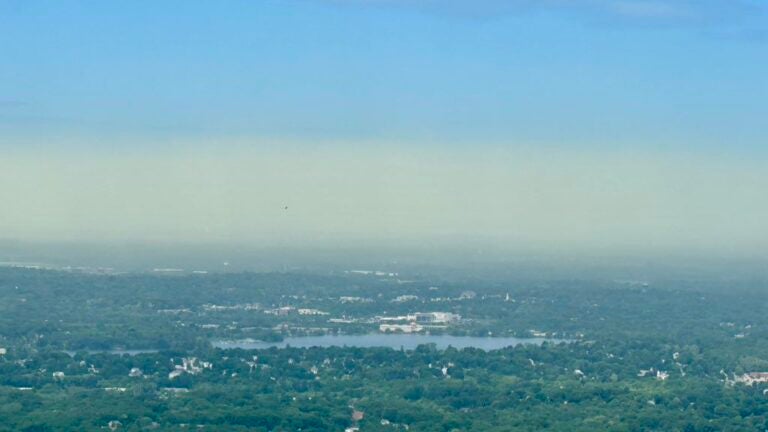
A thick haze of pollen descended upon Boston Monday, turning the sky yellow and complicating the lives of allergy sufferers in the area.
“Got pollen? A thick haze of yellow pollen has engulfed us at the office!” the National Weather Service wrote from their office in Norton in a post on X Monday morning. “Relief from the pollen won’t come for a few days, with rain expected Thursday and Friday.”
The Weather Service noted that the pollen was thick enough to reduce visibility in Taunton, and some residents found their cars and clothing covered in a layer of yellow powder.

Ed Hughes, a photojournalist for NBC 10 Boston, captured pictures of a cloud of pollen hanging over the city.
“[Pollen is] still holding its grip of the Boston area and making the lives of allergy sufferers miserable,” Hughes wrote in a post on X.
The Boston Globe meteorologist Ken Mahan said the sunny weather the past few days and a phenomenon known as a temperature inversion were responsible for the haze.
“[A temperature inversion] happens when the air actually warms up as you go higher in the atmosphere before cooling again,” Mahan told the Globe. “This will make any surface air that heated up during the day and rose get stuck and suspended aloft. Pair that with high pollen count and you have a pollen cloud!”
While pollen concentrations eased up on Tuesday, a significant drop won’t come until Thursday, forecasters predict.
The allergy forecast for Wednesday is expected to be medium-high, in line with what Boston residents experienced Monday.
Pollens from trees and grasses are among the most common allergens in the late spring and early summer, according to Boston Medical Center. The powder helps fertilize plans and is transported by the wind, birds, insects, and other animals.
The presence of the irritating substance didn’t go unnoticed by locals.
“Got allergies? I do. I hate pollen,” one person wrote in the replies of the Weather Service’s post on X.
“I’m feeling that haze,” someone else wrote.
Stay up to date on all the latest news from Boston.com





To comment, please create a screen name in your profile
To comment, please verify your email address
Conversation
This discussion has ended. Please join elsewhere on Boston.com