
Newsletter Signup
Stay up to date on all the latest news from Boston.com
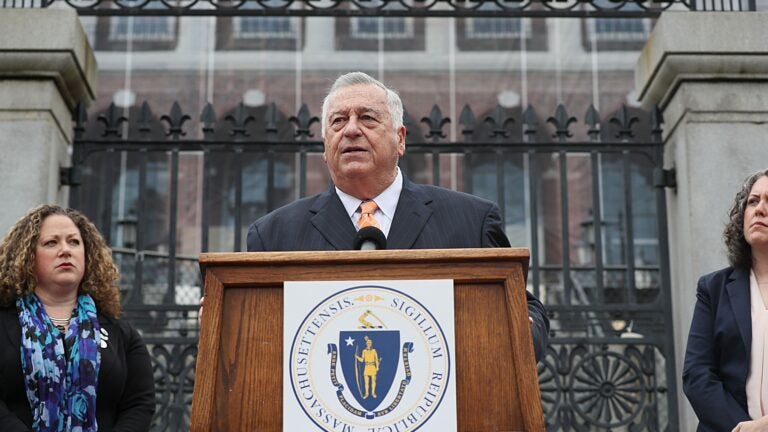
State House Democrats are seeking a vote this week on a $6.2 billion housing bond bill that includes a wide range of initiatives to build more affordable housing and spur sustainable development.
The bill is a rewrite of Governor Maura Healey’s $4 billion Affordable Homes Act she introduced to the House in October. The rewrite, released Monday, cuts Healey’s proposal of a real estate transfer fee on pricey properties but keeps an initiative to allow accessory dwelling units in certain districts. It also expands funding for renovations of the state’s existing public housing.
In a statement, Speaker of the House Ron Mariano called the bill the “largest investment in affordable housing and housing production in the history of Massachusetts.”
The proposal, unveiled Monday, is 123 pages long and includes investments, tax breaks, and zoning law changes.
Mariano told reporters Monday that the bill is the “beginning of a process” to solve the state’s housing crisis, according to The Boston Globe.
The bill sets aside $2 billion for renovation, remodeling, and reconstruction of the more than 40,000 existing public housing units in the state — some $500 million more than what Healey’s bill proposed. Recent reports indicate that the state’s public housing is underfunded and in a state of disrepair.
$150 million of that money will go toward funding public housing projects that incorporate sustainability and decarbonization initiatives.
Another $1 billion is proposed to go to the Massachusetts Water Resources Authority to expand its access to water for housing construction. This funding was not included in Healey’s original bill.
The money would also help improve drinking water quality in cities and towns where water is contaminated with per- and polyfluoroalkyl substances, also known as forever chemicals.
$150 million is designated to help cities and towns convert commercial properties into residential housing, and $200 million would go toward housing for people with special needs including veterans, elders, and survivors of domestic violence.
$60 million is laid out to help add accessibility features to homes where someone has a disability.
The new bill excludes a proposal in Healey’s document that would have allowed cities and towns to institute a transaction fee of 0.5% to 2% on property sales exceeding $1 million. That money would’ve gone to the development of affordable housing and was supported by Boston Mayor Michelle Wu.
“It’s disappointing not to see forward momentum on the transfer fee, which is a broadly popular measure that would generate necessary resources dedicated to creating more housing and more affordability,” Wu said in a statement to Boston.com. “Our regional housing crisis is the biggest threat to the Commonwealth’s economy, and we need every possible solution at hand to make a difference.”
The initiative drew criticism from some real estate developers who said the tax would create an unstable source of revenue.
Healey said in October that her proposal was projected to create over 40,000 new homes and preserve over 27,000 existing residences. The Commonwealth needs to produce 200,000 homes by 2030 in order to keep up with growing demand, Healey wrote in her proposal to the House.
Mariano said that it’s “tough” to tell how many housing units the House’s proposal would spur, according to the Globe, but said in a statement that the rewritten bill is a “concerted effort” by state legislators to ease the housing crisis.
“The cost of buying a home or renting an apartment in Massachusetts is amongst the highest in the United States, a crisis that has made the Commonwealth less competitive with other states, and that has made the American Dream unachievable for many of our young people,” Mariano said in a statement on X. “With this legislation however, the House is making a concerted effort to change that reality by increasing access to affordable and middle-income housing, and by ensuring that the Commonwealth’s infrastructure system is equipped for an increase in housing production.”
Healey said she had yet to read the bill on Monday, the Globe reported, and did not respond to a request for comment from Boston.com about the bill Monday night.
“We offered up a menu of options and ideas and policy initiatives to help spark production,” Healey told reporters, the Globe reported. “That’s what this is about.”
Stay up to date on all the latest news from Boston.com





To comment, please create a screen name in your profile
To comment, please verify your email address
Conversation
This discussion has ended. Please join elsewhere on Boston.com