

Newsletter Signup
Stay up to date on all the latest news from Boston.com
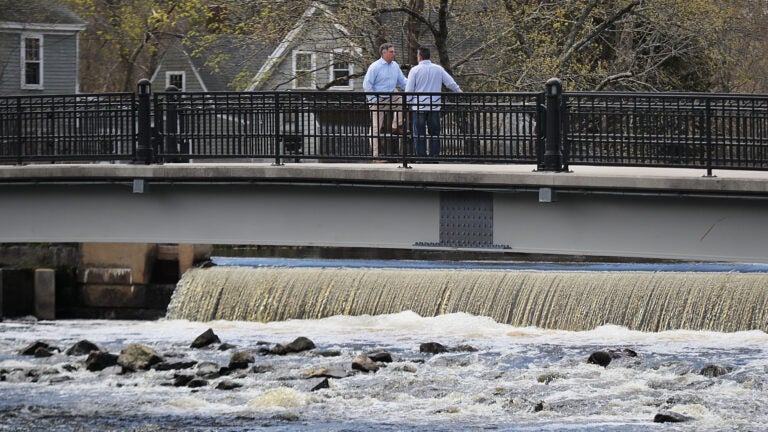
In the battle over a historic Ipswich dam, more than half of the town’s voters are in favor of removing the obsolete, but picturesque, structure that has existed in some form for nearly 400 years.
On Tuesday, about 58% of Ipswich voters said “yes” to a non-binding ballot question gauging public support for removing the Ipswich Mills Dam. The dam’s fate is ultimately in the hands of the town’s Select Board, which meets again on June 3.
Located in the center of town on the Ipswich River, the dam’s earliest iteration was built in 1637. According to Historic Ipswich, the current Ipswich Mills Dam is believed to have been constructed — and reconstructed — between 1880 and 1908. The dam once powered adjacent mills but was decommissioned in the 1930s, per the Ipswich River Watershed Association.
Flash forward to the 21st century, and Ipswich has been weighing dam removal for more than a decade. In a town meeting vote last year, 68% supported a non-binding article in favor of removing the dam. Proponents say doing so will benefit migratory fish, improve water quality, reduce the threat of flooding, slash the financial burden of upkeep, and eliminate public safety risks associated with potential dam failure.
On the flip side, Save Ipswich Mills Dam argues that “the supposed benefits of dam removal are either uncertain or exaggerated — in some cases significantly.” The “save our dam” camp touts the ecological, recreational, and aesthetic benefits of the millpond above the dam, which is used for swimming, paddling, and fishing.
“If they really want to bring the fish back and don’t want to divide the town further, they should look at a nature-like fishway,” homeowner Eric Krathwohl told The Boston Globe. “It would show real leadership by the Select Board to acknowledge that this vote showed there are a lot of people who want to do something other than just take the dam down.”
Yet the Ipswich River Watershed Association, which has taken point on the project, notes that a nature-like fishway and an improved fish ladder were both ruled out early in the feasibility process due to site constraints, maintenance obligations, and prohibitive costs.
“Dam removal remains the most affordable and most effective path to fisheries restoration,” according to the organization. The dam removal project has also received state and federal funding.

“People are passionate on both sides, and I think it all stems from a love of the river,” IRWA Restoration Program Director Neil Shea told NBC10 Boston. “All the studies show that not only is dam removal feasible, but it’s one of the most important things we can do on behalf of the river and the ecology.”
In an open letter posted to Facebook following Tuesday’s vote, the Ipswich River Watershed Association acknowledged the sizable faction of Ipswich voters who opposed dam removal.
“This campaign highlighted for us at IRWA that there is still a need for ongoing community outreach about this project,” the organization wrote. “We hear the concerns and we are committed to continuing conversations about the best way for the community to move this project forward.”

Stay up to date on all the latest news from Boston.com




To comment, please create a screen name in your profile
To comment, please verify your email address
Conversation
This discussion has ended. Please join elsewhere on Boston.com