
Newsletter Signup
Stay up to date on all the latest news from Boston.com
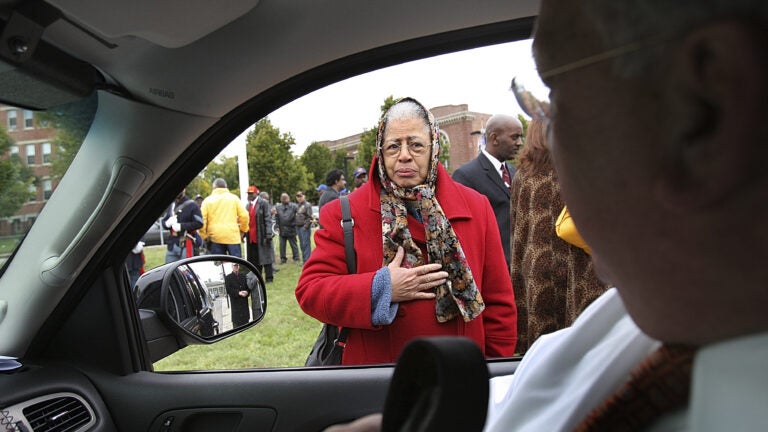
The city of Boston is remembering Sarah-Ann Shaw, a pioneering Black journalist from Roxbury, whose contributions to advocacy journalism were unmatched in her time.
Shaw passed away in her home at the age of 90 on Thursday. Her death has been recognized and mourned by the many organizations she shaped in her time as a journalist.
Shaw was the first woman of color to be an on-air reporter at WBZ. She began her broadcast career in 1969, and stayed there for another 31 years.
Her most popular show was called “Say, Brother.” Shaw had said she did not want to report on people of color in the typical fashion; rather, she wanted to show the triumphant and change-making stories that lift communities up.
Shaw was inducted into the Massachusetts Broadcasters Hall of Fame, received an honorary degree from Simmons College, and a lifetime achievement award from the National Association of Black Journalists, among many more honors.
When she retired from the field in 2000, she continued to work for local news outlets, service-based organizations, and her neighborhood library, according to her biography from Roxbury Community College.
Through the Civil Rights movement, the busing crisis in Boston schools, and the Vietnam War, Shaw reported on it all with the lens of a member of the Black community. She aimed to cover stories that other news outlets neglected or marginalized.
Peter Brown, a former WBZ news director, told the Boston Globe, “Every newsroom needs a Sarah-Ann. An honest voice who will not cower or hold back.”
Her connections in communities of color helped her reshape the narrative on urban neighborhoods.
One of the major issues Shaw reported on was busing in the 1970s, when Boston schools were under court mandate to desegregate by busing Black students to predominantly white schools. There were protests throughout the city, and many Black children were yelled at, taunted, and threatened on their way to learn.
Her daughter Klare Shaw, in an interview with the Boston Globe, recalls her mother’s bravery.
“She had a lot of empathy for those kids. She was always concerned about the lives of those around her,” said Klare.
The impact Shaw had on journalism and advocacy can not be overstated.
Klare Shaw made one request to the Boston Globe on Thursday.
“In her memory, she would want people to do something actively to make the community and country a better place because that’s what she was all about.”
Tributes continue to pour in for the late broadcaster.
The Bay State Banner, a Black-owned paper that reports on communities of color, stated on X yesterday that Shaw was “a visionary leader and pioneering journalist” who has “joined the ancestors.”
Congresswoman Ayanna Presley also announced her sadness at Shaw’s passing.
“A trailblazing & proud Black journalist, she dedicated her life to telling our stories, shattering ceilings & inspiring others to do the same,” Presley wrote.
Stay up to date on all the latest news from Boston.com




To comment, please create a screen name in your profile
To comment, please verify your email address
Conversation
This discussion has ended. Please join elsewhere on Boston.com