
Newsletter Signup
Stay up to date on all the latest news from Boston.com
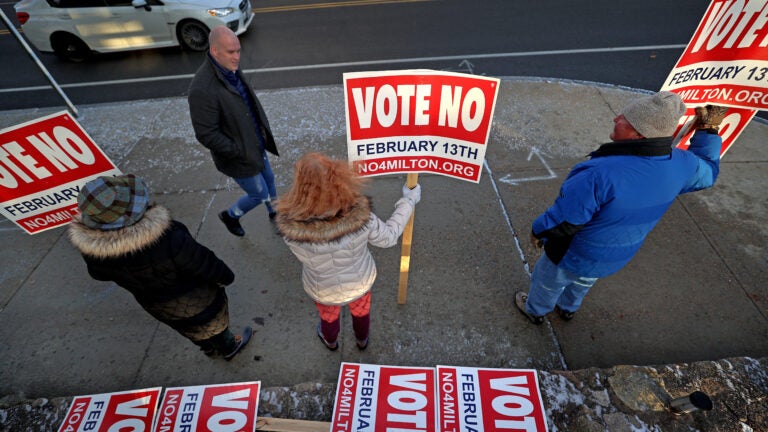
Milton residents voted Wednesday to reject changes to the town’s zoning bylaws that would enable more multifamily development. The zoning changes are part of a state-mandated plan known as the MBTA Communities Act, and Milton’s rejection appears poised to initiate a legal battle with state officials.
The vote, which was rescheduled from Tuesday to Wednesday due to the forecasted snowstorm, sharply divided residents. In total, 9,466 ballots were cast Wednesday, and 54% were “no” votes opposing the changes, according to unofficial results released by the Milton Town Clerk’s office.
“I’m disappointed that a select group of Milton residents chose to be part of the problem rather than the solution to our housing affordability crisis. My office has made it clear that compliance with the law is mandatory,” Attorney General Andrea Campbell said in a statement Wednesday night. “When a municipality elects to evade its responsibility to comply with the law, we will meet our responsibility to enforce the law.”
Campbell said last month that the state would take legal action to enforce the law if Milton was still not compliant following the vote.
The MBTA Communities Act, passed in 2021, requires “MBTA communities” to allow multifamily housing like apartments and condos to be built near public transit stations without special permits. Much of eastern Massachusetts consists of “MBTA communities,” as defined by the state. There are 177 in total. Communities with access to rapid transit stops must meet stricter requirements. Milton is the only community with a “rapid transit” designation that is not in compliance with the law.
Failure to comply with the law prevents communities from receiving grants from programs like MassWorks, HousingWorks, and Housing Choice. Campbell issued an advisory last March specifying that communities “cannot avoid their obligations under the Law by foregoing this funding.”
Milton stands to lose as much as $1.7 million in state funding, and noncompliance could jeopardize Milton’s ability to receive other grants not explicitly outlined by the state, Town Administrator Nicholas Milano wrote in a letter to the town’s select board last month.
Before the election, Gov. Maura Healey urged voters to approve the zoning changes. Compliance with the law is an essential part of the state’s efforts to address the housing crisis, she told reporters.
“There is no greater priority than making housing more affordable,” Healey said in a statement to The Boston Globe. “Today’s vote is disappointing, but we will continue to make the case for every community to embrace the opportunity that comes with creating more housing and making it more affordable for all.”
Those behind the “no” campaign in Milton have said that they want to work with state officials to comply with the law, but need something that is more tailored to their community.
In December, Milton Town Meeting spent six hours debating the topic before eventually approving the changes, the Globe reported. However, opponents garnered enough signatures to challenge the measure and force this week’s vote.
Stay up to date on all the latest news from Boston.com





To comment, please create a screen name in your profile
To comment, please verify your email address
Conversation
This discussion has ended. Please join elsewhere on Boston.com