
Newsletter Signup
Stay up to date on all the latest news from Boston.com
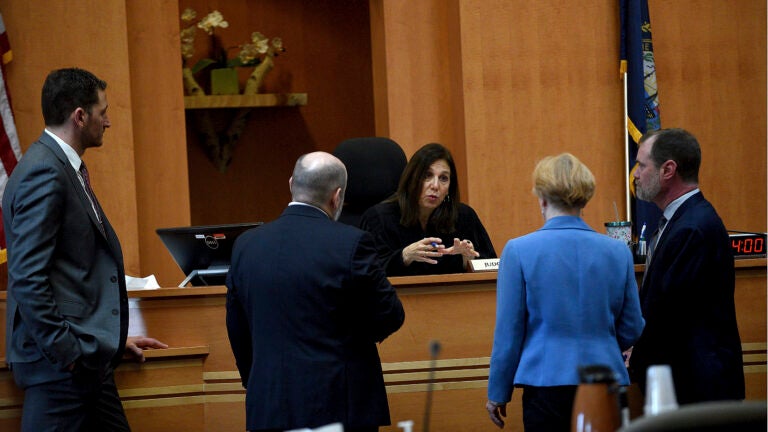
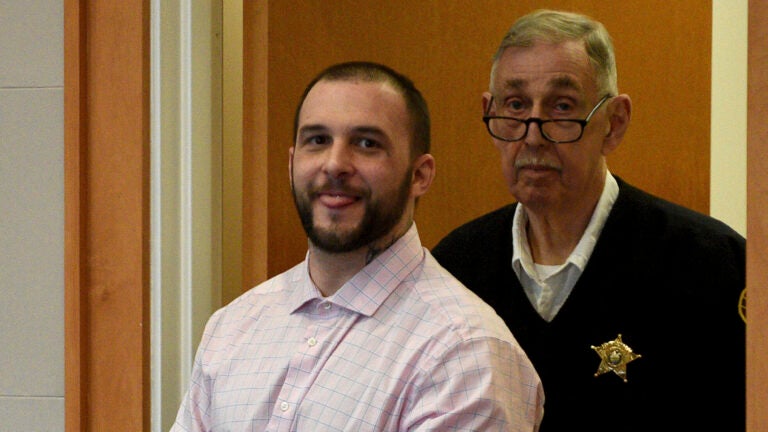
The trial of Adam Montgomery, accused of beating his young daughter Harmony to death, began in earnest Thursday with opening statements from the prosecution and the defense.
Jury selection took place earlier this week, and those jurors spent Wednesday afternoon on a bus tour of locations important to the trial.
Also on Wednesday, Montgomery said his attorneys would acknowledge guilt on two of the lesser charges against him: falsifying physical evidence and abusing a corpse. He still faces charges of second-degree murder, assault, and witness tampering. He did not appear in court Thursday.
Harmony Montgomery was last seen alive in 2019, but her disappearance did not become public knowledge until she was reported missing in late 2021. Her body has never been found.
Prosecutor Christopher Knowles addressed the jury first Thursday morning. He began by repeating the question asked by people across the country over the past two years:
“Where is Harmony Montgomery?”
As a nation was looking for the little girl, one person was not. That was her father, who Knowles said “disposed of her like yesterday’s trash.”
For about the next 45 minutes, Knowles laid out much of what was included in an affidavit compiled by police after their investigation. He painted a picture of a terrified little girl and of an uncaring father who beat his young daughter to death because she could not control her bladder and bowel movements, and who meticulously hid her corpse for months afterward.
Much of Knowles’s statements also centered on Kayla Montgomery, Adam’s estranged wife who lied to investigators multiple times before apparently coming clean and telling them of how she witnessed Harmony’s death and helped Adam evade authorities.
Adam’s only concern, aside from keeping Harmony’s body hidden, was preventing Kayla from telling the truth, Knowles said. As the only loose end in the murder, she was beat and terrorized by Adam, he said. She was conditioned through force to lie to police about what she saw, he argued.
Images of Kayla with black eyes, allegedly caused by Adam, were shown to jurors. At one point, Knowles dramatically opened a brown paper package that contained a tote bag similar to one that Adam allegedly stuffed Harmony’s corpse into in the months after her death.
Harmony was a “fun-loving” little girl, Knowles said. She spent the first few years of her life living and thriving with foster parents. She “defied all odds,” as doctors initially suggested she would likely not live past seven months. She had learning disabilities, but was potty trained at a very young age.
Adam got custody of his daughter when she was 4 years old in February 2019. Afterward, Harmony grew scared, skinny, and constantly exhausted, Knowles said. She was beaten for her bathroom accidents, he said. About a week-and-a-half before she died, the family was evicted from their home and forced to live in a car. This major life change reportedly made the accidents worse.
Harmony was sometimes so bruised that Adam threw a blanket over her to hide the signs of his abuse while in public, Knowles said.
Knowles seemingly anticipated that lawyers for Adam would attempt to reframe the case to put blame on Kayla.
“This case, it’s not about Kayla, it’s not about what Kayla did, it’s not about what Kayla didn’t do. Remember that as we go along, it’s about what the defendant did. Kayla was the defendant’s loose end,” he said.
Knowles took the jury through Kayla’s story of what happened on Dec. 7, 2019, the day Harmony was allegedly killed.
According to that account, Harmony had an accident early that morning, was beaten for it, and the family drove to a methadone clinic. Adam and Kayla took turns going inside to receive their treatment, and while this happened, Harmony had another accident in the backseat.
“Really Harmony? Again?” Adam said at one point, according to the account. He allegedly hit her with a closed fist repeatedly while driving and later said, “I think I really hurt her this time. I think I did something.”
Knowles described how Harmony made moaning and gurgling sounds while Adam showed no concern, ordering food from a Burger King and going back to the parking lot where they had been parking the car to do drugs. Kayla was too scared to intervene, he said.
“He ate his food and he did his drugs and Harmony slowly died,” Knowles said.
Later that morning the family’s car broke down in a busy intersection. According to Kayla’s account to police, that’s when Adam tried waking Harmony up and realized she was dead. So he allegedly grabbed a duffel bag from the trunk and stuffed her body inside.
“That’s when harmony became the dead girl in the duffel bag,” Knowles said.
Kayla’s account, repeated by Knowles, is that they spent the next few months taking Harmony’s body with them wherever they went, to multiple apartments and a shelter. Her body was kept inside various bags, sometimes left out in the cold to slow decomposition or in a cooler in a hallway. At a shelter, Adam hid the body in a ceiling vent, only for other residents to complain of a foul odor. After compressing Harmony’s body into the tote bag, Adam regularly brought it to work with him at a local pizza shop and stored it in a freezer there.
Throughout Knowles’s remarks, he repeatedly stressed Adam’s alleged belief that if Harmony’s body was not found, he would not be charged with her murder. He grew paranoid, accusing Kayla of working with police, beating her, and threatening her life, Knowles said. She initially lied to investigators and before a grand jury because she was scared, and she went to prison for those lies.
“The reason you only have one witness to the defendant’s crime is because he killed the other, the witness he couldn’t control, the witness he couldn’t manipulate,” Knowles said.
Public Defender James Brooks began his opening statements admitting that the images painted by Knowles were heartbreaking, but that Adam did not kill his daughter. Brooks repeatedly shifted the blame to Kayla, telling jurors that she was the last person to see Harmony alive and is the only one who knows how she died.
“She didn’t come clean with Adam, she didn’t come clean with the police, and she will not come clean with you,” Brooks told the jury. “The only reason she has to lie and point the finger at Adam is because the truth points the finger at her.”
Brooks did not pretend that Adam is innocent. He said that Adam and Kayla covered up Harmony’s death, moved her body from place to place to keep it hidden, and compressed it into the bag.
After the family was evicted from their home in Manchester right before Thanksgiving 2019, Kayla was left cooped up in the car with her two young sons and with Harmony, who Brooks stressed was “not her own.” Harmony was born to Adam and Crystal Sorey, who lost custody of Harmony in 2018 while dealing with substance use issues.
According to Brooks, Harmony’s dead body was not discovered in the middle of the day when the car broke down, but rather much earlier that morning when Adam returned from unspecified “business.” Brooks characterized this as Adam trying to make money to support the family.
Kayla claimed not to know what happened to Harmony and made Adam feel responsible for her death, Brooks said. She convinced him to help cover up her death so that they would not lose custody of their two children, he said.
Neither knew what to do, so they put the decision off and placed Harmony’s body in a duffel bag. It was already in this bag when the car broke down, Brooks said. They moved it around from place to place, telling others that Harmony was with Sorey in Massachusetts.
Brooks spent time detailing how Kayla lied to investigators. Her story was that Adam had dropped her off for work at a Dunkin’ on the morning of Dec. 7, 2019, and told her that he was going to bring Harmony to Sorey. Investigators later obtained employment records that revealed how Kayla had been fired from that Dunkin’ before the date of Harmony’s death.
Brooks also produced a piece of evidence: a note he said was written by Kayla in her jail cell that contained her demands for a bargain with authorities. She wrote of a willingness to “betray” Adam, not of a desire to be safe from him. She also wrote about how she longed to be alone with him one more time, not of how she feared him, Brooks said.
Kayla wanted immunity from all charges, she wanted to have her kids back and to not lose custody of them.
“Kayla was willing to sing for her supper. Not for truth, not for Harmony, but for Kayla. Kayla was all about protecting herself to wiggle out of accountability for her own conduct,” Brooks said.
After Kayla testified before a grand jury in the spring of 2022, she was caught in the lie about working at Dunkin’. So, according to Brooks’s account, she made up the details of how Harmony was allegedly beaten to death by Adam.
Brooks poked holes in Kayla’s account, noting how she did not mention anything about the other two kids crying in the car while Adam allegedly beat Harmony. She also did not describe hiding Harmony from the Burger King cashier, Brooks said, and that it is hard to believe that no one noticed Adam manhandling a dead child in the middle of a busy intersection after the car broke down. This all supports the notion that Harmony was already dead and in the bag at that time, he added.
“After you have heard all the evidence in this case and apply the facts to the law, you will know that Adam did not murder his daughter or engage in witness tampering with Kayla. Kayla was an equal participant in the coverup,” Brooks said. “She alone knows how Harmony died, and she won’t tell.”
Stay up to date on all the latest news from Boston.com





To comment, please create a screen name in your profile
To comment, please verify your email address
Conversation
This discussion has ended. Please join elsewhere on Boston.com