
Newsletter Signup
Stay up to date on all the latest news from Boston.com
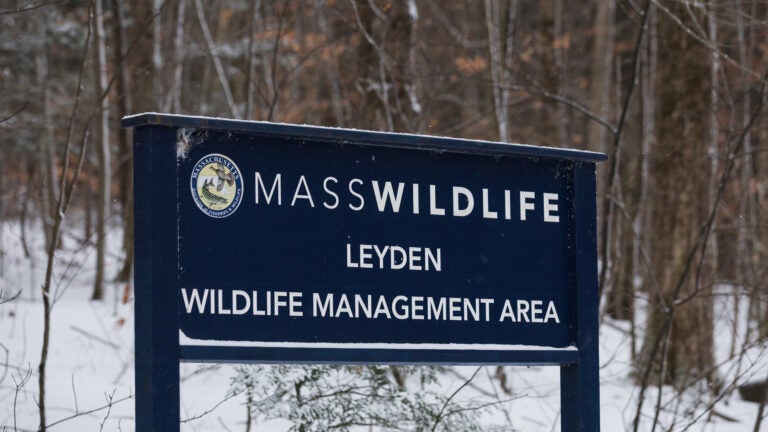
The small airplane that crashed in a wooded area of western Massachusetts on Jan. 14, killing the three people onboard, had ice on its wings, according to a preliminary report released by the National Transportation Safety Board.
The twin-engine Beechcraft Baron 55 took off from Barnes Airport in Westfield at approximately 11:06 a.m. on Jan. 14 and crashed near Leyden, Massachusetts, a short time later in the Leyden Wildlife Management Area. Fredrika Ballard, 53, of Southwick, Mass., who owned the Fly Lugu Flight School, flight instructor William Hampton, 68, of Indian Orchard, Mass., and student pilot Chad Davidson, 29, of Woodstock, Conn. were killed in the crash.
“Airframe icing was observed on the leading edge of both wings and horizontal stabilizers, both engine nacelles, and the leading edge of the rudder,” investigators wrote in their preliminary report on the crash. “Ice was also observed on the front face of one of the left engine’s propeller blades, and on the nav antenna located on the vertical stabilizer.”
According to the report, the temperature recorded at the Orange Municipal Airport, about 12 miles from the crash site, was about 35 degrees just before noon, visibility was at about 10 miles, with wind gusts around 26 mph.
At the time of the crash, there were two meteorological warnings — one for moderate icing conditions and the other for occasional severe turbulence between 3,000 and 16,000 feet due to strong low-level winds, according to the report.
Several witnesses heard or saw the plane’s maneuvers before it went down, according to investigators.
“One eyewitness was walking his dog when he first heard the airplane’s engines and looked up,” the report reads. “He said the airplane was ‘trying to gain altitude,’ ‘then stopped’ before the nose of the airplane dropped and ‘made a straight line’ toward the ground. The airplane ‘corkscrewed’ straight down and went out of view. The witness described that the airplane did not appear to make any movements that would indicate it was going to exit the spinning descent.”
According to that witness, the conditions at the time were very windy and cold, with good visibility.
The investigation into the crash is ongoing.

Stay up to date on all the latest news from Boston.com



To comment, please create a screen name in your profile
To comment, please verify your email address
Conversation
This discussion has ended. Please join elsewhere on Boston.com