

Newsletter Signup
Stay up to date on all the latest news from Boston.com
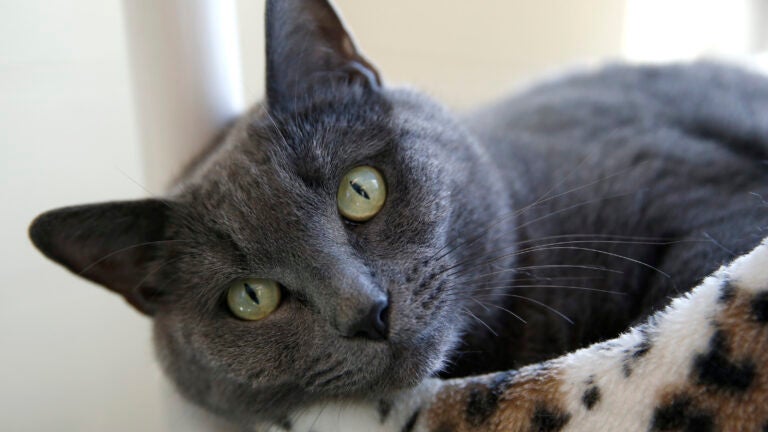
The practice of declawing cats could get banned in the state of Massachusetts, which would join only two other states in the country that have enacted statewide bans in recent years.
For some vets and many animal welfare groups, a ban is absolutely necessary to protect cats from a cruel procedure.
“It’s an amputation of the last part of the digits,” said Erin Doyle, the Animal Rescue League of Boston’s senior vice president of animal welfare and veterinary services. “If you were to look at your fingers, the joint right below our fingernails — it’s essentially amputating the digit right there.”
Doyle said the procedure — called an onychectomy and described as a “surgical amputation” of a cat’s toe bones — has traditionally been used as a way to curb nuisance or aggressive scratching.
But due to more debates around the harm the practice potentially poses to cats and whether it’s always necessary, less vets are doing it, and less owners are asking for it.
Still, if an owner wanted to get their cat’s nails removed, there would be no law in any state — except for two — that would stop them.
The ban would prohibit the declawing of cats across the commonwealth — in most cases.
The bill defines a “therapeutic purpose” as a surgery that would be required because the animal’s health is impacted, and that would be allowed under the law. Examples of this, Doyle said, include paw abnormalities, infections, or tumors.
When a surgery is medically necessary, a veterinarian only needs to remove the problem toe bone, Doyle said. But when an owner has declawed a cat in the past for tearing up a couch or scratching a person, they’ve typically opted to have all claws removed.
Vets who declaw cats under the allowed circumstances would have to keep a record of the procedure for “4 years after the last contact with the animal.”
Doyle said it is not currently required that vets keep track of declawing procedures, which is why it’s difficult to say how many cats still receive it.
The bill also states that vets who do the procedure when it’s not medically necessary will face fines up to $2,500 and may be subject to disciplinary action.
Declawing is a controversial practice that critics say causes more harm than good.
Doyle, who graduated from Tufts University’s veterinary medicine program, said the vet’s office she started at did declawing procedures. The worst part for cats, in her experience, was the recovery.
“Every time they’re putting weight on their front feet, it puts pressure on that surgical site,” she said. “The cats were given pain medication, and steps were taken to make the recovery as smooth as possible, but just the nature of the surgery and the way that they can’t avoid constantly putting pressure on the surgical sites, cats definitely had a hard time.”
Critics also point to the long-term effects declawing can have on a cat, with some studies showing that it can cause back pain in cats and unwanted behaviors, like aggressive biting.
But other studies and vets argue that it can be challenging to gauge pain and determine behavioral changes in cats.
Both Doyle at ARL and Susan O’Bell, who leads MSPCA Angell Animal Medical Center’s general medicine program, said they don’t do the procedure and talk pet owners through alternative options like rubber tips to cover the nails, regular trimmings, and behavioral health solutions.
“A lot of times they give you a warning,” O’Bell said. “Educating clients about learning some cat body language — it amazes me how often cats and dogs show quite a bit of restraint.”
Only in New York and Maryland is cat declawing banned statewide, though other states besides Massachusetts are working to join them.
A bill was introduced in neighboring Rhode Island, and similar bills are being considered in Pennsylvania and Michigan. Many cities in California, Pennsylvania, and Washington have banned the procedure.
“Potentially more symbolically, it shows the evolution of how we treat non-human animals and how they’ve become really family members,” O’Bell said of the spate of recent legislation.
Yet passage hasn’t been as smooth sailing for some states. Similar bans have stalled in state legislatures and have been reintroduced.
In Virginia, a bill to outlaw cat declawing failed after testimony from the state’s Veterinary Medical Association came out against it. Other vets or state boards that represent vets have similarly voiced opinions against bans in other states, their reason being that vets should get to decide what’s best for their patients. Some have also argued that it will lead to owners who are older or immunocompromised giving up their cats in order to not get scratched.
Among vets, banning declawing can actually be a contentious issue, said Jamie Falzone, Massachusetts Veterinary Medical Association’s executive director.
“It’s the idea that the vet has the knowledge to make the best medical call for their patient,” Falzone said.
The MVMA supports and opposes legislation each session, but did not take action on this bill, having vets in their organization that both support the ban and oppose it. The national American Veterinary Medical Association similarly has said it respects its veterinarians to use their judgment, though the organization “discourages” declawing.
This isn’t the bill’s first introduction to the Legislature by Sen. Mark Montigny, having made it to a Senate committee before the session ended in years’ past. But this time around, it passed the Senate unanimously. It heads to the House next before it requires a signature from Gov. Maura Healey.

Stay up to date on all the latest news from Boston.com




To comment, please create a screen name in your profile
To comment, please verify your email address
Conversation
This discussion has ended. Please join elsewhere on Boston.com