
Newsletter Signup
Stay up to date on all the latest news from Boston.com
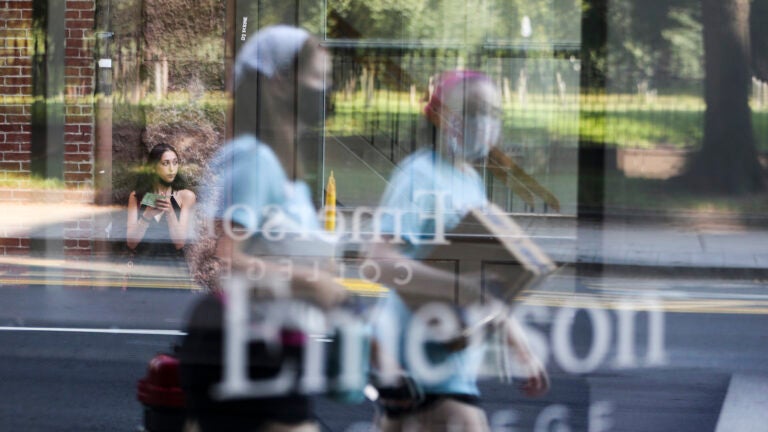
This week, 83% of the resident assistants at Emerson College voted to officially form a union. The 67-0 vote capped a monthslong process where the students followed in the footsteps of others in Boston and around the region who are increasingly interested in unionizing.
RAs at public institutions have been able to unionize for decades — it happened at UMass Amherst in 2002 — but a 2016 ruling from the National Labor Relations Board opened the door for students at private colleges to follow suit. Momentum has been building at colleges and universities since then, and RAs at Tufts University grabbed headlines last August when they decided to initiate a 24-hour strike as students returned to campus.
The actions of Tufts students were particularly inspiring to those at Emerson. Private talks of unionizing had been ongoing among RAs at the liberal arts college for months, but it was not until they were connected with the Office and Professional Employees International Union (OPEIU) Local 153 in November that concrete progress was made.
“It’s such an exciting win,” OPEIU Organizer Sam Heyne said of the recent vote. “It just shows that this movement is building and getting stronger with every worker who demands better.
“With high inflation and the student debt crisis out of control, student workers are organizing because they don’t really have another choice to put themselves through college,” she said. “This is just the latest, definitely not the last in a wave of student unionization efforts.”
Since 2022, OPEIU Local 153 has worked with students at Wesleyan University, Barnard College, Fordham University, the University of Pennsylvania, Tufts, Rensselaer Polytechnic Institute, and Swarthmore College to form unions. Since then, student unions at Wesleyan, Tufts, RPI and Barnard have all successfully ratified contracts with school officials, according to Heyne.
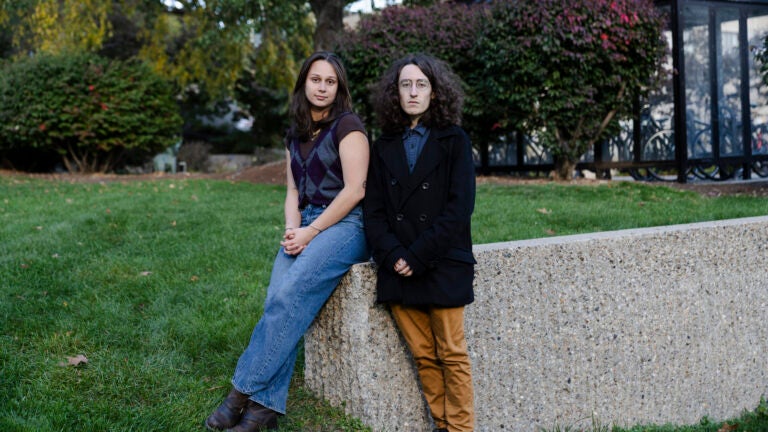
“Last year was a particularly rough year to be an RA,” Drake Skelly, a senior at Emerson who is a member of the union’s organizing committee, told Boston.com in emailed comments.
RAs are assigned certain nights where they are “on call” and must do rounds through dorm buildings at certain times to check for problems. Skelly pointed to recent changes that mandated the RAs walk another set of rounds at 2 a.m. on weekends as a sticking point. RAs asked Emerson officials to explain why the additional mandates were necessary, but college leaders denied the request for an explanation, he said.
Skelly and Sophie Severs, another senior on the organizing committee, also mentioned concerns about RAs being fired unnecessarily. They mentioned reporting from The Boston Globe last year that an RA was fired after contacting college police to help an inebriated friend after a night of drinking. That RA was reportedly given a week to move out and spiraled into depression afterwards.
Severs said the RA was fired for using the college’s help-seeking policy, and RAs are “at-will” employees who can be fired at any time for any reason.
“RAs are always on the clock. The position consists of much more than throwing fun social events and being on duty every other week — it is more often helping students navigate through mental health crises, acting as witnesses to acts of sexual, physical and racial violence, facilitating emergency medical transports, etc.,” Severs told Boston.com in emailed comments. “Our work keeps the on-campus community safe, but we are asking: What regulations are set in place to make us feel safe?”
Heyne echoed this sentiment, saying that RAs often serve as “first responders” who must deal with a number of challenges on campus.
The Emerson RAs say they unionized to fight for increased pay, better working conditions, and better policies regarding training and seeking help in emergencies. At Emerson and many other colleges, RAs already benefit by getting free room and board. Severs pushed back at the idea of equating unionization with being ungrateful for the role and its benefits.
“As RAs we recognize the immense privilege that comes with the role,” Severs said. “This sense of gratitude, however, does not negate the issues that the position has, or our determination to work toward addressing them.”
Housing costs are just one piece of paying for school, but tuition and the daily costs of everyday necessities stack up, Heyne said. She has worked with students from eight different institutions on unionization efforts. Many RAs are forced to pick up second and third jobs to stay afloat, she said.
Severs, Skelly, and their peers worked on outreach throughout the fall, trying to determine if there was enough support behind their efforts. The response from the Emerson community, including from members of the faculty union, was overwhelmingly positive, both said.
By mid-November, the Emerson RAs officially announced their intention to unionize. They marched to the Office of Housing and Residence Life and the office of President Jay M. Bernhardt to deliver a letter requesting voluntary recognition. At the time, 73 RAs, or 80% of the workforce, had signed onto supporting the union.
Emerson officials declined to voluntarily recognize the union, forcing the students to organize a vote through the NLRB. Heyne, Severs, and Skelly all said they were unsurprised by this. It is rare for a college or university to voluntarily recognize a union, Heyne said. The exception occurred at Wesleyan, but all the other institutions she has worked with on RA unionization efforts have declined to voluntarily recognize the groups.
Severs and Skelly said they viewed the move as a “union-busting” strategy to force the RAs to lose momentum.
“If anything, being met with these setbacks made us even more motivated to work toward organizing. We became stronger as a unit through our development of ways to deal with the challenges that Emerson was throwing at us,” Severs said.
An Emerson spokesperson declined to comment when contacted by the Globe in November.
The union held its vote Wednesday, to overwhelming success.
“I am ecstatic about the results of the vote. There was a lot of great outreach by the organizing committee over the past few months, so we knew that we had the support to win the vote, but we never predicted it would be as successful as it was,” Skelly said.
Emerson officials congratulated the union on its vote and defended the importance of going through the NLRB in a statement afterwards.
“Emerson College recognizes the important role of Resident Assistants on our campus and congratulates them on the results of the National Labor Relations Board (NLRB) election supporting the formation of a union, which is tentative until confirmed by the NLRB. This approach ensured that all affected workers expressed their views on union representation by casting a secret ballot using the NLRB’s election process. The College will not challenge the outcome of the vote and is committed to negotiating in good faith with the new union representing our Resident Assistants,” officials said in a statement.
Now, the two sides will head to the bargaining table. In Heyne’s experience, it normally takes between 6 and 9 months for a contract to be agreed upon. But students in this position face a unique challenge: turnover. Students graduate, or transfer, or find themselves drowning in school work, and the momentum of a successful NLRB vote can be lost in the negotiating process.
“A lot of these workers are organizing knowing that they’re not going to actually see the benefits of their organizing because they’ll be gone by that time,” Heyne said.
Heyne is working with the students to help them start the process as soon as possible, but much of the timeline will depend on Emerson officials. But the Emerson RAs have been particularly well-organized and motivated, so she is hopeful that that translates to a quick negotiation.
“It’s showing the power of the labor movement, that it’s spreading to college campuses all over. And these student workers are going to go off into their jobs post-college and understand the power of collective action and bargaining for better worker rights. That’s really exciting to see” she said. “They’re the future.”
Stay up to date on all the latest news from Boston.com




To comment, please create a screen name in your profile
To comment, please verify your email address
Conversation
This discussion has ended. Please join elsewhere on Boston.com