
Newsletter Signup
Stay up to date on all the latest news from Boston.com
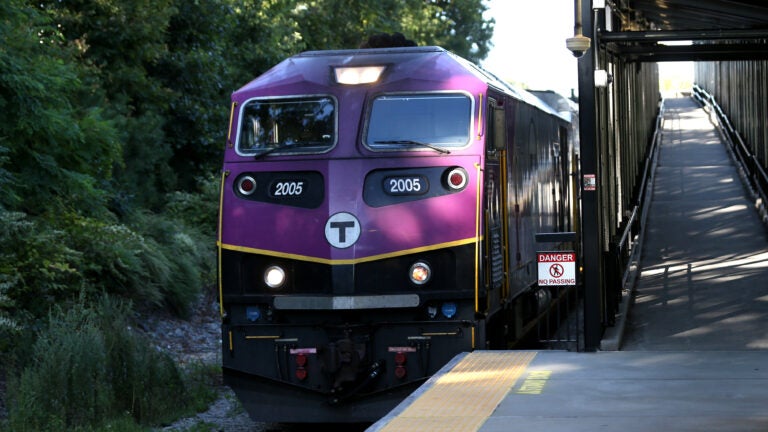
Mayor Michelle Wu took to the statehouse Wednesday to advocate for level fares on the commuter rail, specifically for southwest Boston.
A proposed new law would keep all stations in the city of Boston at the cheapest fare level. Right now, most of the stations across the city are in Zone 1A, which means a one-way ticket costs the same as the T. A one-way ticket is $2.40, and a monthly pass is $90.
Six stations in Boston – all in West Roxbury, Roslindale, and Hyde Park neighborhoods – are in further, and more expensive, zones. Stations Hyde Park, Roslindale Village, Bellevue, Highland, and West Roxbury are all in Zone 1, and Readville is in Zone 2.
Wu was joined by state Rep. Rob Consalvo, state Sen. Mike Rush of Boston, state Rep. Bill MacGregor, and Mary Skelton Roberts, Wu’s pick to represent the city on the MBTA Board of Directors. They testified to the Joint Committee on Transportation in support of the fare equity bills.
Wu said alleviating this financial barrier is “low-hanging fruit.” In Zone 1, a one-way ticket is $6.50 and a monthly pass is $214. In Zone 2, a one-way ticket is $7 and a monthly pass is $232.
Increased commuter rail ridership would decrease traffic, revitalize Boston’s downtown, and address environmental issues, she said.
“It is the transportation that makes it possible to fit everything together,” she said. “When we are in a situation like we are now where the MBTA is experiencing such stresses, we hope that we can take the parts that are working really well and make them more accessible to everyone.”
The mayor said the three stops in Hyde Park — Fairmount, Readville, and Hyde Park — are within two miles of each other but classified as three different fare zones.
Lawmakers also brought up the Fairmount Line, which runs from Readville to South Station, entirely in Boston. They discussed its electrification, its potential as its own subway line, and its discrepancies across the station’s zones.
Every station on this line is in the 1A Zone except Readville, a Hyde Park station in Zone 2. Consalvo, who represents Hyde Park, said the increased fares have been affecting his neighborhood for years.
“It makes absolutely no sense as to why people in Hyde Park has to pay all of these different fares when they’re trying to decide how they get to work,” he said.
Committee member and state Rep. Brandy Fluker Oakley, who is from Mattapan, shared her own struggles as a teenager to get to jobs in Framingham and on the South Shore. She said the commuter rail prices “ate (her) paycheck.”
Fluker Oakley asked Skelton Roberts about the MBTA’s response. Fluker Oakley said that with the MBTA cash-strapped, they may be opposed. Rush said the transit agency’s hesitation in the past was due to the “ripple effect” the change could have on their tiered fare system.
“We’re asking for the MBTA to do some analysis that really helps us understand what the revenue implications might be,” Skelton Roberts said.
Wu said the new law could attract more riders, mitigating any change in the MBTA’s revenue. When the Orange Line was closed and the commuter rail was free, ridership spiked, she said.
“We know the demand is there,” she said. “I was riding and talking to folks who said they would love to keep doing that if only it were affordable.”

Stay up to date on all the latest news from Boston.com




To comment, please create a screen name in your profile
To comment, please verify your email address
Conversation
This discussion has ended. Please join elsewhere on Boston.com