
Newsletter Signup
Stay up to date on all the latest news from Boston.com
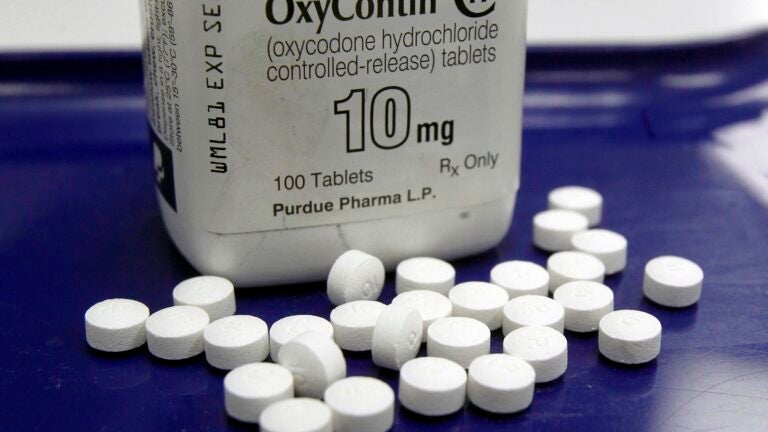
A scathing new lawsuit by the City of Boston alleges that several pharmacy benefit managers collaborated with opioid manufacturers and intentionally ignored evidence of opioid misuse in pursuit of profit, essentially helping create and fuel the opioid epidemic in the nation.
The lawsuit, filed in Suffolk County Superior Court and brought by the city, the Boston Public Health Commission, and the Boston Housing Authority, specifically names Express Scripts and OptumRx — the two largest pharmacy benefit managers, or PBMs, in the nation — along with related entities.
“This case arises from the worst man-made epidemic in modern medical history – an epidemic of addiction, overdose, and death caused by an oversupply of opioids flooding communities from powerful corporations who sought to profit at the expense of the public,” the complaint reads.
Along with PBMs, which manage prescription drug benefits on behalf of insurance companies, the suit alleges manufacturers, distributors, and pharmacies all had a role in furthering the crisis. But while the other groups, most commonly pharmaceutical supply companies, have long been targets of legal action, the new suit is among the few that specifically names PBMs.
“The Defendants’ central role in the opioid crisis was made possible by their unique combination of knowledge and power that provided them with an extraordinary ability to control the opioid supply throughout the United States,” the suit says. “Defendants along with their affiliated companies have more control over and insight into the flow of opioids into communities across the country than any other entities in the pharmaceutical distribution and payment chain.”
The city alleges that the named companies collaborated with opioid manufacturers –– specifically Purdue Pharma — and partnered with them in “deceptive” and “dangerous” marketing of powerful drugs.
According to the original filing, PBMs have access to analyze opioid utilization data and intentionally ignored evidence of misuse and addiction to “boost profits and manufacturers’ sales.” The city also claims the companies violated Massachusetts and federal law by failing to implement proper controls against diversion when sending opioids through the mail.
Together, OptumRx and Express Script serve an estimated 165 million Americans, according to their websites.
“Through that data, Defendants could effectively track the opioid epidemic, pill-by-pill, as it unfolded over decades and chronicle the opioid epidemic in real time,” the lawsuit states.
In an email statement, OptumRx denied allegations against them.
“Optum did not cause the opioid crisis or make it worse, and we will defend ourselves in this litigation,” the statement said. “Optum takes the opioid epidemic seriously and has taken a comprehensive approach to fight this issue, including the Opioid Risk Management Program, available to all Optum Rx clients, to address opioid abuse and promote patient health.”
The number of drug overdose deaths in the nation has been increasing steadily since 2013, coinciding with the rise in use of synthetic opioids, according to the Centers for Disease Control and Prevention (CDC). In 2021, 107,622 people died of a drug overdose in the U.S. — a 15% increase from 2020 — the lawsuit said.
In Massachusetts, overdoses reached a record high in 2022. Boston residents are prescribed oxycodone at three times the national average per person, the original complaint said.
According to the National Institutes of Health, nearly 80% of heroin users reported using prescription opioids prior to heroin.
The original filing also says that the rate of infants born addicted to opioids has steadily increased in the city, adding that drug abuse can lead to the loss of jobs, homes, and families for users.
“PBMs have adopted business practices designed to increase the utilization of opioids and maximize their own profits,” the lawsuit said. “As a result, far greater quantities of prescription opioids entered the market than Defendants knew could be necessary for legitimate, safe, or appropriate medical uses.”
Stay up to date on all the latest news from Boston.com



To comment, please create a screen name in your profile
To comment, please verify your email address
Conversation
This discussion has ended. Please join elsewhere on Boston.com