
Newsletter Signup
Stay up to date on all the latest news from Boston.com
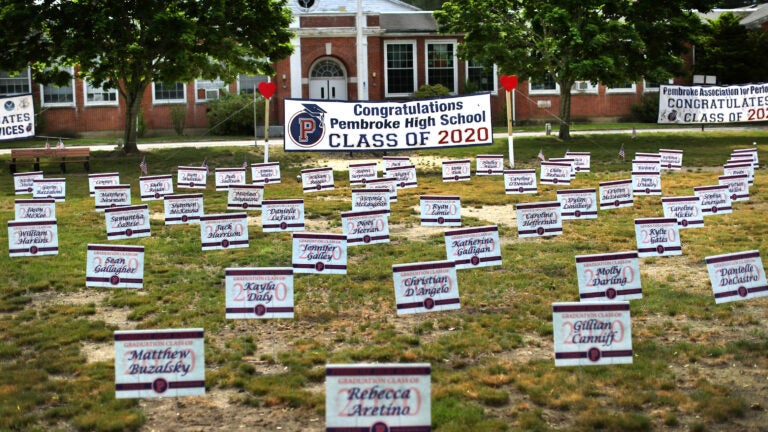
A controversial proposal to prohibit teachers and school staff from displaying political symbols or discussing their political views nearly packed a school board meeting in Pembroke Tuesday night, and ended in unanimous disapproval of the policy — even from the board member who originally brought it forward.
Pembroke School Committee chair Susan Bollinger introduced the draft of the policy in July and said it was spurred by multiple complaints she received from students and parents about feeling pressured by hot-button issues being advocated in classrooms and the displays of certain flags and pins by teachers.
The policy draft, obtained by The Boston Globe, would have prohibited teachers and staff from talking about their political views during the work day. They would also not be allowed to advocate for “political, partisan, or social policy” issues using pamphlets, stickers, buttons, flags, or “other similar materials.”
During the nearly four-hour meeting, Bollinger said multiple flags — including the Pride flag, Black Lives Matter flag, Don’t Tread on Me flag, and Blue Lives Matter flag — were inappropriate in a classroom and needed to be addressed. Those in opposition expressed their concerns over what this would do to support for LGBTQ+ issues.
“The reason this became what seems to be more about LGBTQ+ causes is because the examples I was given from parents and students with teachers was mostly around teacher advocacy for LGBTQ+ that infringed on the student rights,” Bollinger said.
She then elaborated on that point that those with certain religious views, specifically calling out Jewish people, are “in direct conflict” with Pride flags. This argument from Bollinger resulted in an outburst from the crowd, with some waving Pride flags in the audience.
Those opposed to the drafted policy — the majority of the audience — argued two points: that it would make the suburban school system less safe for the LGBTQ+ community and could present costly legal troubles for the school system.
Student Silas Bell, who has lived in the community for four years now, said it’s one of the most accepting places he’s lived. That would no longer be the case if such a policy passed, he said.
He also pointed out that part of the policy would only allow for displays of social issues from teachers and staff if it’s “a part of their own personal identity or culture.”
“This is forcing teachers to out themselves,” Bell argued. “No one should be forced to out themselves.”
School Committee member Allison Glennon said teachers display the flag to make LGBTQ+ students feel safe, a group at an increased risk of suicide because of discrimination and bullying.
Such a policy would not be in the system’s best financial interest, she also said.
“Our pockets are empty — we can’t afford lawsuits,” Glennon said. “Who is going to want to move their family here? What will it look like when someone Google’s Pembroke, Massachusetts?”
Prior to the meeting the American Civil Liberties Union of Massachusetts sent the School Committee a letter that said the drafted policy was unlawful and that members needed “to categorically and immediately reject this censorious policy to avoid the need for litigation.”
Bollinger told the audience this policy would not prohibit students from advocacy, which the draft mentions as long as the advocacy is not “inciteful, vulgar, or disruptive.”
But the draft also states that students in after-school clubs and activities who “would like to exhibit advocacy” for said club would need to first request it in writing to the school administration and get approval from the School Committee.
“A file of the written request with the name of the student requesting will be kept by administration,” the draft said.
Bollinger said she received many emails ahead of the meeting — some in favor, some with ideas to re-draft the policy, and some “hateful” correspondence that called her homophobic.
“I would never advocate for something that would make them feel less valued,” Bollinger said. “My goal is to have a safe and supportive classroom for all students. This policy change suggestion is coming from a place of love for our students, not hate.”
The unanimous vote to kill the draft came from the four School Committee members who were present Tuesday evening.

Stay up to date on all the latest news from Boston.com





To comment, please create a screen name in your profile
To comment, please verify your email address
Conversation
This discussion has ended. Please join elsewhere on Boston.com