
Newsletter Signup
Stay up to date on all the latest news from Boston.com
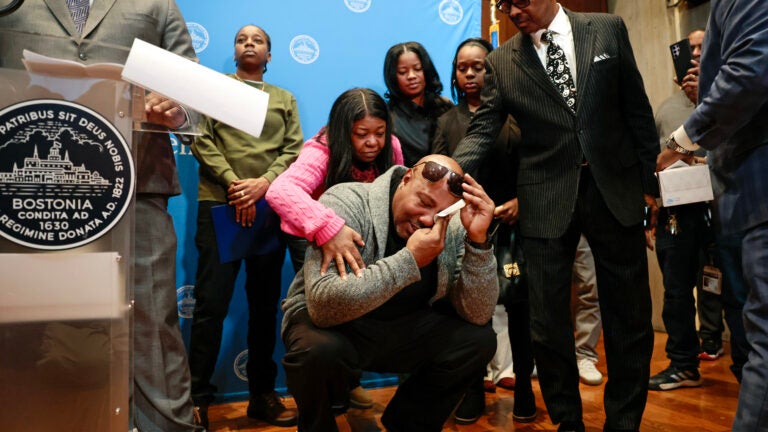
Boston Mayor Michelle Wu issued formal apologies Wednesday to two men who were wrongly tied to the shooting death of Carol Stuart in 1989. Wu’s apologies to Alan Swanson, Willie Bennett, and their families came on behalf of the entire administration and the Boston Police Department.
In the aftermath of Stuart’s death at the hands of her husband, Charles, Boston officials launched a “systemic campaign” that targeted Black men based on a “false, racist claim,” Wu said.
Charles Stuart, who had told at least one person that he wanted his wife dead, shot her while she was pregnant after a birthing class on Oct. 23, 1989. Charles told police that a Black man in a track suit was responsible for the crime.
Both Swanson and Bennett were arrested for alleged links to the murder. Neither Swanson nor Bennett were formally charged with crimes related to the case, but were publicly labeled as suspects by the media and suffered as a result.
Charles Stuart’s brother, Matthew, eventually told family members and authorities that Charles masterminded the incident. Charles Stuart died after jumping off the Tobin Bridge on Jan. 4, 1990.
Bennett’s family and Swanson were in attendance for a ceremony marking the apologies Wednesday morning at City Hall.
“Your presence here is a gift, in the truest sense of the word, in that it has been given to the city, but not earned,” Wu told them. “We are here today to acknowledge the tremendous pain that the city of Boston inflicted on Black residents throughout our neighborhoods 34 years ago. The mayor’s office, city officials, and the Boston Police Department took actions that directly harmed these families and continued to impact the larger community, reopening a wound that has gone untended for decades.”
There was no evidence that a Black man killed Carol Stuart, Wu said, and those in power at the time ignored the truth.
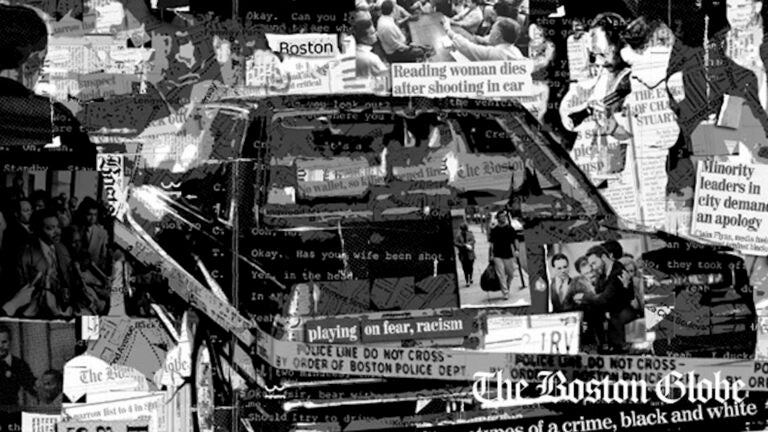
Wu’s formal apologies come in the wake of a multimedia Boston Globe investigation into the case and a related HBO documentary.
“Black fathers, Black uncles, Black brothers, and Black sons, if you were a parent, or a child, or a partner, or a friend, if you knew and loved a Black man in Boston, you feared for his life,” Wu said.
Boston Police Commissioner Michael Cox, a Black man who was once himself beaten unconscious by fellow BPD officers when they mistook him for a murder suspect, also offered his apologies.
“The city is a different place today than it was in 1989 — the police department has changed and evolved in many ways, and we have a ways to go. Hopefully this apology signals our commitment to learn from our past and continue to strengthen relationships for the community we serve,” Cox said.
Bennett’s nephew, Joseph, spoke about being wrongfully convicted of a murder he did not commit. He spent 22 years in prison before being released on April 30, 2019. This was the same date that his grandmother had passed away in 1995, he said.
“I believe she sent me home to make sure this story got changed,” Joseph Bennett said of his grandmother.
“I lost my grandmother to this case,” he said. “A lot of you all don’t know, this stuff didn’t stop with my uncle Willie.”
Black Men and Boys Commission Chair Tito Jackson, a former city councilor, fought back tears as he reflected on Joseph Bennett’s time behind bars. Jackson said that he had been stopped, frisked, and “dehumanized” himself. Wednesday will count as one of the most important days of his life, he added.
Swanson opted not to speak publicly at the press conference. Willie Bennett, when asked if he wanted to participate, simply said that he wanted to be compensated, according to family members that spoke. Jackson and Judge Leslie Harris, who represented Swanson in court after his arrest, also called for reparations to be paid to the families.
“William Bennett said it best: ‘Pay me,'” Harris said. “We owe them an opportunity to move forward, we owe them an opportunity for the next generation not to have to suffer what they suffered, not to have to be ashamed of the Bennett name.”
As the investigation into the shootings unfurled, media outlets in Boston played into racial stereotypes and perpetuated Charles Stuart’s bogus claims, as explored in a retrospective from Globe reporter Adrian Walker.
Jackson highlighted the media’s role in the incident.
“You have a responsibility to do what is right, to tell the right story … some of you all were here. You must step forward and apologize, atone, and speak the truth,” Jackson said, addressing members of the media in the room.
Wu acknowledged that the apologies are largely a symbolic act, but said that they should be the beginning of a larger process.
“What was done to you was unjust, unfair, racist, and wrong. And this apology is long overdue,” Wu said. “There is no world in which a piece of paper undoes the harm of this part of our history. But it is my hope, and the hope of our entire administration, that you might accept this letter of apology as a small step toward accountability for the damage done by our city.”
Stay up to date on all the latest news from Boston.com



To comment, please create a screen name in your profile
To comment, please verify your email address
Conversation
This discussion has ended. Please join elsewhere on Boston.com