
Newsletter Signup
Stay up to date on all the latest news from Boston.com
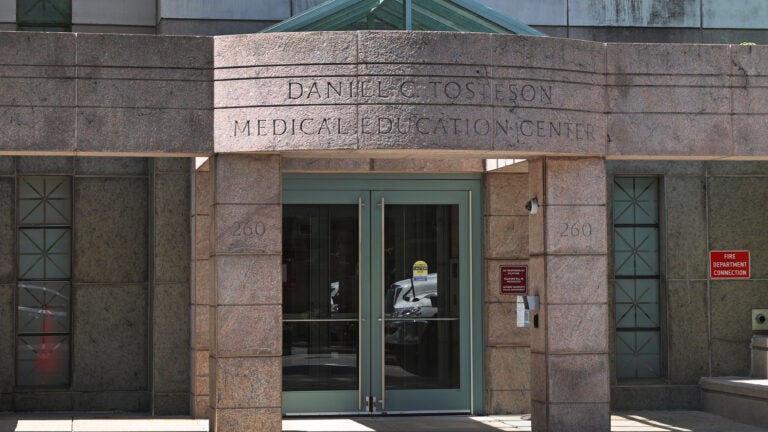
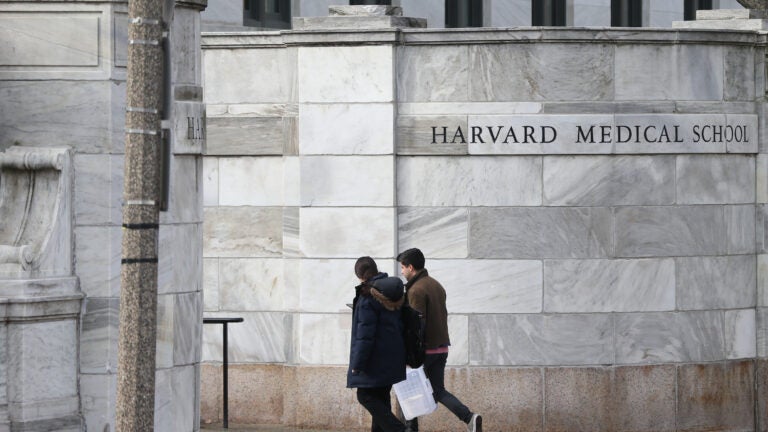
Nearly six months after a morgue manager was indicted for allegedly stealing human remains from Harvard Medical School and selling them, the university has released a highly anticipated review of its Anatomical Gift Program.
Produced by a panel of outside experts, the report does not point fingers or delve into the allegations behind the criminal charges, instead focusing on procedural improvements and weaknesses in documentation and oversight.
It’s an approach that some involved are now questioning. “They took great pains not to look at the facts of what happened here,” said Kathryn Barnett, a Morgan & Morgan attorney representing several families who are now suing Harvard after their loved ones’ remains were allegedly mishandled.
The resulting report, she said, raises more questions than it answers.
“There’s nothing in this report that says what happened and why it happened in a place like Harvard for years,” Barnett said. “There’s no answers here.”
For its part, Harvard said the review’s purpose was always intended to be separate from the criminal investigation into former morgue manager Cedric Lodge, who was indicted alongside several others in June and accused of stealing human heads, brains, skin, and bones from the morgue between 2018 through 2022.
The goal was to provide constructive feedback and recommendations to keep the donor program running in adherence with “the highest standards and best practices,” Harvard Provost Alan M. Garber and HMS Dean Dr. George Q. Daley said in a joint message Thursday.
“We take our responsibility for oversight of the Anatomical Gift Program seriously,” the pair wrote. “We owe it to our community, and especially to our anatomical donors and their loved ones, to ensure that Harvard is worthy of those who, through selfless generosity, have chosen and will in the future choose to advance medical education and research.”
Lodge’s alleged criminal acts, they said, “are morally reprehensible and inconsistent with the standards that Harvard University, Harvard Medical School, our anatomical donors, and their loved ones expect and deserve.”
But according to Barnett, Harvard appears to be pinning the blame squarely on Lodge without acknowledging that the university hired him and had a duty to oversee him.
The donors’ families “put their trust in Harvard, and so there’s a deep betrayal of trust,” she said. “And then to see Harvard again and again try to duck responsibility and paint itself as a victim, it’s just been adding an insult to an injury.”

Thursday’s report offered several recommendations to improve employee training and vetting, donation and specimen tracking, and oversight of the Anatomical Gift Program. For example, the expert panel found that Harvard did not have a policy regarding the care and use of human specimens meant for education and research, also noting that the program’s procedures manual hadn’t been updated in nearly a decade.
The panel included Dr. Sally Aiken, retired chief medical examiner of Spokane County, Washington, and a member of the Federal Forensic Sciences Standards Board; Robert McKeon, director of the Body Donor Program at the Emory University School of Medicine; and Brandi Schmitt, executive director of anatomical services for the University of California.
Notably, the trio found that Harvard did not have any institutional requirement or process to label and track donor specimens retained for long-term use. Some faculty had taken it upon themselves to use their own method of tracking and labeling these collections, the experts said.
The panel’s recommendations range from adding security cameras in the morgue and laboratory areas to overhauling the system for tracking donors and specimens in real time. The experts also suggested rigorous background checks and screening for employees, as well as an operational committee and governing board to oversee the Anatomical Gift Program and ensure its regulatory compliance.
According to The Boston Globe, Harvard has already implemented or started on some of the recommendations, including security cameras and a barcode system to track bodies.
“The things that this panel is asking for are basic, minimum standards that anybody would expect,” Barnett said, adding: “There’s no rocket science here in terms of what ought to be done.”
Barnett said she’s thankful Harvard released the report and hopes that the university will follow through on the experts’ recommendations, even as she acknowledged that several crucial details remain unknown in the case.
“There are a lot of questions in here about what was done and what wasn’t done, and this report doesn’t give those answers, which is why we think it’s so important to push forward with our lawsuit, because that may be the only way to get real answers about what happened,” Barnett said.
She said the donors’ families continue to struggle with that uncertainty months after Lodge and several others were charged with trafficking in stolen human remains. Some family members continue to have nightmares, according to Barnett; others have spent hours looking at pictures of items recovered during the criminal investigation, squinting to see if they can recognize their loved ones’ remains.

“When you lose a loved one, you go through all the stages of grief, and it’s painful and it’s hard. It’s part of life, and you get to a place where you can focus on the happy memories,” she said. “And so to have something like this happen that strips away all of that is profoundly disturbing. Every time now when families think back on their wife, or their father, or their child, they immediately imagine the horrific, grotesque things that were done with their remains.”
By taking legal action, the families hope to underscore Harvard’s responsibility to donors and their loved ones. Harvard has filed a motion to dismiss Morgan & Morgan’s class action complaint, arguing that under the state’s anatomical gift law, organizations and employees aren’t liable if they operated in “good faith.”
Meanwhile, Lodge and his co-defendants continue to await trial. As the civil and criminal cases makes their way through court, Barnett said she doesn’t want the donors’ stories to be lost or overlooked.
“Instead of being remembered for this generous donation, a lot of the press that’s out there is all about the grotesquerie — ‘cadaver’ this, and ‘body part’ that,” she said. “And these were people who lived and walked and breathed and were loved.”

Stay up to date on all the latest news from Boston.com



To comment, please create a screen name in your profile
To comment, please verify your email address
Conversation
This discussion has ended. Please join elsewhere on Boston.com