
Newsletter Signup
Stay up to date on all the latest news from Boston.com
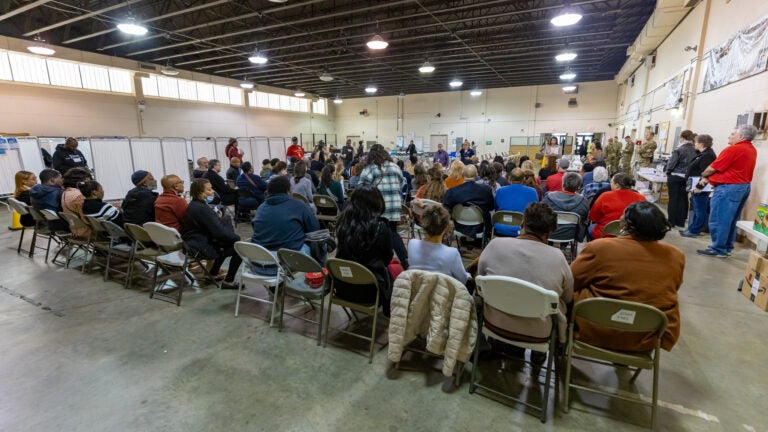
As Massachusetts struggles to provide resources and shelter to all that need it, Gov. Maura Healey said Monday that a recent work authorization clinic for migrants will help ease the burden on the state’s overflowing emergency shelter system.
This clinic, which was open the week of Nov. 13, helped more than 1,000 people get their work authorization documents processed, Healey said Monday on GBH’s “Boston Public Radio” program. The Healey administration had said the clinic would help reduce the processing time for these authorizations from months to a matter of weeks.
It is a key part of Healey’s strategy to free up space in the shelter system by connecting newly-arrived migrants with job opportunities and the means of acquiring those jobs legally. The clinic is set to run again this week in Middlesex County.
“That’s really important, because so many of the people who come here, they all want to work,” Healey said on GBH. “We’ve got so many jobs that we need to fill.”
The shelter system has been strained for months, prompting Healey to declare a state of emergency this summer and impose a cap of 7,500 families. It exceeded that threshold last month, but has since dipped back down below it. There were 7,480 families in the shelter system as of Friday, according to state data. More than half of them are staying in hotels and motels.
The migrant families that are being helped have all entered the country lawfully, Healey stressed. She has called on federal officials for months to provide more funding to Massachusetts and to help expedite the work authorization process for newly arrived migrants.
A team from the Department of Homeland Security was dispatched to assess the situation in October, and the work clinics are the result of a partnership between the Healey administration and DHS. The clinics consist of multiple stations staffed by federal, state, and nonprofit workers.
The state’s so-called “right-to-shelter” law guarantees temporary housing for homeless families and pregnant women. But many who apply for emergency shelter are still denied or otherwise discouraged from pursuing the application process, as detailed in a recent piece from The Boston Globe. When asked about that piece during her interview on GBH, Healey stressed the value of the “right-to-shelter” law but said that the real issue continues to be a lack of housing.
“Even though I increased the amount that people will receive in a voucher for rental housing or for more permanent placement through something called our HomeBASE program, at the end of the day, we don’t have enough housing units out there,” Healey said. “Part of the reason I proposed a $4 billion dollar housing bond bill is because we’ve got to spark production.”
This includes rehabbing public housing while producing more affordable housing and market-rate housing, she added.
But every day, usually somewhere between 20 and 40 new families enroll in the emergency shelter system. Aside from the work clinics and job training programs being organized by the state, officials are also setting up overflow shelter sites to help those that are being waitlisted.
Local agencies are being awarded grant money to create shelter beds, in partnership with the United Way of Massachusetts Bay. Catholic Charities Boston was the first organization to be awarded a grant. It opened a site in Boston last week that can accommodate up to 27 families, or about 81 people. Another overflow shelter site was created at the state transportation building in Boston.
Healey said last week that officials are seeing a decrease in the number of people entering the shelter system. She attributed this to the colder weather and peoples’ hesitancy to leave warmer states during this time of the year.
Healey has requested about $250 million in additional state money for the shelter system, but lawmakers could not reach a deal on a supplemental budget bill before formal sessions ended for the year. Senators and representatives continued to meet during informal sessions Monday, but did not reach a deal as of Monday afternoon, State House News Service reported.
Healey said Monday that she hopes a deal is reached soon.
“We’ve got to have that supp. budget done, I’m anxious to sign something, and I hope it comes soon,” she said on GBH. “People need it, our residents need it, our communities need it, our businesses need it.”
Stay up to date on all the latest news from Boston.com





To comment, please create a screen name in your profile
To comment, please verify your email address
Conversation
This discussion has ended. Please join elsewhere on Boston.com