
Newsletter Signup
Stay up to date on all the latest news from Boston.com
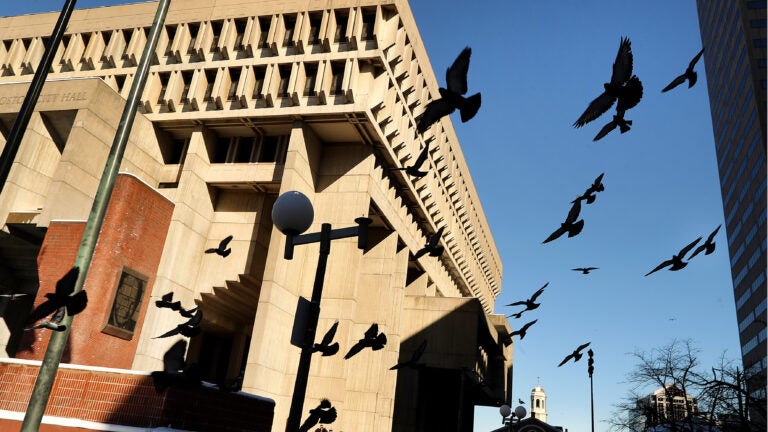
The Boston City Council narrowly approved a series of divisive grants Wednesday that will fund the Boston Regional Intelligence Center. Better known as BRIC, the center is a police data gathering and analysis operation that houses, among other things, Boston’s database of suspected gang members.
After more than an hour of debate, where tempers occasionally flared, $3.4 million in grants were approved by a 7-5 margin. Councilors Frank Baker, Liz Breadon, Gabriela Coletta, Sharon Durkan, Michael Flaherty, Ed Flynn, and Erin Murphy all voted in favor. Councilors Ricardo Arroyo, Kendra Lara, Ruthzee Louijeune, Julia Mejia, and Brian Worrell all voted against the grants. Councilor Tania Fernandes Anderson was absent.
The votes broke along racial lines, with white councilors voting in favor and councilors of color voting against.
The funding was the subject of a heated hearing last week, where Boston police officials were called to answer pointed questions about BRIC and how they would increase transparency.
Last year, a panel of judges said that the gang database relied on an “erratic point system built on unsubstantiated inferences.” The database and BRIC itself have frequently come under fire for potentially violating civil liberties and racially profiling residents.
The funding has been debated for years, dating back to Mayor Michelle Wu’s time on the City Council. She voted against the grants then, but supported them recently. Wu sent a letter to the City Council Wednesday morning urging them to support the funding and outlining her reasons for changing course.
The four grants, amounting to $850,000 each, will help police hire eight new analysts to work at BRIC. Four will monitor active events, two will coordinate with other law enforcement officials, and two will focus on BPD’s initiative to share information with the public, according to Wu’s letter.
Councilor Flaherty, chair of the Committee on Public Safety and Criminal Justice, also recommended that the City Council approve the grants after last week’s hearing. During an exchange Wednesday, Flaherty spoke to the history of the center and stressed that the work done at BRIC helps solve a variety of crimes, in addition to identifying gang members.
“For those that weren’t here in previous years, we’ve had multiple hearings on the BRIC. And if anyone in here can testify to it, it’s me. Today’s BRIC is not the BRIC of two years ago, not the BRIC of five years ago, not the BRIC of 10 years ago. Give them an opportunity to earn the trust and respect that we’re willing to offer them,” Flaherty said, growing visibly agitated.
Despite ultimately voting yes, Coletta said she had various concerns about BRIC. Data sharing between BPD, Boston Public Schools, and U.S. Immigration and Customs Enforcement that occurred during the Trump administration was “abhorrent,” she said, agreeing that the old system of adding residents to the gang database was faulty. She called for an external audit of individual records kept at BRIC and biannual hearings to get information on transparency and oversight within the center.
Coletta cited demographic data of those that work at BRIC, which showed between 16% and 17% identifying as Black or hispanic.
“This clearly needs to change. Lived experience matters, especially when you’re making decisions about subjective behaviors that meet the criteria of ‘reasonable suspicion,’” she said.
Lara forcefully opposed the funding, saying that she worked with young people who were unfairly targeted by gang classifications based on a flawed system.
“I got to see firsthand the damage that a BRIC classification does to a young person that is trying to turn their life around,” she said. “We are calling ourselves progressive, including the mayor, in name only. This is a regressive step.”
Lara singled out Wu, saying that the mayor left promises of abolishing the gang database unfulfilled and that she would not be voting for Wu again.
Mejia was one of several members who took issue with how fast the funding was being put up for a vote. She called for further hearings in front of the Committee on Government Accountability, Transparency & Accessibility, rather than the Committee on Public Safety and Criminal Justice. Mejia also said that the issue is dividing the city, and the City Council, along racial lines.
“It is interesting that we are now, yet again, falling on a vote that will again uplift the deep racial divide that exists here in the city of Boston, that exists here in City Council,” she said.
Baker advocated for the funding. BRIC’s work extends beyond Boston, he said, adding that he has family members in police departments of neighboring communities who have told him how much they rely on BRIC.
“BRIC is intelligence. We want intelligent police,” he said.
Arroyo said that police officials have not provided enough “measurables” regarding the impact of BRIC’s work. Arroyo said he has been in touch with immigration attorneys. They said that, even though their clients have been removed from databases, the Department of Homeland Security is still submitting former gang database classification as evidence in immigration court. He called for more solid commitments that this information would not be handed over to federal agents.
Louijeune said that she asked for more information from police officials about BRIC after the hearing, but only got answers 90 minutes before Wednesday’s meeting. These answers were incomplete, she said, and she urged her fellow councilors to vote against the grants so that mechanisms to hold BRIC accountable could be better formulated.
“We here on this body routinely approve grants to the Boston Police Department. Routinely, and unanimously,” she said. “To support the work of community safety. That this grant has all of these questions begs us to pause… Without more review there is no effective mechanism to hold the BRIC accountable for misconduct and mistakes.”
Stay up to date on all the latest news from Boston.com




To comment, please create a screen name in your profile
To comment, please verify your email address
Conversation
This discussion has ended. Please join elsewhere on Boston.com