
Newsletter Signup
Stay up to date on all the latest news from Boston.com
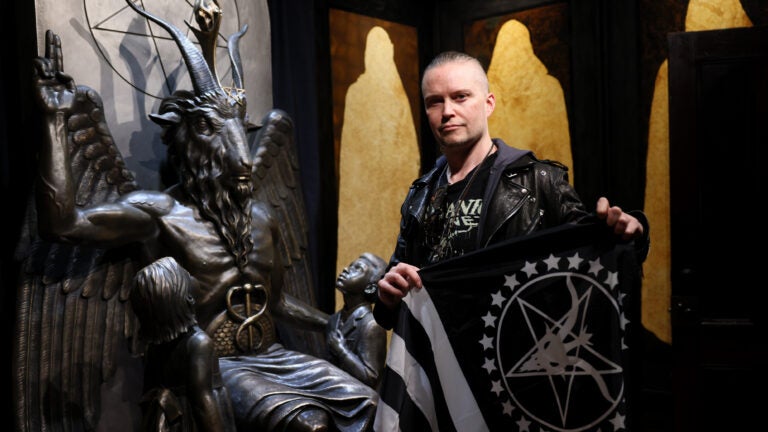
Earlier this week, a judge ruled against the Salem-based Satanic Temple in a lawsuit the organization filed against the City of Boston regarding how the City Council selects local clergy members to start their meetings with invocations.
On Wednesday, the Satanists filed an appeal of numerous rulings made in the case.
The Satanic Temple first sued the city in early 2021, claiming that the system used by councilors violates their rights under the First Amendment and the Fourteenth Amendment. The group said that no councilors were willing to give a member of their organization an invocation slot, and that those who were given the opportunity were overwhelmingly Christian.
Invocations are offered by clergy members before each Wednesday meeting of the City Council. Members of the Council take turns selecting them.
U.S. District Court Judge Angel Kelley dismissed the lawsuit. She concluded that the City Council’s legislative prayer practice did not violate anyone’s rights, did not hamper the Satanic Temple’s “right to maintain its religion,” did not reflect an attempt to push any particular religion onto residents, and that no evidence showed that the selection process reflected an aversion or bias against the temple’s faith.
Kelley did, however, raise concerns that that the City Council chooses these speakers could open the door for future problems.
“The City Council’s process—or lack thereof—for selecting invocation speakers is the most troublesome to the Court of all factors to consider regarding legislative prayer practices. There is no dispute that the selection of the invocation speaker is left to each individual City Councilor’s discretion, and there are no formal written policies governing this procedure. This leaves ample room for abuse, which concerns the Court,” Kelley wrote.
Stay up to date on all the latest news from Boston.com





To comment, please create a screen name in your profile
To comment, please verify your email address
Conversation
This discussion has ended. Please join elsewhere on Boston.com