
Newsletter Signup
Stay up to date on all the latest news from Boston.com
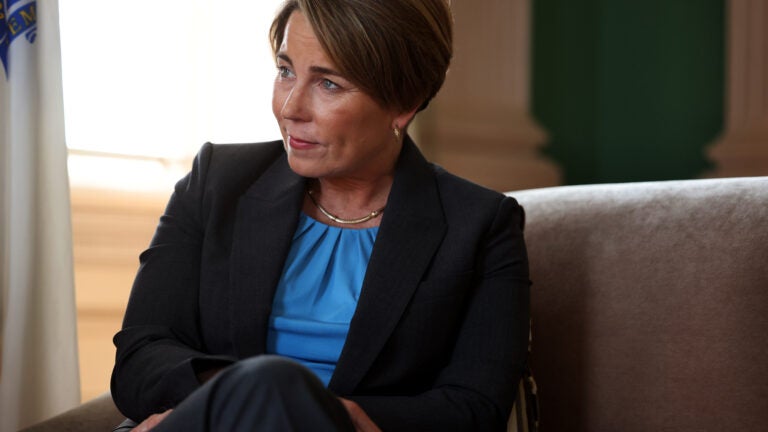
Gov. Maura Healey announced Thursday that she is recommending pardons for seven people, the most by a Massachusetts governor during their first year in more than 40 years.
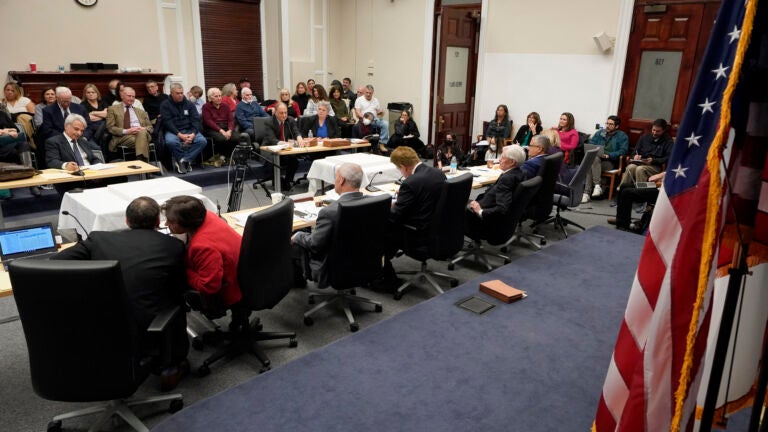
“In recent decades governors have not issued clemency in their first term, let alone in their first six months. But I believe, and the lieutenant governor believes, that justice delayed can be justice denied,” Healey said during a press conference at the State House.
Those Healey is recommending pardons for include a firefighter, a social worker, a nurse, a cancer patient, and a public works employee. All have accepted responsibility for their crimes, which were often committed decades ago, Healey said.
The governor has the power to grant executive clemency for those that violated state law, with the consent of the Governor’s Council.
Healey also said Thursday that her administration is working to review and revise the state’s clemency guidelines. In the coming months, those within her legal office will communicate with various stakeholders and government partners to “build consensus” about the purpose and potential of pardons and commutations.
These efforts will likely include an examination of how fairly and timely clemency petitions are reviewed. Clemency will be looked at as a potential tool for mitigating racial disparities and other inequities, Healey said. The governor also wants to “modernize” clemency to account for the science of brain development and research into how peoples’ judgment can improve through early adulthood.
“What we know is that clemency is a fundamental and important right of our justice system. It provides an opportunity to soften the harshest edges of this system. Today we have a much better understanding of where those harsh edges are and what we need to do to address them,” Healey said.
The state’s Parole Board unanimously recommended each of the following seven people for clemency, Healey said.
Advocates praised Healey’s announcement and her decision to break with the recent tradition of Massachusetts governors who have largely waited until the end of their tenure to use executive clemency.
“For nearly 250 years, the Massachusetts Constitution has invested in the Governor the authority to issue pardons as part of our structure of checks and balances, yet this critical element of a functioning justice system has fallen into disuse and neglect in recent decades,” Chinh Pham, president of the Boston Bar Association, said in a statement.
Last year, President Joe Biden announced that he would pardon thousands of people who were convicted of marijuana possession under federal law. While running for governor, Healey said she would “move to pardon state convictions for simple marijuana possession.”
When asked about the topic Thursday, Healey said that simple marijuana possession violations should not be a barrier for anyone in the state seeking housing, employment, or education. However, she did not offer more specifics and said only that there is “more work to come.”
Speaking Thursday at the State House, King reflected on his journey.
“Peer pressure was everywhere, it was rampant,” he said. “America is the land of opportunity. Opportunity is there, you just got to make it happen. There’s the right way and the wrong way. I took the wrong way for a short moment of time, but I got right back on track. The fire department was nice enough to accept me, I appreciate that too, and I’ve been living large ever since, thank God.”
Williams, who also spoke at the State House, said he supported more clemency efforts like this and that those in similar positions should stay resilient.
“I think we really need to look at people who are out there just like me, who just made a mistake years ago, who just want that opportunity to come back to society,” Williams said. “I never gave up. I tell my kids, I tell everybody, never, never give up.”
Stay up to date on all the latest news from Boston.com





To comment, please create a screen name in your profile
To comment, please verify your email address
Conversation
This discussion has ended. Please join elsewhere on Boston.com