
Newsletter Signup
Stay up to date on all the latest news from Boston.com
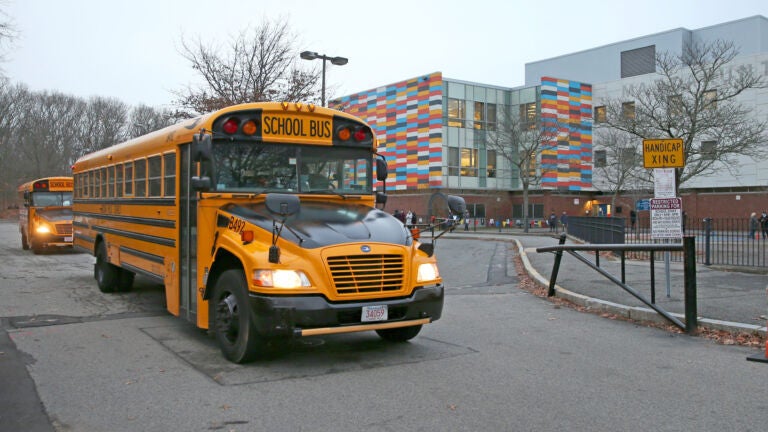
A city watchdog agency found that Boston Public Schools mishandled invoices for a vendor, “unnecessarily” wasting more than $24,000 of taxpayer dollars and opening up potential means of corruption.
The details of the situation were made public in a May 11 report from the Boston Finance Commission. It detailed how an unnamed vendor came to the Finance Commission in 2021 claiming that he had not been paid in full for his services to the city’s school system.
Instead of paying the vendor directly, BPS had a separate heating, ventilation, and air conditioning contractor pay the money owed, according to the report. The HVAC contractor, ENE Systems, Inc., then “falsely” charged the district for the payment after BPS officials requested that it do so.
The payment from BPS to ENE included an additional 15% fee, the $24,673.33 of taxpayer money, the report said.
“This transaction unnecessarily cost the taxpayers money that could have gone towards services for Boston Public School students, undermines the faith citizens have in their public officials, and will potentially cause vendors to question whether they should enter a business relationship with the City of Boston,” the report said.
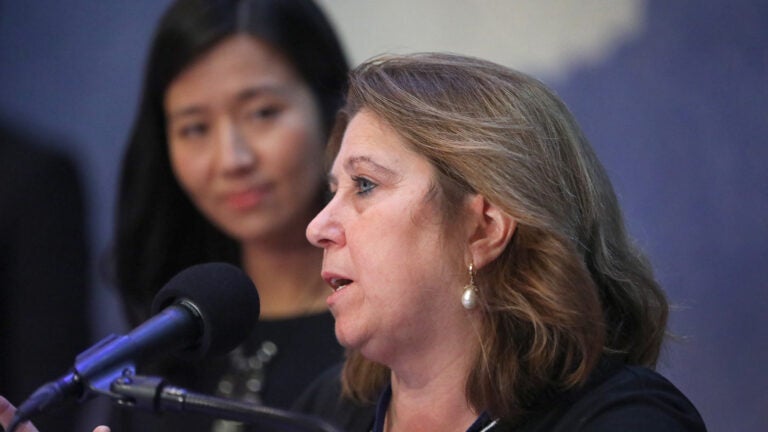
BPS Superintendent Mary Skipper has called for an outside auditor to look over all payment processes with vendors, The Boston Globe reported. This auditor will be tasked with identifying ways to prevent errors like this from occurring.
“BPS values the relationships with our many vendors and is committed to providing them with the payments they are due for services rendered in a timely manner and consistent with Massachusetts procurement laws,” a BPS spokesperson told the Globe. “This matter will be thoroughly investigated, as we understand holding BPS employees to the highest standards is critical to ensuring public trust in the stewardship of public funds.”
The Commission was informed during its investigation that actions like this have occurred before, but involving smaller amounts. It said that BPS needs to take “immediate corrective actions to prevent this from occurring in the future.”
The Commission received a request for assistance from the unnamed vendor on Oct. 28, 2021. That vendor, who had been awarded a multi-year contract through a bidding process, claimed that he had not been paid in full for services performed since 2018. The Commission contacted BPS officials, who said that they would review the vendor’s invoices and pay him, according to the report.
The vendor contacted BPS several times over the next year, voicing concerns that the district was not paying all of the invoices he submitted. The BPS Assistant Director of Finances and Operations told the Commission that they were working with the vendor to determine the total amount owed, according to the report.
In February 2023, the vendor called the Commission to say that he had been paid in full for his work. But the Commission found that BPS had not paid the vendor directly, instead arranging for ENE to pay the bill, according to the report. This prompted further investigation.
ENE, a national company with an office in Canton, has multiple contracts with the city totaling about $20 million, according to the Commission. ENE’s contract with BPS did not include obligations to solve the district’s billing issues.
BPS staff did verify that all work performed and invoiced by the vendor was legitimate, and that he had not been fully compensated since 2018. The vendor confirmed to the Commission that ENE contacted him and offered full payment of the amount that he was owed, $164,448.84. However, ENE required him to complete paperwork that made him a subcontractor of ENE before he received payment, according to the report.
Through its investigation, the Commission found an invoice submitted on Feb. 8, 2023, by ENE for “work completed at the Campbell Resource Center.” Contained in the invoice was a breakdown of costs that included $189,162.17 listed as “subcontractors,” according to the report.
The Commission’s report notes that vendors adding a percentage surcharge on subcontractor costs is common industry practice. In this invoice, it appeared that ENE added a 15% surcharge of $24,673.33 to $164,488.84, the amount ENE paid the unnamed vendor.
“For ENE to invoice for work that was not within the scope of their contract that was falsely invoiced as subcontractor work at the Campbell Resource Center and to charge a surcharge for that cost is unethical,” the report said.
A BPS employee who oversees the approval of vendor invoice payments was interviewed by the Commission. They confirmed that the invoice for services performed at the Campbell Resource Center was used to reimburse ENE for paying the vendor, including a 15% fee. That employee said that the idea was his own, that he brought it to his supervisor, and that he was told to move forward with the plan, according to the report.
The Commission did note that the BPS employee was “very forthcoming,” and that they said their only goal was to make sure the vendor received the money he was owed.
Still, the Commission determined that city employees breached “policy, procedures, and public trust.” Concern remains that, since the vendor was paid by ENE and not BPS, the past due amounts are still unreconciled in the BPS payment system. This would make it appear that the vendor is still owed more than $164,000 by the district, according to the report.
Although the Commission did not find any evidence of corruption, the report said that BPS should know that “approaching a contractor to hide a payment problem puts pressure on vendors to ‘do BPS a favor’ or potentially suffer some consequence.”
Actions like this can also “offer opportunities for city employees to create avenues to receive unwarranted financial gain,” the report said. The Commission did not find that such a thing occurred in this case.
Stay up to date on all the latest news from Boston.com


To comment, please create a screen name in your profile
To comment, please verify your email address
Conversation
This discussion has ended. Please join elsewhere on Boston.com