
Newsletter Signup
Stay up to date on all the latest news from Boston.com

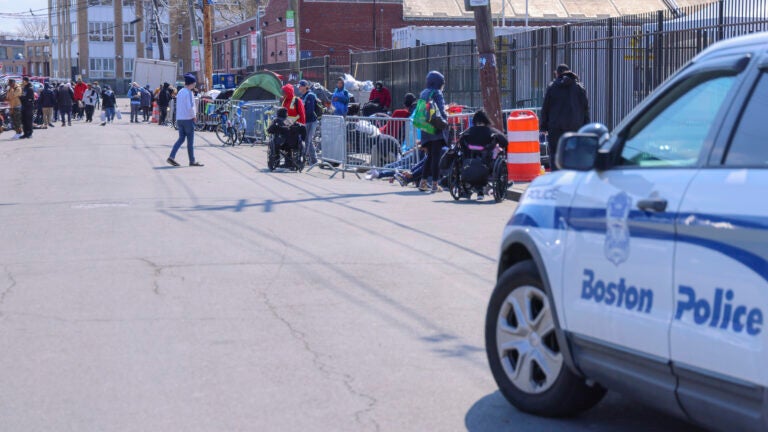
Boston now has a pathway for friends and family members looking to connect with loved ones they believe to be living or spending time in the area of the city known as “Mass. and Cass.”
The “Friends and Family Protocol” was rolled out in early April and allows people to request support from the city for communicating with or locating a “missing loved one” thought to be in the neighborhood.
Mass. and Cass — the area surrounding the intersection of Massachusetts Avenue and Melnea Cass Boulevard — has been recognized for years by officials as the epicenter of the overlapping crises of addiction, mental health, and homelessness in the region. According to the city, hundreds of individuals in the area come from communities outside Boston proper. Typically, friends and family members have relied on word of mouth, visiting the area themselves, and social media, including dedicated Facebook groups like “The Mass. Ave Project,” to locate their loved ones.
“Friends and family who are missing loved ones can have difficulties locating them,” Tania Del Rio, director of the city’s Coordinated Response Team, wrote on Twitter. “People living on the street do not have consistent access to phones or Internet service.”
While families always have the option of filing a missing persons report through Boston police, Del Rio said the new protocol provides “an additional direct mechanism to notify the Coordinated Response Team about your situation.”
According to the city, the protocol will also ensure that anyone who does not want to be contacted is protected.
Once a request for assistance is received, the outreach teams in the area will work to locate the individual and, if consent is obtained from that person, work to facilitate a phone or in-person communication with their friend or loved one, according to the city.
“Our team will work to reestablish a connection for consenting individuals,” Del Rio wrote. “Studies have shown that establishing connections with family and supportive social networks can increase the possibility that people who struggle with [homelessness, substance use disorder, or mental health challenges] can make progress towards stabilization. Our goal is to support that process whenever possible.”
The new option for locating loved ones in the area comes as the city is resuming its protocols for removing encampments around Mass. and Cass.

Stay up to date on all the latest news from Boston.com




To comment, please create a screen name in your profile
To comment, please verify your email address
Conversation
This discussion has ended. Please join elsewhere on Boston.com