
Newsletter Signup
Stay up to date on all the latest news from Boston.com
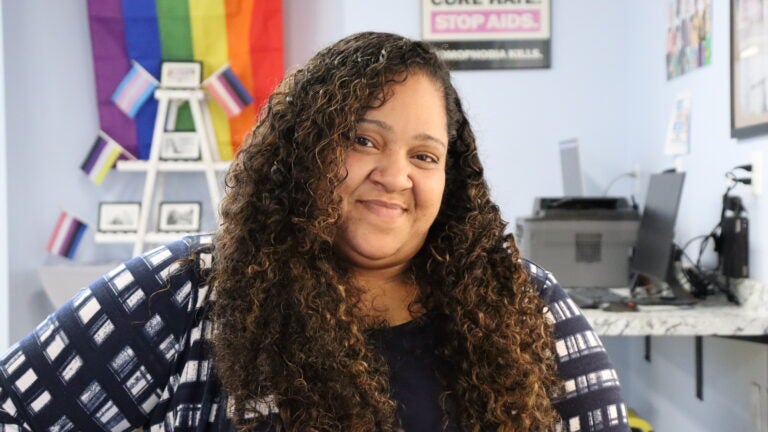
Keisa Rivera knows how it feels to not be seen.
To not be heard.
It’s why the 46-year-old loves her job, working as a harm reduction specialist with individuals experiencing addiction, homelessness, and mental health issues in the area of Mass. and Cass in Boston.
“Sometimes I feel so happy that my heart — I feel like I’m having like a big, good pain in my heart,” she said. “I just want to continue.”
Giving the individuals that she counsels at The Victory Connector, a low-threshold navigation center in the neighborhood run by the nonprofit Victory Programs, a feeling of care, a sense of calm and peace, is what she aims for each day.
Being able to provide that respite and getting to see individuals who have come in from the street smile (she calls them “members”) is the best, she told Boston.com.
It makes her feel like she’s doing her job.
“We have some members that come in and say, ‘You know, we’re not used to being treated like this.’ And I say, ‘How?’ ‘You treat us like you care,’” Rivera said. “And I’m like, ‘That’s because I care. You know, I don’t know about everybody else, or where you go to, but I care. And I know what you’re going through. Because I’ve been there.’”
In the years that she’s been working in harm reduction, Rivera has shared bits and pieces of her own experiences with addiction, trauma, and violence with those she works with. She’s always been cautious of sharing too much, in part because she’s aware that the people she is helping have their own traumas that they may not be ready to talk about.
But she said it’s also taken her a long time to feel comfortable sharing what she experienced as a child and teenager, which resulted in her own years-long struggle with substance use, incarceration, and instability.
“I don’t put my story out there too much due to not being believed when I was young,” Rivera said.
But now, with 24 years in recovery, the Dorchester resident hopes that by talking about her own experiences, others might be encouraged to speak up. She’s also hopeful that people who are quick to judge the unsheltered individuals, still in the throes of their own crises of addiction and mental health, living around Mass. and Cass might gain greater understanding from hearing her story.
The people in the area are in pain and need help, as she once was, she said.
Seeing the tents on Atkinson Street is her own constant reminder of that reality.
“It gives me more strength,” she said. “I’m like, ‘Wow, imagine if I would have still been using? Would I’ve been going through this? Would I have been dead?’ You don’t know what life can throw at you. And it makes me feel like I want to do more. So I stay thinking about, you know, what else can be done?”
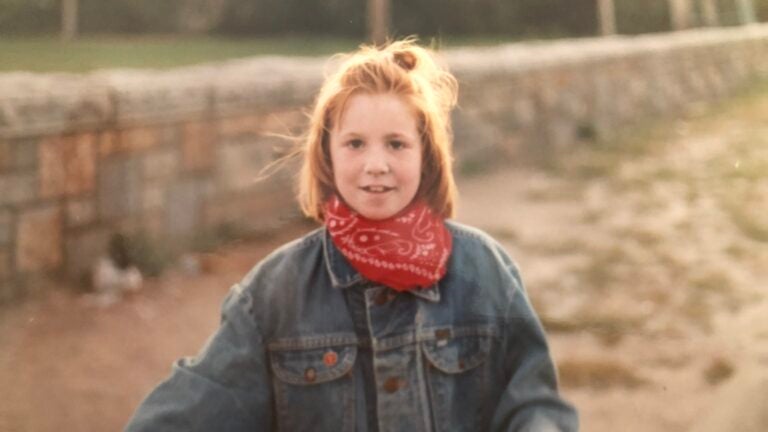
Rivera was born in Puerto Rico, and she said from the start, she “didn’t have a childhood.”
“I grew up in a very poor place, and, to not say much, we grew up in a very violent situation throughout the house since I was young,” she said.
Her father passed away when she was about 5 years old, and Rivera said she, her brother, and sister were sent to live in New York, where she said “issues” and mistreatment continued. They were there for a few years before their mother came from Puerto Rico and picked them up.
After that, “harder” situations started happening, Rivera recalled.
By the time that she was about 8, her mother moved the family to Springfield, Massachusetts.
“We moved a few times,” she said. “My mom, she had her own problems, which I didn’t understand back then. Alcohol was always present in the family. My mom had different boyfriends here and there. I remember when a few or her boyfriends either mistreated us by hitting us or [having] either me or my sister, like, massage their feet and cut their nails.”
By the time she was 10 or 11, Rivera and her siblings were placed in foster care because of their mother’s alcohol use.
“We were always left alone, and the violence that was in the house was not normal,” she said of living with her mother.
But once in the foster home, Rivera said she continued to be exposed to alcohol, drugs, and sexual violence.
“I ended up being raped in that foster home,” she said. “And we were molested — me and my sister were touched inappropriately. And I ended up being pregnant by that man.”
Rivera said she was raped twice and she told adults around her at the time. But she said she wasn’t believed.
“They always tried to find an excuse,” she said. “How are you gonna tell a 15-year-old, ‘Oh, you’re just doing that because you don’t want to be in a foster home. You want to be with your mom.’”
Rivera said she ended up being transferred to another foster home where she gave birth to the child, and she was taken away.
Over the course of roughly the next 15 years, Rivera continued to deal with instability and the effects of her trauma.
By the time she was 16, she’d been introduced to drugs by one of her mother’s friends, she said.
She had the flu at the time, she remembered.
“He was like, ‘Here, sniff this, you’re going to feel wonderful after that,’” Rivera said. “After that, I ended up [with] just a lightness. It made me not feel anything. It didn’t make me think about what I was going through. I was in the moment of however I was doing when I was doing heroin.”
In the ensuing years, Rivera said she was in and out of jail, first as a juvenile offender and then later, a six-year prison sentence related to substances.
Speaking about that time in her life, Rivera said she felt safe when she was in prison. She said she ended up “getting into trouble” so that her parole would be denied. She ended up serving her whole sentence.
When she was released, she was in her early 30s. She said she was taken to Casa Esperanza, a bilingual and bicultural behavioral health and human services nonprofit, in Roxbury.
“After being there for 15 months, it made me realize and gain so much knowledge of what I went through,” Rivera said. “Because I hid it for so long. It was buried so deep.”
At Casa Esperanza, she started going to counseling and therapy. She began having dreams about her past, and she was prescribed medications to help with the nightmares. But they made her shaky, and she didn’t like them.
Rivera said around that time, whenever she was walking around by herself, she felt like she was being followed.
In response to her fear, staff at Casa Esperanza had someone escort her wherever she went, she said.
“Every time I had an appointment, they had somebody to come with me because it’s how I felt safe,” she said.
After two months, she was able to get a job at a Dunkin’ Donuts.
“They saw so much in me that I didn’t see,” she said of the job offer.
When Rivera was moved to Casa Esperanza’s new housing on Eustis Street, she again felt flooded with feelings of fear and nervousness about the change, she recalled.
She didn’t want to go.
“I spoke to the director, and I had asked her, I remember so clearly, ‘I don’t think I can go, can I please just go a few days then come back here for a few days?’ And she did,” Rivera said. “I did that for like a month, and I got used to being in my own house. I started feeling happy.”
More stability followed.
She ended up working as a staff member at Casa Esperanza for almost 12 years, becoming first a peer recovery coach, then a house manager, then a treatment coordinator, a senior treatment coordinator, and a supervisor.
Rivera said she was also able to reconnect with her four children.
“I just forgave,” she said of her past family experiences. “You know, I surrendered myself. I left it in God’s hands and told him, ‘You know, I’m starting a new life. This is me now.’ This is for me, not for anybody.”
Over the 14 years, Rivera said she found herself constantly wanting to learn more about harm reduction and the ways to help people, like herself, who deal with addiction and recovery.
“It took me a while to understand that I had so much in me to give that I hadn’t seen,” Rivera said. “But others did.”
Remembering her own experiences — of sleeping in cars or under a bridge, of wanting to end her own life — and the moments when people helped, or failed to help, Rivera said she continues to find herself wanting to do more to aid people in similar need.
People who are struggling simply want to be heard, she said.
“Seeing, throughout my experience, after all those years being in the field, seeing how they have been mistreated … it’s shocking,” Rivera said. “And me having been through what they’ve been through and being in the field, [it] has made me be a better person. Why would I want to treat somebody worse than they are? … That’s what I tell everybody. If you’re not going to help somebody, don’t make them feel worse than what they are. You don’t know what they’re going through.”

Working in harm reduction has become Rivera’s passion.
She started working at Victory Programs eight months ago. The Victory Connector, where she is a harm reduction specialist, provides a range of services to women, transgender, and nonbinary individuals who are at high risk of overdose and who are reluctant to engage with other care systems.
“I love my job,” she said. “I’ve been there, I understand. I want to give what was given to me; I want to be able to help. In any type of way that I need to help, I’m gonna be there.”
Rivera starts each day with a cup of coffee and greets her staff, ensuring the plan is set for the day.
When people come in, she and her colleagues offer hot meals and find out what their needs may be. They make sure people have clean needles and talk to those who are engaged with sex work, asking how they are keeping themselves safe.
They offer clothes, and make sure everyone has phone numbers for requesting help if they need or want.
“Some of them are so tired that they can’t even walk; we let them stay here for as long as they can,” Rivera said. “If you’re here and you feel safe … [and] I know I kept you safe, I’m happy. And that’s why it matters. Having someone come in and be treated like they’re human, not a piece of work. Because everybody, those that are out there suffering from substance abuse, suffering from trauma, suffering from stress, depression, are going through something that they need to deal with. And you need that help. You’re asking for that help. And I feel, for me, it’s a circle.”
Each day, she and her colleagues at the Connector also do about two hours of street outreach, rotating who stays in the office and who goes out.
They talk to people on the street around Mass. and Cass about the services they have and offer resources.
“We let them know, ‘Hey, when you’re ready, we’re here for you and can help you get into detox,’” Rivera said. “‘We can help you find a program. If you need housing, we’re here to help you. What could we do to help you? What is it that you need for us to help you with?’ We talk to them about safe sex work, we talk to them about testing, [sexually transmitted infections], Hep C, AIDS.”
The work doesn’t come without challenges.
The hardest moments are when Rivera and her colleagues learn from members coming into the Connector that someone has passed away from an overdose, she said.
“It’s happening a lot,” Rivera said, emphasizing that there are more dangerous substances being put in the drugs being consumed on the street.
Public health officials, including the Boston Public Health Commission, have been warning in particular that xylazine, a non-opioid veterinary tranquilizer, has been increasingly detected in street drug samples analyzed in Massachusetts. Xylazine, also referred to as “tranq,” increases the risk of overdose and death when mixed with other sedating drugs like opioids — and it is not affected by the overdose reversal drug naloxone, according to BPHC.
There were an estimated 1,696 fatal overdoses in Massachusetts during the first nine months of 2022, according to the state Department of Public Health. Fentanyl was found in nearly every opioid-related fatal overdose during that period, according to the state.
Rivera said whenever she learns of another fatal overdose, she finds herself wondering about how there could have been a different outcome.
“What if I would have met her? I would have probably helped her out,” she said. “It’s just things you think about. You know, maybe things would have been different.”
Coping with those deaths, and the prospect that she will likely see more as the state and country continue to grapple with the overdose crisis, Rivera said she relies on belief — and the knowledge that change doesn’t happen overnight.
“I have hope, just like they had hope with me,” she said. “I see things in them that they don’t see themselves, which is what I also went through. I didn’t see it, until I got to that point where I was like, ‘Oh, now I see it.’ It’s a process.”
The best thing anyone can do to help those who are struggling with addiction, homelessness, or mental health issues is get educated, Rivera said.
She added that she, herself, even after her years in the field is still learning.
“If you have a loved one that’s using, going through what they are going through, talk to them,” she said. “Show them that you do care. That tough love is not gonna work. You got to support them, because you don’t know what they’re going through.”
The people that she’s working with want to be heard, she said.
They want to know that there are people out there who care, who won’t treat them “like they’re trash,” Rivera said.
“They’re not trash, they’re not animals, you know, they’re human,” she said.
One person showing they care can make all the difference.
“You feel it,” Rivera said.

Stay up to date on all the latest news from Boston.com





To comment, please create a screen name in your profile
To comment, please verify your email address
Conversation
This discussion has ended. Please join elsewhere on Boston.com