
Newsletter Signup
Stay up to date on all the latest news from Boston.com
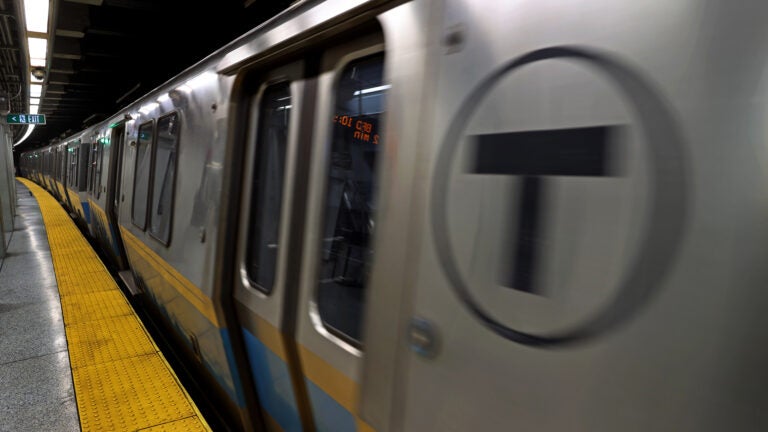
A new poll has revealed just how fed up riders are with the MBTA.
The poll, conducted by the Boston Business Journal and communications firm Seven Letter, found that about three out of four respondents said the MBTA’s reliability had gotten worse over the past six months.
Compared to last September, the number of respondents who said Boston public transit is reliable decreased by 22%. Just 24% of respondents to the most recent poll said the system was currently reliable.
A total of 59% of respondents said that the system was convenient for them. This is down 12% from September 2022.
Fewer rides also said that the MBTA was safe. This spring, 69% of respondents said that public transportation near them was safe, down 17% from last September.
Those polled were asked to give letter grades to the forms of public transportation available to them. The MBTA’s subway system received the worst grades. A total of 67% of respondents gave it a “D” or an “F,” up 27% from last year. The subway system garnered an average grade of “D,” compared to an average grade of “C” for the Commuter Rail and “C-” for the bus system.
Notably, the BBJ poll found that people are taking the city’s public transit system more often. About 50% of respondents said that they were taking the MBTA’s subway lines either daily or weekly. This is up 16% from last year.
“But when they get to the T, the grade they’re giving that experience is not meeting their expectations,” Matt George, head of research at Seven Letter, told the BBJ. “With higher frequency, you’re going to notice those negative experiences quite a bit more.”
The MBTA’s problems could have wide-ranging economic consequences. According to the BBJ, 55% of respondents said that the MBTA’s lack of reliability affected their businesses’ ability to attract and retain quality employees. 34% of respondents said the same thing last September.
A small bit of good news for the MBTA from the polling results comes on the topic of affordability. When asked if public transportation near them was affordable, 75% of respondents said that it was. This figure did not change over the past six months.
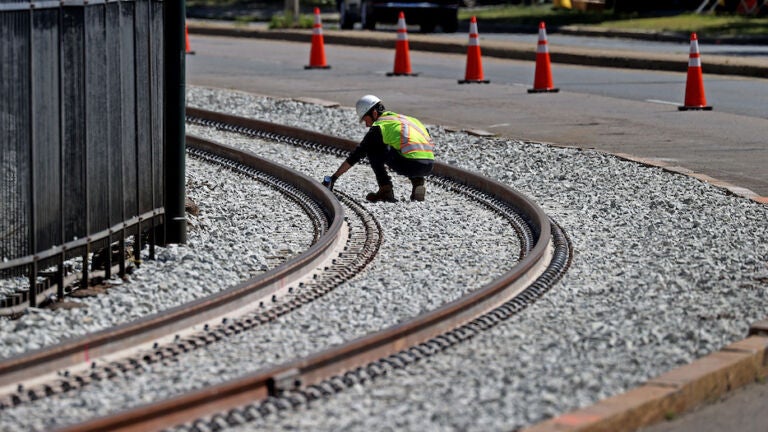
The system’s lack of reliability is likely tied to the MBTA’s many “slow zones,” areas of track where trains are under speed restrictions. The agency released a new dashboard tracking these zones earlier this year. As of April 18, 24% of the system’s tracks were speed restricted. The Red Line has the most “slow zones,” with 12.4 miles, or 26% of its length restricted.
Officials are hoping that new leadership can help turn the beleaguered agency around. Phillip Eng, who previously oversaw the Long Island Rail Road, was named the MBTA’s next general manager last month.
“To people who have lost faith in the T, I’d tell them, ‘Stay tuned,’” Eng said on his first day of work earlier this month. “If we lose faith, then why are we even trying? The real thing is, you have to believe, you have to have a vision, and we do. I know the people at the T … know we can turn it around; I’m going to demonstrate that we can turn it around.”
Stay up to date on all the latest news from Boston.com




To comment, please create a screen name in your profile
To comment, please verify your email address
Conversation
This discussion has ended. Please join elsewhere on Boston.com