
Newsletter Signup
Stay up to date on all the latest news from Boston.com
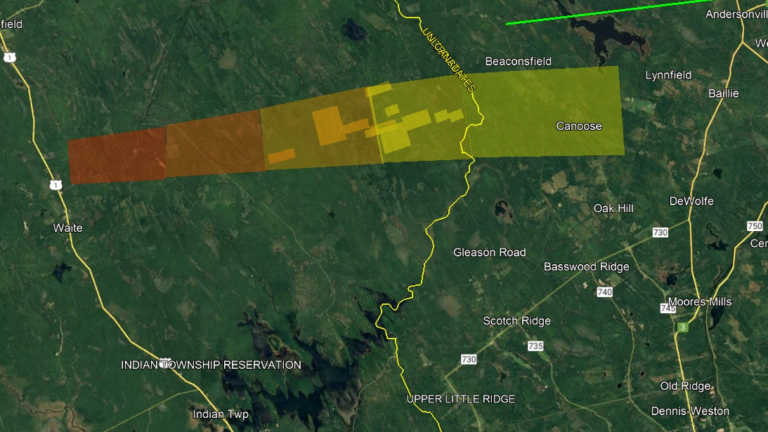
A meteorite fell in Maine this weekend, and a museum is offering a $25,000 reward to anyone who can find them a piece of it.
The fireball that came down Saturday afternoon was also the first in the state to be captured on radar, according to NASA. It was seen by multiple observers around noon as a bright red blaze.
Parts of the rock are likely in Maine and Canada following impact.
Now, the Maine Mineral and Gem Museum in Bethel wants to get a chunk of it for their collection, said Darryl Pitt, the head of the meteorite division.
He called the museum one of the leaders in its field. He added that it has a “special appetite for meteorites,” and this one being so close makes it all the more desirable.
Saturday’s event was also not a regular meteorite, Pitt said. It was a fireball.
“A meteorite is like that little zipper of light in the night sky that you make a wish on,” he said. “This is a bright event that makes your jaw drop and you go, ‘Oh my goodness, what is that?’ It’s a breathtaking event to see a fireball.”
While meteorites are common, he said that it’s not often that rocks are found afterward. Of the hundreds of showers that happen every year, Pitt estimates that eight to 10 meteorite recoveries occur.
“It’s super, super rare,” he said, adding that the weight of the world’s gold output is higher than the weight of all meteorites collected.
Five total meteorites have been recovered in Maine, Pitt said. Of those, three are at the museum.
The Saturday meteorites were caught on camera in their final descent, Pitt said, so it is at least known they are out there. He said finding one will be difficult, though.
Despite this, he said people are already on the hunt for these rocks, and he encouraged everyone to try their hand at searching.
“Everyone is an amateur meteorite hunter until they find their first one, and then they become a professional. We’re trying to motivate as many people as possible to look,” he said, referencing the reward.
He added that this could prove to be very important to scientific exploration. There’s also a timeliness aspect to the search.
“The sooner it’s recovered, the less it becomes contaminated by what it encounters on Earth,” he said.
Stay up to date on all the latest news from Boston.com



To comment, please create a screen name in your profile
To comment, please verify your email address
Conversation
This discussion has ended. Please join elsewhere on Boston.com