
Newsletter Signup
Stay up to date on all the latest news from Boston.com

Should your train catch fire, derail, or become stuck underground, try not to panic: The MBTA has an evacuation protocol in place for emergencies, and it doesn’t involve kicking out windows or leaping from bridges.
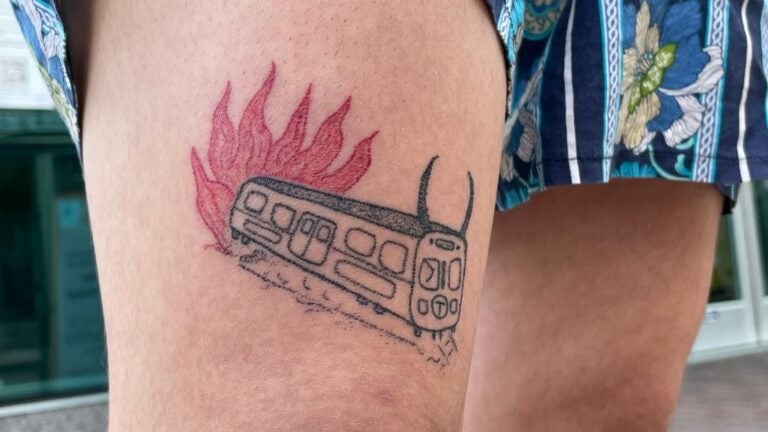
However, Chief Safety Officer Ronald Ester said last week that the MBTA is working on better communication to avoid a repeat of July’s Orange Line chaos, when passengers took matters into their own hands to escape a burning train. Some jumped through a broken window and onto the tracks, and one woman even dove into the Mystic River below.
“We have information on each of the cars as to what the evacuation procedures are and how to move from car to car,” Ester said during a meeting of the MBTA Safety, Health & Environment Subcommittee Thursday.
But, he added, “I think we have to do a little more just to ensure that everyone understands that you don’t have to kick out windows and jump off the train, that there’s a path to the other end of the train in order for you to exit safely.”
He said there are three types of evacuation procedures, depending on where the incident takes place. When the disabled train is at a station or partially berthed at one, passengers can generally evacuate onto the platform, Ester explained.
There are some added steps for evacuations that happen in between stations. For example, the train operator must notify the operations control center and make an announcement providing passengers with information and instructions.
The operations control center will then stop train movement and power in the affected area, alert emergency crews, and designate an incident commander — typically the train operator — to provide periodic updates, Ester said.
MBTA Board of Directors member Mary Beth Mello noted that some passengers attempt to evacuate themselves regardless of the agency’s protocol, describing self-evacuation as “problematic” and “extremely dangerous.”
“They get nervous, no matter how good your procedures are,” Mello said. “What are you doing to prevent that?”
“We have to make sure that we’re communicating,” Ester responded, noting that July’s Orange Line fire occurred at the front end of a car, possibly inhibiting frequent communication between the operator and passengers.

Stay up to date on all the latest news from Boston.com




To comment, please create a screen name in your profile
To comment, please verify your email address
Conversation
This discussion has ended. Please join elsewhere on Boston.com