
Newsletter Signup
Stay up to date on all the latest news from Boston.com
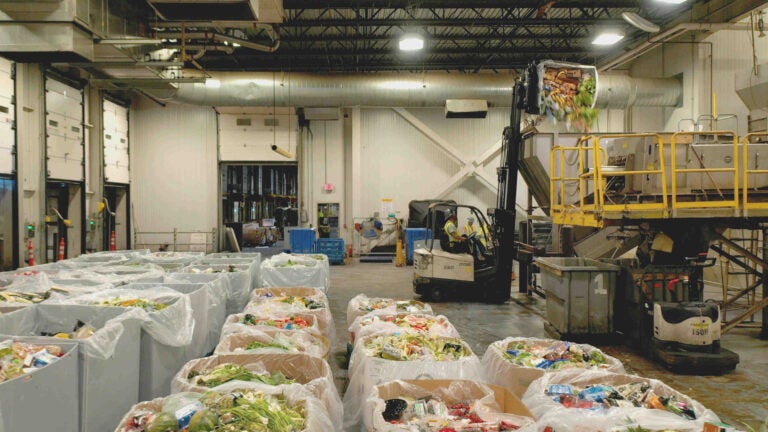
Massachusetts is tightening up its ban on commercial-scale food waste.
According to an announcement by the state Department of Environmental Protection, any business producing more than half a ton of food waste per week cannot send it to landfills or incinerators as of Nov. 1. This halves the state’s previous ban, which affected businesses producing one ton of food waste.
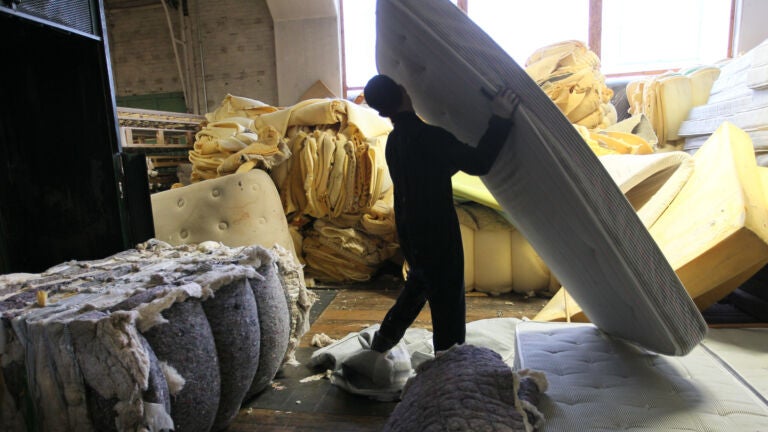
The ban also takes aim at textiles, such as clothes and household linens, and mattresses.
While Massachusetts residents throw away large amounts of uneaten food every day, this food waste ban isn’t targeted at individual households.
The new food waste changes impact large-scale generators of food waste, like grocery stores, wholesale distributors, resorts, large restaurants, and even institutions like colleges and universities.
The state estimates that about 2,000 businesses were affected by the original ban, and the new ban will encompass about 2,000 more. About half of these businesses could be restaurants, according to state estimates, but it still makes up a small portion of restaurants overall.
The stricter ban likely won’t create financial difficulties for restaurant owners — industry advocates say the cost of sustainably diverting food waste is often comparable to throwing it away.
For business owners who may be concerned about if the ban affects them, government program RecyclingWorks has created an estimation guide encompassing everything from hospitals to hotels.
A full list of food waste generators is available here.
In total, Massachusetts throws away almost one million tons of food waste every year that could be reduced, composted, or recycled. In fact, food makes up over a quarter of all waste in the Bay State.
Nationally, commercial-scale waste comes in at about 16 billion tons every year. The United States wastes more food than any other country in the world, about 30-40% of our total food supply.
This has deadly consequences for the environment — fossil fuel emissions that are required for growing, processing, and trashing uneaten food in the United States each year are equivalent to the annual emissions of 42 coal-fired power plants, according to estimates from the Environmental Protection Agency.
Massachusetts aims to reduce solid waste disposal state-wide by 30% by 2030, and by 90% by 2050.
But some have pointed out that Massachusetts’s ban won’t work unless it’s enforced — according to a 2022 report from MassPIRG, 40% of the waste stream in the state is currently made up of banned materials.
While the new ban targets large-scale waste, institutions affected by it have options for disposing of uneaten food.
Massachusetts has compiled a list of statewide off-site generators that accept food materials for composting, anaerobic digestion, and other processing.
The state pours funds into large-scale composting initiatives, and has cleared available capacity for food materials to be recycled into organic matter in the last several years.
Anaerobic digestion, a way of turning emissions into energy, is another burgeoning climate solution. The digesting machines have been compared to a “giant cow stomach,” as it uses bacteria from manure to eat the food waste and create methane, which is then converted to electricity.
Businesses and institutions can also get rid of unspoiled food while fighting food insecurity by donating to a local food bank.
Stay up to date on all the latest news from Boston.com





To comment, please create a screen name in your profile
To comment, please verify your email address
Conversation
This discussion has ended. Please join elsewhere on Boston.com