
Newsletter Signup
Stay up to date on all the latest news from Boston.com
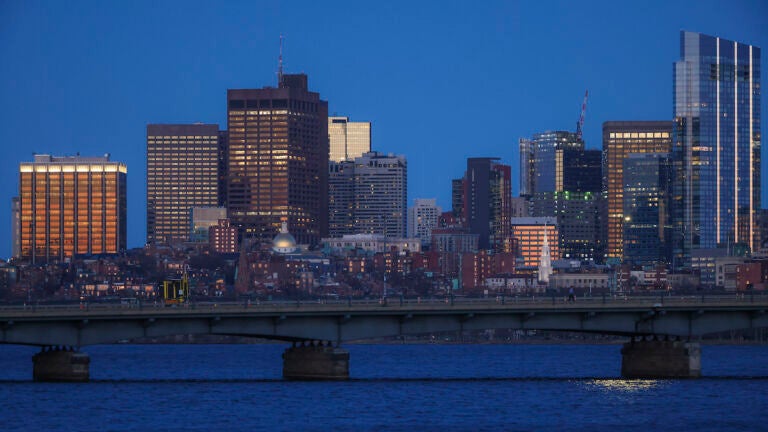
Less people and empty offices — after two-and-a-half years of the COVID-19 pandemic, will Downtown Boston ever be the same?
That’s not the question to ask, according to city leaders.
In a new report published Thursday, Mayor Michelle Wu’s administration put forth the charge to find new ways to use one of the city’s oldest and most influential neighborhoods that’s long relied on the worker weekday shuffle to breathe life into its skyscraper canyons.
Indeed, the report confirms there is at least 40 percent less foot traffic Downtown than prior to the pandemic, as remote work — likely permanent for as many as 25 percent of the would-be Downtown-based workers — is changing commuting patterns.
In fact, officials found foot traffic in the area is higher on the weekends, which they contend shows Downtown is being used less as an office hub these days. (Office occupancy is hovering between 30 and 35 percent of pre-pandemic levels, the report says.)
The report, written up by City Hall officials and the Boston Consulting Group, rolls out a set of initiatives and recommendations to “revitalize and reimagine the neighborhood,” Wu’s office says.
The release of the report dovetails with the re-launch of PLAN: Downtown, the Boston Planning and Development Agency’s planning process for the area. The city first began that effort in 2018, but the work had, until this week, been put on hold due to the pandemic.
According to Wu, this all makes for a chance to boldly reconsider what Bostonians — and tourists — get out of their Downtown experiences.
“We envision Downtown Boston as a space where people from all backgrounds come together,” Wu said in a statement. “Together with the restart of PLAN: Downtown, this report presents a roadmap for a truly inclusive, round-the-clock neighborhood filled with new homes, diverse businesses, world-class public spaces, vibrant nightlife, and a thriving arts and culture scene.”
Bringing back the buzz to Downtown is something Wu has prioritized this year, especially since March when the mayor formally laid out a few ideas to do just that.
The report incorporates and builds on those, and focuses specifically on tee-ing up policies the city can carry out on its own, rather than, say, in partnership with the state.
Among those stated goals are making sure Downtown office space is vibrant; expanding the neighborhood’s housing; and creating new ways the area can be used for other non-work purposes, such as for the arts, retail, and hospitality.
Officials are also eyeing ways to make Downtown a more magnetic tourist destination; better connected for multi-modal transportation; and more economically opportunistic for small businesses and women and underserved populations, including indigenous communities and people of color.
As for policies, the report spells out over 30 potential steps the city can take, including giving a makeover to certain kinds of office space to become suitable for housing, and hammering out new zoning incentives to allow for higher density for new housing construction.
Also on the list is creating low-rent spaces for minority- and women-owned businesses; re-imagining the Faneuil Hall Marketplace and Quincy Market; re-opening City Hall Plaza post-redesign; and making more streets pedestrian-only.
There’s also the concept to make Downtown Boston more of a 24-hour neighborhood, so to speak: The report targets “creating new spaces, events, and programs to expand nightlife downtown, ideally to attract new populations and demographic/socioeconomic groups,” officials said.
To formalize the re-launch of PLAN: Downtown, city officials will host a kick-off event on Nov. 9 in Downtown Crossing.
“At that event, community members and BPDA staff will review work to date and work to come,” Wu’s office said in a news release. “The relaunched process will include engagement with local stakeholders and community members to directly address the impacts of the COVID-19 pandemic on Downtown, including a market and feasibility study of converting underutilized office buildings to residential and other uses.”
Stay up to date on all the latest news from Boston.com



To comment, please create a screen name in your profile
To comment, please verify your email address
Conversation
This discussion has ended. Please join elsewhere on Boston.com