
Newsletter Signup
Stay up to date on all the latest news from Boston.com
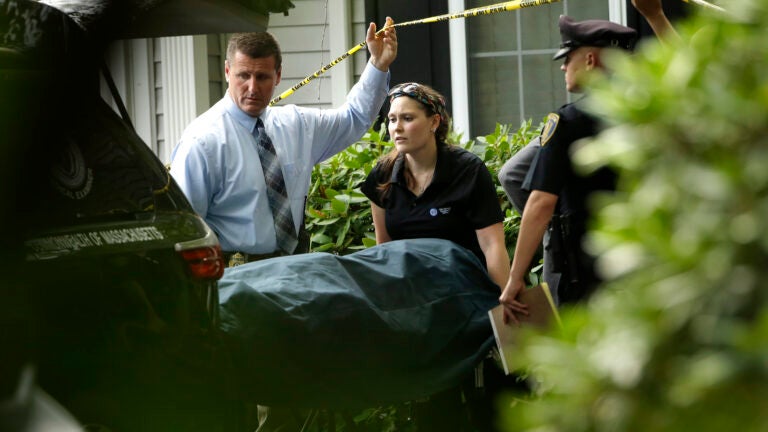
A new report shows that the State Medical Examiner’s Office has been reducing the number of autopsies it performs, preferring quicker, less intensive methods of examining bodies.
In each of the past three years, the medical examiner’s office performed autopsies in 26% to 27% of cases. This is significantly below the national average, which a U.S. Department of Justice report says is performing autopsies in 38% of cases.
In fact, in the last fiscal year, in about 14% of cases, the examiner simply performed a “chart review,” meaning that they didn’t examine the body in person. In those cases, the examiner used medical records and photographs taken by staff to determine the cause and manner of death.
The number of cases in which chart reviews were conducted nearly doubled between FY20 and FY21, and more than quadrupled between FY19 and FY21, but this increase cannot be explained by the increase in caseload between those years.
According to The Boston Globe, these changes are a result of a new approach taken by the state’s chief medical examiner, Mindy Hull, who took office in 2017.

The Globe reported that in FY 2017, the last full year under Hull’s predecessor, the agency performed autopsies in 44% of all cases, completing 3,192 in total. In Hull’s first year, the number dropped to 2,755.
But, according to the Globe, under Hull’s predecessor, the office was often slow to produce autopsy reports. Now, more than 90% of reports are completed within 90 days, which is an important standard set by the National Association of Medical Examiners (NAME).
Hull’s predecessor also left her with a backlog of 1,612 cases in which an autopsy or examination had been performed, but the autopsy report and/or death certificate was not yet complete.
Since then, Hull’s office has completed more than 70% of these cases, reducing
the number of unfinished cases to 419. It has also added only a tiny percentage of its new cases to the backlog.
Hull’s office told the Globe it’s confident its examiners are still doing autopsies when the situation calls for it, while using chart reviews to avoid having to transport a body to the office when the death is “well-documented.”
“The Massachusetts Office of the Chief Medical Examiner remains a national leader both in its process to fulfill its mission and [to] address its large caseload volume,” spokeswoman Elaine Driscoll told the Globe.
But experts say not performing as many autopsies could hurt accuracy.
“We’ve all seen cases that come in and look like a straightforward drug overdose. And then you do an autopsy and find out this person was strangled,” Dr. James Gill, Connecticut’s chief medical examiner and a past NAME president told the Globe.
“That’s the nightmare scenario. That’s what you don’t want to miss.”
State officials told the Globe they still conduct autopsies in deaths believed to be suspicious or a homicide, in unexplained deaths of infants and children, and in cases that are likely to be used in a court case.
The Globe also reported that Massachusetts isn’t alone in having its medical examiner’s officer reduce the number of autopsies performed. It wrote that the number of bodies submitted to the office has been increasing over the years because of things like drug overdoses.
At the same time, the newspaper wrote, the number of medical examiners across the country is dropping.
Stay up to date on all the latest news from Boston.com




To comment, please create a screen name in your profile
To comment, please verify your email address
Conversation
This discussion has ended. Please join elsewhere on Boston.com