
Newsletter Signup
Stay up to date on all the latest news from Boston.com
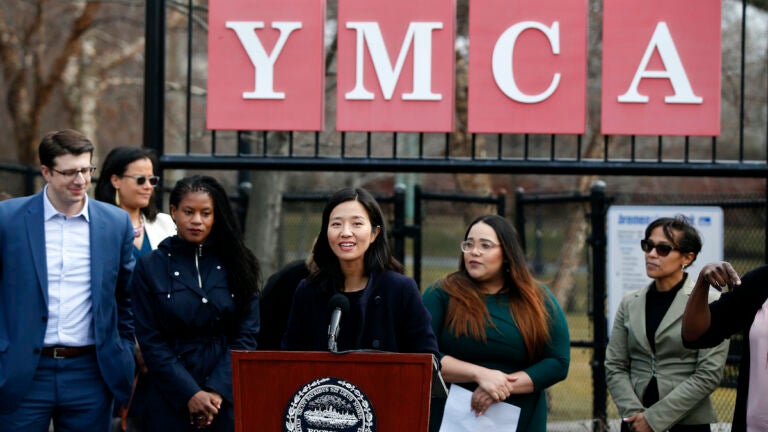
Parents and caregivers in Boston will soon have what Mayor Michelle Wu describes as a “one-stop shop” when looking for child care and early education services and supports.
On Wednesday, Wu announced the creation of the Office of Early Childhood, which will centralize enrollment and access to child care and education under a single roof in City Hall.
The multilingual office will also prioritize Wu’s push for a universal pre-K system in the city, one that “stretches across Boston Public Schools, community-based organizations, and family-based child care programs,” officials said.
The move makes good on Wu’s pitch to voters on the campaign trail last year, when the then-candidate outlined a plan to pursue universal preschool through a centralized office.
Wu envisions the office will connect families to open seats in school-based, center-based, and family-based child care programs while giving those programs the resources they need to thrive, she told reporters at a press conference at the East Boston YMCA.
“We will surround the entire ecosystem and help make those connections because often our child care providers, our early educators, are doing everything perfectly in terms of educating our young people, but they’re not set up to be the publicists and marketers to make those services known throughout the city,” Wu said.
The office will work in partnership with Boston Public Schools, the Office of Women’s Advancement, the Boston Public Health Commission, the Boston Centers for Youth and Families, along with community organizations and other city departments.
“The ultimate dream is for … anyone who is looking to start a family in the City of Boston to know that this is a city where it’ll be convenient, easy, and not a question whether you can find the supports to raise a child here,” Wu said.
Families seeking child care face significant challenges in the city and across Massachusetts, particularly when it comes to affordability.
The latest edition of the city’s annual Child Care Census Survey, also released Wednesday, outlines the heavy costs facing parents in the Hub.
The average cost of center-based care across the city, for example, is higher than the statewide average, with care in those facilities for 0- to 2-year-old children costing $2,237 per month in Boston compared to $1,743 across the state, on average.
Center-based care for 3- to 5-year-old children costs families about $1,806 per month in the city, whereas the statewide average is $1,258.
Approximately 41 percent of children in the city report’s sample pool received care that cost more than the ideal expense of 10 percent of their family’s income.
Many respondents to the 2021 version of the yearly survey said even finding available child care remains a persistent problem.
“Child care costs too much, and once you figure out how to pay for it, you get out on a waitlist,” one anonymous Jamaica Plain resident told city officials.
The COVID-19 pandemic only exacerbated these problems, the report says.
Unemployment, the permanent closure of some facilities, long waitlists, limited hours, and safety concerns all added burdens and strain to child care access issues, the report states.
“In addition to fewer child care seats due to program closures, a number of providers are also not accepting new children due to the pandemic, leaving parents with fewer options for good quality child care,” the report reads. “Overall, the pandemic has massively disrupted the child care sector with lasting impacts on families.”
The work of the city’s new Office of Early Childhood will help support the expansion of universal pre-K seats, according to Wu’s office.
The city’s current universal pre-K program, now in its third year, serves 664 pre-K students; 2,556 non-special education K1 seats for 4-year-old children; and 880 special education seats for 3- and 4-year-old children in K0/K1 programs.
In the 2022-23 school year, the program is slated to boost the number of seats available to support 930 children at “community provide settings, including 600 4-year-olds and 330 3-year-olds,” according to Wu’s office.
“We’re sending a message to our families today that Boston is united in our work to help our youngest learners get off to the right start through new supports to them in their families,” said Boston School Committee chairwoman Jeri Robinson.
Wu declared right now is the time to “truly tackle [the] root causes” of issues facing Boston’s child care infrastructure.
“The costs are high. The need is great,” she said. “But the opportunity is tremendous right now as well.”
Stay up to date on all the latest news from Boston.com


To comment, please create a screen name in your profile
To comment, please verify your email address
Conversation
This discussion has ended. Please join elsewhere on Boston.com