
MBTA reallocates $500M to safety, grants, worker retention
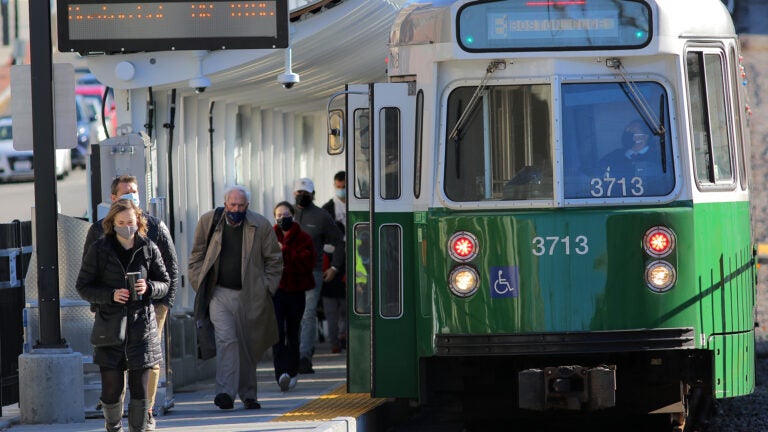
The installation of anti-collision technology on the Green Line will now finish next year instead of in 2024, according to the agency.
GREEN LINE CRASH:
BOSTON (AP) — The Massachusetts Bay Transit Authority has reallocated $500 million in operating costs to invest in one-time projects, thanks to a steady influx of federal emergency relief funds that have given the agency flexibility.
The funding decisions announced Thursday will channel money to safety improvements, workforce retention, bus improvements and matching grants, the Boston Herald reported.
The agency’s general manager, Steve Poftak, said the federal funding will allow them to keep a balanced budget through 2023, despite huge losses in fare revenue during the pandemic.
“These are all one-time expenses that do not impact the future budget of the T, nor do they rule out some flexibility in the future,” he said.
Some $145 million will be set aside as the required 20% matching funds for federal grants to be allocated under the the Bipartisan Infrastructure Law. Another $109 million is going to accelerate investments in bus improvements, including buying more electric vehicles.
An additional $67 million will go toward investments in safety, including moving up the installation of anti-collision technology on the Green Line so it is finished next year instead of in 2024.
The allocation comes in the wake of news that, earlier this month, outgoing Suffolk District Attorney Rachael Rollins’s office launched a criminal probe into a potential “lack of oversight or negligence” at the MBTA stemming from a July 2021 Green Line crash that sent 27 people to the hospital, and was followed by a series of other safety incidents.
The agency will spend $20 million on work force retention, including recruitment and pandemic pay for frontline workers; $70 million on the design and construction of new projects; and $89 million to be put toward existing capital programs.


To comment, please create a screen name in your profile
To comment, please verify your email address
Conversation
This discussion has ended. Please join elsewhere on Boston.com