
Civil rights complaint filed against Boston over lack of diversity in contract work
A report found that very little city contract work went to businesses owned by people of color.
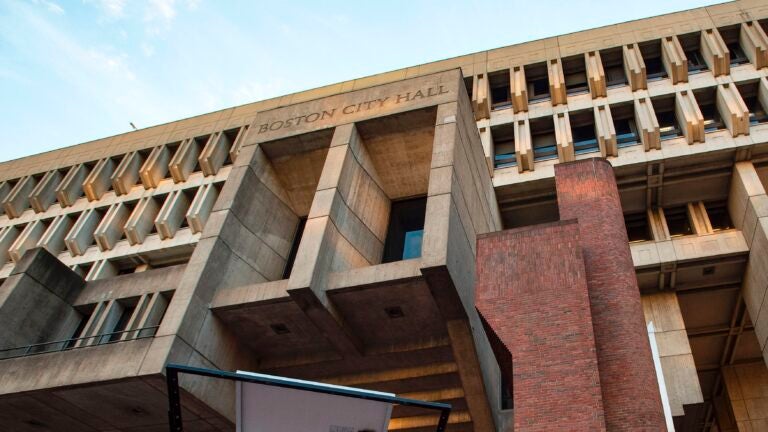
A federal civil rights complaint has been filed against the City of Boston after a report found that just 1.2 percent of $2.1 billion in public contract work went to Black- or Latinx-owned businesses over a period of five years.The complaint was filed with the Civil Rights Division of the U.S. Department of Justice on Wednesday by Lawyers for Civil Rights in conjunction with the Black Economic Council of Massachusetts (BECMA), Amplify Latinx, and the Greater Boston Latino Network, according to a press release from LCR.The 703-page city-commissioned report found that between 2014 and 2019, of 47,800 contracts analyzed, 8.5 percent of the spending went to entities owned by white women. For businesses owned by people of color, it was 2.5 percent, according to The Boston Globe, which obtained a copy of the report.Further broken down by race, just 0.4 percent of the overall spending went to hiring Black-owned businesses, 0.8 percent to Latino-owned businesses, and 1.1 percent to those owned by Asian Americans. Broken down by dollar amount, the contract spending amounted to $9.4 million, $18.2 million, and $22.7 million, respectively.The report noted that based on the Black-owned businesses available to do the work, they could’ve been awarded 3.6 percent of the contract work. The complaint says that would have amounted to $70 million.“The study reveals what BECMA members and community leaders have been saying for decades: The City of Boston does not value Black businesses or the Black community,” Segun Idowu, BECMA’s president and CEO, said in the release. “Mayor Martin J. Walsh and his administration have failed to deliver fair and equitable procurement for Black-owned businesses, as well as for other minority-owned businesses. Bold leadership is required to immediately correct this systemic problem.”The study, according to the complaint, took into account not just certified minority business enterprises, or MBEs, but those that aren’t certified by the city.“Black- and Latinx-owned businesses are available to perform the type of work that the City needs, but the City is simply not contracting with them,” the complaint says. “Instead, the City’s discriminatory contracting system perpetuates and exacerbates the racial wealth gap that plagues Boston.”In response to the report, Mayor Marty Walsh plans to issue an executive order with a goal of having 17 percent or more of contact work going to businesses owned by women or people of color, according to the Boston Business Journal. Through this goal, the city wants to have 11 percent of contract work go to businesses owned by white women and 6 percent go to those owned by people of color, a spokesperson told the publication. These numbers match with how many of these businesses are available to take on the work.“While the results of this study are not surprising, they reaffirm our belief that more work needs to be done to institutionalize these practices into the everyday business of city government, and reaffirm our commitment to getting the work done,” Nicholas Martin, a spokesman for Walsh, told the Globe.
In addition to the complaint, Boston mayoral candidates have weighed in on the issue.
“Our city has missed opportunities to invest in & deliver economic justice for Black & brown residents,” candidate Michelle Wu, a city councilor, wrote on Twitter earlier this month. “We need bold leadership to close the gap now.”
Boston has a massive racial wealth gap AND the resources to close it.
Our city has missed opportunities to invest in & deliver economic justice for Black & brown residents. We need bold leadership to close the gap now.https://t.co/KnYcHNBwTt
— Michelle Wu 吳弭 (@wutrain) February 8, 2021
“It is an absolute failure of the administration to not have made more substantial progress towards equity in city contracts, as we’ve been talking about this for years,” candidate Andrea Campbell, also a city councilor, said.
If we are going to come back equitably from this pandemic and lift up minority and women owned businesses, it is absolutely necessary that the city of Boston do their business better. pic.twitter.com/oF8YJa6buL
— Andrea J. Campbell (@AJCampbellMA) February 12, 2021
Get Boston.com's browser alerts:
Enable breaking news notifications straight to your internet browser.




To comment, please create a screen name in your profile
To comment, please verify your email address
Conversation
This discussion has ended. Please join elsewhere on Boston.com