
Here are the people President Trump is proposing building statues of in his new National Garden
On Friday, President Trump announced he was signing an executive order to create the National Garden of American Heroes, which he described as “a vast outdoor park that will feature the statues of the greatest Americans who ever lived.”
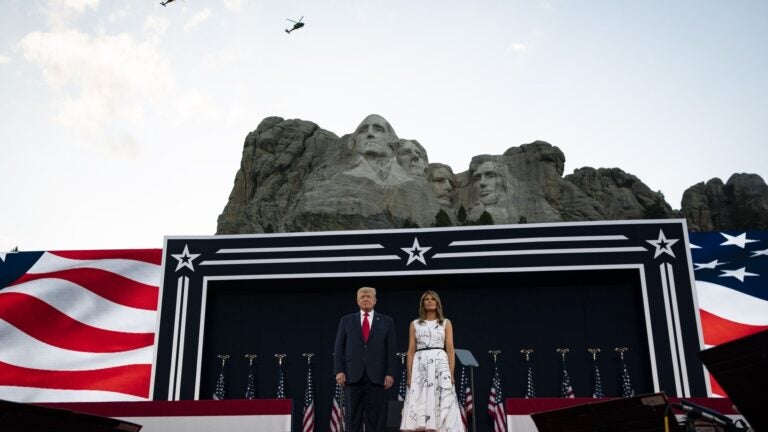
During a speech at Mount Rushmore on the eve of July Fourth, President Trump announced he was signing an executive order to create the National Garden of American Heroes, which he described as “a vast outdoor park that will feature the statues of the greatest Americans who ever lived.”
The order comes amid a national reckoning with racism after high-profile killings of Black people sparked weeks of demonstrations, and as protesters and local governments across the country remove monuments to those who benefited from slavery.
The president has vowed to protect the statues. At the Friday night event he described calls for their removal an effort to “defame our heroes, erase our values, and indoctrinate our children.” Last week, he issued an executive order aimed at punishing people who destroy monuments on federal property, and threatened to veto a defense spending bill if it requires military bases named after Confederate officers to be renamed.
The executive order doesn’t name a specific city where the park would be built but says it should be “on a site of natural beauty” near at least one major population center. The order also says the park should be open to the public ahead of July 4, 2026, the 250th anniversary of the formal adoption of the Declaration of Independence.
The order lists several “historically significant figures” who should be depicted in the park:
The order says “historically significant figures” also includes people such as Christopher Columbus, Junipero Serra, and the Marquis de La Fayette, “who lived prior to or during the American Revolution and were not American citizens, but who made substantive historical contributions to the discovery, development, or independence of the future United States.”
Material from the Associated Press was used in this report.



To comment, please create a screen name in your profile
To comment, please verify your email address
Conversation
This discussion has ended. Please join elsewhere on Boston.com