
Commuter rail officials say Verizon was to blame for delays this week
The problems disrupted communications between Worcester and Boston.
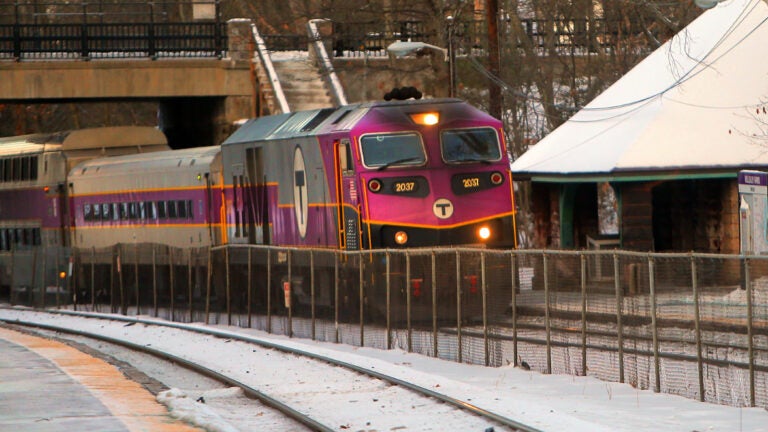
Was a telephone company to blame for major delays and cancellations on the commuter rail this week? Officials say it appears so.
Keolis Commuter Services, which operates the commuter rail for the MBTA, says that issues with a Verizon telephone system they use caused major delays and multiple cancellations Tuesday night on the Framingham/Worcester line.
“Initial findings from the investigation suggest the cause was related to a component of Verizon’s telephone system that is used by Keolis to connect our signal system in Worcester to our Boston-based dispatching center,” Justin Thompson, a Keolis spokesman, told Boston.com in a statement Thursday.
Thompson added that MBTA and Keolis crews had been working with Verizon since Tuesday night to fix the “defective component” and make the signal system more resilient in the future.
Verizon did not immediately respond to a request for comment Thursday.
According to WVCB, hundreds of commuters were stuck on a train for hours Tuesday night. At the time, Keolis attributed the disruption to an unforeseen signal failure. Officials reported around 9:50 p.m. that the issue had been resolved and that normal service was “resuming with residual delays,” with some trains operating 45 minutes to an hour behind schedule.
With this being an unforeseen issue, our teams worked together to resolve the signal failure as well as communicate updates as they developed. The issue along the Framingham/Worcester Line is now resolved and normal service is resuming with residual delays.
— MBTA Commuter Rail (@MBTA_CR) January 8, 2020
In addition to fixing the telephone system, Thompson noted that the MBTA is also in the midst of broader efforts to improve commuter rail service.
“The MBTA has invested hundreds of millions of dollars into the network,” he said. “These include major programs to further enhance safety, operations, service reliability, increase capacity and modernize critical components such as switches, rail and signals. This accelerated capital delivery initiative is a comprehensive program designed to safely and quickly enhance the service by bringing the infrastructure into a state of good repair and signals are a part of this program.”



To comment, please create a screen name in your profile
To comment, please verify your email address
Conversation
This discussion has ended. Please join elsewhere on Boston.com