
‘A whole unit has been employed to combat this epidemic’: Cambridge continues two-pronged approach to opioid crisis
“We can’t stop thinking about working in the moment but also working with what the future holds.”
Over the summer, Boston’s Operation Clean Sweep prompted public outcry and resulted in city officials unveiling a cohesive plan for addressing the opioid crisis.
Related Links
And while Boston saw lingering effects of the targeted police action in neighborhoods surrounding the area known as “Methadone Mile” — the stretch of city blocks surrounding Mass. Ave. and Melnea Cass Boulevard punctuated with shelters and recovery resources for those struggling with addiction — across the river in Cambridge, police said it has largely been business as usual.
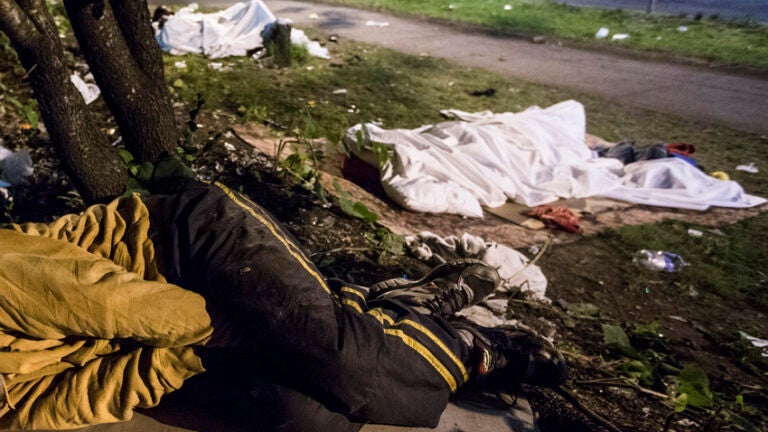
Homeless encampments comprising people Cambridge police hadn’t seen for some time did pop up following the displacements in Boston, and the city saw an “anecdotal” spike in violence within that community, according to the Cambridge Chronicle.
But Sergeant Louis Cherubino, who supervises the department’s response to the opioid crisis with its Special Investigations Unit, said the city hasn’t seen any effects from the actions in Boston on substance use or activity related to addiction in Cambridge.
“I don’t see it as something that’s impacted this,” he told Boston.com.
Police have, however, observed a “small increase” in the number of overdoses seen in Cambridge from last year, he said.
“We’ve also observed a small increase in the number of fatalities,” Cherubino said. “My correlation with both of those increases would be the prevalence of Narcan within first responders’ hands, as well as the general public. I think in large part a lot of users now feel a little bit of comfort knowing that that a reversal drug is at just about everyone’s disposal.”
The sergeant said the increase in fatalities is connected to the proliferation of potent synthetic drugs, like fentanyl. Like surrounding communities, including Boston, Cambridge has also seen rising methamphetamine use and crack cocaine.
The increase, Cherubino said, is “in direct relation to the maintenance drugs that people are receiving” for medical assisted treatment, which act on the opioid receptors in the brain, leaving those struggling with addiction potentially seeking a different type of stimulant for a high, he said.
“I’ve been with the department for quite some time and I’d only heard about methamphetamine,” he said. “It wasn’t until within the last year that we’ve seen a big increase in that amount.”
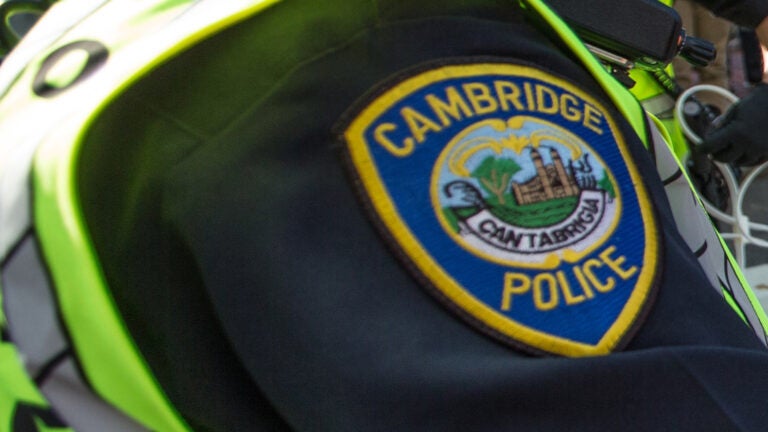
For the last five years, a licensed social worker and recovery coach have been embedded within the Cambridge Police Department as part of the PARTNER (Providing Access to Resources, Treatment Needs, and Education for Recovery) Initiative.
Working with an embedded social worker helps the department maintain its two-pronged approach to the opioid crisis by balancing intervention and enforcement, Cherubino said.
“A whole unit has been employed to combat this epidemic,” he said. “And with the advent of the licensed social worker and a part-time recovery coach, we’ve made some great movement forward.”
The Special Investigations Unit, along with the licensed social worker, responds within 48 hours to all overdoses in the city, he said. Follow up from the team, directing victims to resources, is offered at the scene and the hospital, and then the social worker conducts an in-depth evaluation, working with both the victim and his or her family.
Sabrina Voegelin, the social worker case manager for Cambridge police, said the initiative started out by having the social worker and detectives go to the hospital together after a reported overdose, to begin building trust with the individual.
In those moments, access to information can be a big barrier, she said, so having a timely response with someone physically with the department who can jump on a call and help coordinate services is key.
“If they were a little bit hesitant to work with officers and maybe more wanted to work with a social worker, I would follow up with them about two to three days later to see if they’d changed their minds, to see if they wanted to participate in treatment or see if they were interested in some education around harm reduction and using safely,” Voegelin said. “But the primary goal is to offer support services to either them or their families … that was a piece that sometimes clinicians can do a little bit easier and navigate some barriers that way.”
A unique element of the department’s approach to overdoses, Cherubino said, is that officers are participating both proactively — identifying through data where overdoses are occurring in the city and deploying resources in those areas— and in reactive phases of the response.
But ultimately the department’s focus is on diversion, and as a result, the types of arrests related to the opioid epidemic are down in the city because of how officers are interacting with “clients,” the sergeant said.
“We‘re looking to encourage them to seek treatment instead of going down that road that’s going to take them into the criminal justice system,” he said. “I think our great strength is once we turned the corner and removed stigma within the department, many of these clients that we’re working with now know that we’re part of the solution and not part of the problem.”
Officers will even drive people to a rehabilitation facility if an open bed is found and the victim wants recovery services, he said.
If it turns out someone who overdosed is from another city or town, the detectives and Voegelin will work to reach out to the appropriate jurisdiction to try to ensure that person, upon his or her return, can receive help.
Cherubino said the department is always “exploring and evaluating” how it can better address the epidemic, according to the sergeant, conducting surveys with victims and clients to gauge areas of improvement.
One of the areas currently being discussed is a more mobile approach, such as with a vehicle that would be staffed with representatives from both public health and police.
“We are currently exploring the ability to provide a mobile approach out into the community that we staff with a doctor, a nurse, a licensed social worker, a police detective, and a recovery coach,” Cherubino said. “This will deter a lot of the people that are going to the hospital emergency rooms — we can treat people in the field.”
Cherubino said he ‘s also focused on, and concerned about, planning for ways to work with families and children who are impacted by the epidemic in the city.
“We can’t stop thinking about working in the moment but also working with what the future holds,” he said.




To comment, please create a screen name in your profile
To comment, please verify your email address
Conversation
This discussion has ended. Please join elsewhere on Boston.com