
A new ‘anomaly’ from the past has emerged on a Cape Cod beach
The horse and carriage tracks uncovered by recent storms at Nauset Beach have been joined by what appears to be another vestige of a bygone era.
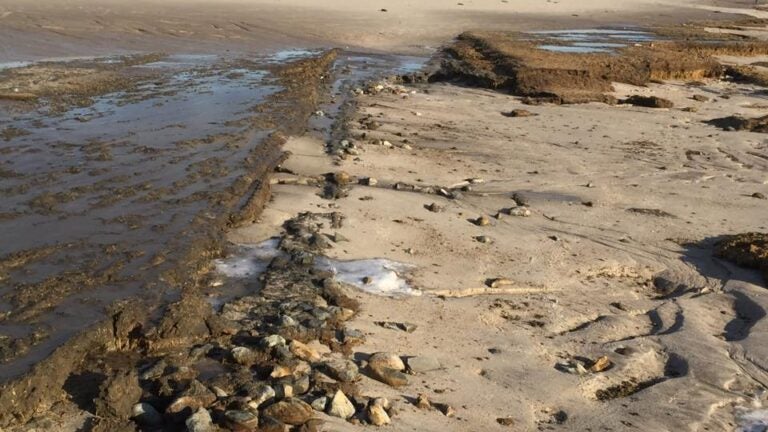
The passage of time keeps being pulled aside on Nauset Beach.
Related Links
The mystery of the impressions of horse and carriage tracks in peat, which were unearthed on the shore by the recent nor’easters pummeling Massachusetts, expanded over the weekend with a new “anomaly,” according to the Orleans Police Department.
“There appears to be a road that goes through the middle of one of the [peat] beds,” Lt. Kevin Higgins wrote on the department’s Facebook page Monday. “This road appears to lead from the end of Smith [Neck] Road, which was the former entrance to Nauset Beach in the late 1800s. What’s interesting is that each side of the road has rock packed in.”
It is believed that the impressions from the horses and carriages date to the late 1800s or early 1900s, when horses were used to harvest salt marsh hay in that area or possibly even replenish camps on the outer beach.
Higgins told Boston.com he observed the new development on the beach at low tide on Sunday.
“I just kind of marvel at it,” he said, adding that it feels like “every single low tide” is revealing something new on the beach.
Higgins, who has been documenting the tracks on the beach on the department’s Facebook page, said the rock discovered over the weekend does not match the stones typically found at Nauset Beach.
“Best guess is this was to allow the carriages to ride above the peat, and prevent the heavier, ladened carriages from sinking into the peat bed,” he wrote. “Early beach-side cobblestoned road?”
https://www.facebook.com/orleanspolice/posts/1720029398020551


