Harvard graduate students make new bid to unionize
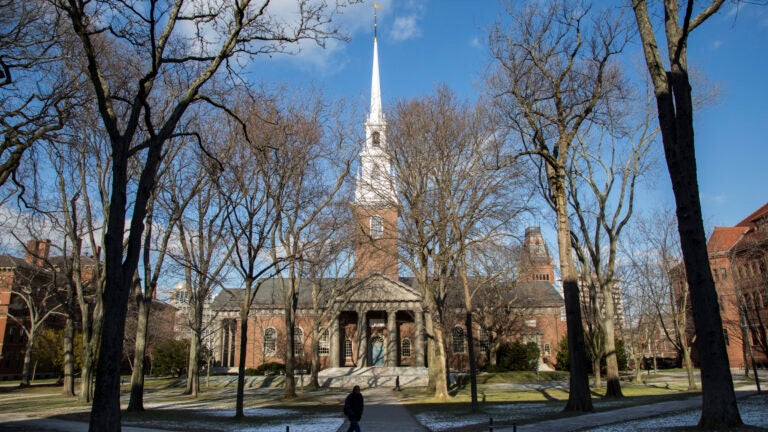
Harvard graduate students hope the second time will be the charm in their effort to unionize, saying that the events of the past year have made the need for cohesion among student workers more clear than ever.
The first unionization effort in 2016 was ultimately unsuccessful. But a recent ruling by a federal board that governs labor disputes has paved the way for students to organize a second election, now expected to occur this spring.
In addition to their own studies, graduate students often perform research for professors, teach classes, and help with other projects. A union could give them the power to negotiate with the university for more standard pay, benefits, and working conditions.
“There’s just a lot of kind of arbitrary, unilateral changes,’’ said Justin Bloesch, a second-year economics graduate student who is helping to organize the unionization effort. “At the moment it’s kind of handed down by the administration.’’
The original vote, in November 2016, came just three months after the National Labor Relations Board ruled for the first time that student employees at private universities could form unions. A few weeks after the Harvard election, students at Columbia unionized.
But the Harvard election results were in dispute before the federal board until April, when it ruled that Harvard had not complied with requirements to provide correct voter lists and allowed the union to hold a new election.
This month, the NLRB officially certified the final count of the original election: 1,526 against unionization and 1,396 for, confirming that the vote failed.
In response to the news that a second election could take place, an official from the Harvard administration sent an e-mail to the campus that stopped short of telling students how to vote.
“As we move forward with a second election, it is critically important to consider again the issues at stake and engage in a robust conversation about the potential impact of unionization,’’ wrote Paul Curran, the Harvard director of labor and employee relations.
Bloesch said several events in the past year have clarified the need for a union, including a smaller-than-expected wage increase for some graduate students and the national attention on sexual harassment.
A standard contract and union representation could help balance the unequal relationship between graduate students and their professor bosses and also require the university to keep its word on pay raises for graduate students, who typically earn about $30,000 per year.
Part of the concern among graduate students, however, is that students in different departments and schools earn different amounts.
This year the Graduate School of Arts and Sciences raised the graduate student stipend by a smaller percentage than originally anticipated, 1.5 percent, citing poor performance by the endowment. But Bloesch said the cost of graduate student housing still increased by 3 percent.
All these factors have combined to make students more convinced that a union could be helpful, he said.
“We’re seeing a lot of energy in places that we haven’t seen before,’’ he said.
Last week US Senator Elizabeth Warren, a former Harvard law professor, endorsed the union movement, saying in a statement to the Harvard Crimson that “it’s past time for [graduate students] to be treated with respect and past time for them to have their own elected representation in decisions that affect their lives.’’
Ignacio Azcueta, a third-year graduate student who studies romance languages, said in his home country of Argentina it would be common for such workers to be unionized.
He said the variations in student pay across the university are particularly frustrating and, for international students like him, visa restrictions make it hard to get an off-campus job for supplemental income.
“It’s very strange, this confusion when we’re being addressed as students but we perform so much work. We are teaching undergraduates — that is a huge responsibility. We are workers in that sense,’’ he said.