Ex-Walsh aide allegedly discussed withholding ‘Top Chef’ permits
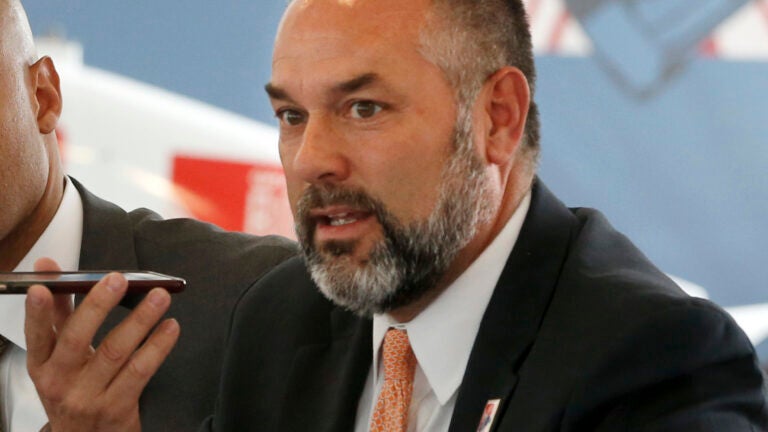
Kenneth Brissette, a Boston City Hall official under indictment for allegedly pressuring a music festival to hire union workers, discussed canceling filming permits for the “Top Chef’’ reality TV show after he learned the Teamsters were angry that producers were not using union labor, a witness in the federal extortion trial said Wednesday.
“They were going to find a way to cancel the permits,’’ testified Derek Cunningham, a former location scout for the show who e-mailed Brissette in June 2014 about the Teamsters’ ire.
Cunningham testified under cross-examination by W. Jamiel Allen, a lawyer for the Teamsters, who asked Cunningham if he had initially proposed canceling the show’s permits.
Brissette “suggested it to me first,’’ Cunningham said.
Cunningham’s account, which appeared to contradict Brissette’s denial that he was acting on behalf of the union, came on the second day of the trial against four Teamsters — John Fidler, Daniel Redmond, Robert Cafarelli, and Michael Ross — who allegedly used strong-arm tactics against the “Top Chef’’ crew. Prosecutors say they threatened to picket if the show’s producers did not hire union drivers, and intimidated and harassed members of the nonunion crew.
Defense lawyers maintain that the men were exercising their right to picket for better wages and jobs.
“Top Chef’’ eventually received the permits, and a lawyer hired by the city to review City Hall’s involvement in the matter concluded that officials working under Mayor Martin J. Walsh, a former union leader, had not behaved criminally.
The lawyer, former federal prosecutor Brian T. Kelly, based his conclusions on e-mails and interviews with city officials, including Brissette. Kelly, who had no subpoena power, tried to interview Cunningham at the time but he declined to speak to him.
During their conversations in June 2014, Brissette told Cunningham in an e-mail that no shooting should take place until he spoke with Bravo, which broadcasts “Top Chef.’’
In a December 2015 report, Kelly said Brissette’s primary concern was that Bravo had not discussed its plans to film on Boston Common at a weekly meeting with the city’s film bureau and that he needed time to determine whether a permit was required.
According to Kelly’s report, “Top Chef’’ producer Ellie Carbajal told Brissette that she had heard the show’s permits would be revoked.
Brissette “had no knowledge of anyone attempting to revoke “Top Chef’’ permits, had never discussed the topic with Cunningham, and did not know why Carbajal had the impression that the show’s permits might be revoked,’’ Kelly wrote his report. “No city personnel had any recollection of having ever discussed, or so much as heard, of the revocation of Top Chef’s permits, and could not speculate as to why Cunningham had told Carbajal that this was a possibility.’’
On Wednesday, Kelly said Brissette had told him during the 2015 investigation that he never discussed withholding “Top Chef’’ permits because the show would not hire Teamsters.
“He flatly denied that to us,’’ Kelly said in an interview. “The government did not indict him in the Top Chef matter, and I assume if they had strong enough evidence they would have.’’
Brissette and another city official were indicted in May 2016 for allegedly extorting a popular music festival by threatening to withhold city permits.
On Wednesday, NBC executive David O’Connell testified that he also spoke to Brissette after Carbajal told him she had heard the city wanted to pull the permits.
“I told him they had issued the permits, and it wasn’t in his power to take them back,’’ O’Donnell testified. “He reiterated the issue that this would all go away if we would just make a deal.’’
The testimony of O’Connell and Cunningham underscored how uncomfortable the trial could become for Walsh, who is up for reelection. Walsh has not been mentioned during the trial so far but prosecutors have elicited the testimony about Brissette in an apparent attempt to show that the Teamsters were applying pressure on the show through City Hall.
A City Hall spokeswoman declined to comment.
Cunningham testified Tuesday that his involvement with the show led to the eventual downfall of his career in the film industry. He said the tactics of the Teamsters unnerved him so much he began sleeping with a knife under his bed.
But under cross-examination, he acknowledged that none of the defendants had ever physically threatened him or told him to quit “Top Chef.’’
Carbajal testified Wednesday that Brissette told her he was holding the permits the show had received to film at the Omni Parker Hotel and Emerson College.
“He was holding on to them in the hopes we would come to an agreement with the Teamsters,’’ Carbajal said.
Under cross-examination, Carbajal said Brissette asked her to work out a deal with the Teamsters because he was worried there would be backlash over Walsh’s appearance in a previous taping.
“Did [Brissette] tell you that [union] protests would be bad publicity for the city?’’ asked Carmen Lepore, the defense attorney for Cafarelli.
“He did,’’ Carbajal replied.
Lepore’s questions sought to show City Hall had other reasons for pushing for a reconciliation between “Top Chef’’ and the Teamsters, and undercut the prosecution’s suggestion that Boston officials were acting on the Teamsters’ behalf. Carbajal said she received the permits June 7, but the hotel canceled its agreement to host the show, citing the conflict with the Teamsters.